AI Agents vs Traditional Chatbots: Which Drives Better Business Growth?
-
 Prashant Padmani
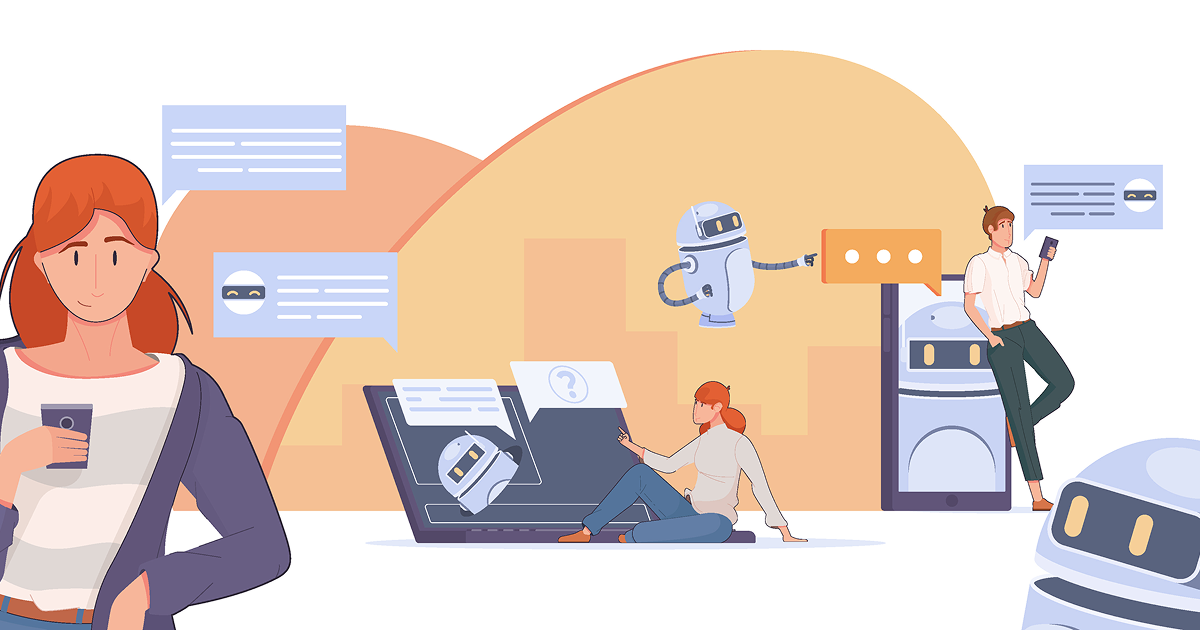
Businesses today rely heavily on digital platforms to stay connected with customers. Chatbots were one of the first solutions used for instant replies, but with the rise of advanced AI agents, the way companies automate communication has completely changed. While chatbots follow fixed scripts, AI agents understand context, learn from data, and provide smarter responses. This shift raises an important question: Which one truly supports long-term business growth? This blog breaks down the major differences and helps you understand which option suits your business needs in 2026.
Functional Intelligence: Rule-Based Chatbots vs Smart AI Agents
Traditional chatbots follow instructions, while AI agents think, understand, and adapt.
Traditional chatbots operate using a fixed flow. They can answer simple questions, but they fail when users type something unexpected. This restricts their ability to solve complex customer queries, impacting user satisfaction and brand experience.
AI agents use natural language processing (NLP) and machine learning to understand what users mean, not just what they type. They analyze message tone, past conversations, and user behavior to give relevant responses that feel human-like.
Unlike chatbots that remain static, AI agents learn from interactions. The more users engage, the smarter the agent becomes. This learning ability helps businesses offer better service and increase customer trust without extra manual effort.
Automation Power: Limited Chatbots vs End-to-End AI Automation
Businesses need more than replies—they need automation that saves time and money.
Most chatbots are designed to reply to repeated queries like pricing, timings, or FAQs. They cannot process complex actions, which forces users to contact human agents, increasing workload on support teams.
AI agents can book appointments, check order status, create tickets, recommend products, collect customer feedback, and connect with third-party systems. This reduces manual work and helps businesses save significant operational costs.
AI agents connect with CRM, ERP systems, payment portals, and internal databases. This allows them to complete tasks without human involvement, improving efficiency, accuracy, and overall business productivity.
Customer Experience: Scripted Flow vs Personalized Interaction
Customers expect natural communication — not robotic conversations.
Since chatbots follow fixed commands, the conversation feels repetitive and unnatural. If the user asks something outside the script, the chatbot gets stuck and creates frustration.
AI agents adjust their tone and reply style based on the user’s mood, preference, and conversation history. This makes interactions feel smoother, more comfortable, and closer to real human support.
By analyzing user data, AI agents recommend products, solutions, or actions based on customer behavior. This boosts engagement, satisfaction, and conversions, helping businesses grow faster.
Scalability: Basic Support vs Growth-Ready Automation
Businesses need tools that support long-term expansion without increasing cost.
Whenever a new product launches or a new service is added, chatbots need manual script changes. This slows down business growth and increases maintenance workload.
AI agents can update themselves by learning from new data, FAQs, or customer queries. This makes scaling easier, especially for fast-growing startups that constantly add new features.
AI agents manage multiple conversations across platforms like WhatsApp, Instagram, websites, and apps at the same time. This helps businesses maintain strong performance even during high-traffic periods.
Business ROI: Minimal Output vs High Growth Potential
They help answer basic questions, but they don’t bring high value to the business. Their limitations affect customer trust and may reduce user engagement over time.
AI agents guide users through the buyer journey, recommend products, handle objections, and assist with checkout. This significantly increases conversion rates and helps businesses earn more revenue.
Because AI agents reduce dependency on human support and automate repeated workflows, businesses save money every month. Their continuous improvement also boosts ROI over time.
Conclusion
Traditional chatbots are useful for basic tasks, but they cannot support growing businesses in 2026. AI agents, on the other hand, offer intelligent automation, personalized experiences, and high scalability. They understand user intent, complete complex tasks, and consistently improve with data. For any business aiming for long-term growth, AI agents clearly deliver better results than traditional chatbots. Investing in AI-powered automation is not just an upgrade — it is a strategic decision that directly impacts business performance and customer satisfaction.
Frequently Asked Questions
Chatbots follow scripts, while AI agents understand intent, learn from data, and provide smarter responses.
They automate complex tasks, personalize user experiences, and help businesses save time and cost.
AI agents handle most basic and medium-level queries, reducing workload for human teams so they can focus on complex issues.
They require higher initial investment than chatbots, but their long-term automation benefits provide stronger ROI.
E-commerce, healthcare, finance, real estate, education, and service-based businesses gain major advantages with AI-driven automation.
Get Free consultation and let us know about your custom web and Mobile App project idea

Over 14+ years of work experience, we have built 210+ web and mobile apps
We can help you with
- Dedicated Developer
- delivering high-quality development
- Custom Mobile App Development
- Innovative Solution For Startups and Enterprise
Latest Blogs
Explore the Latest Blogs on Trends and Technology.