1. What Is ERP and How It Helps Small Businesses
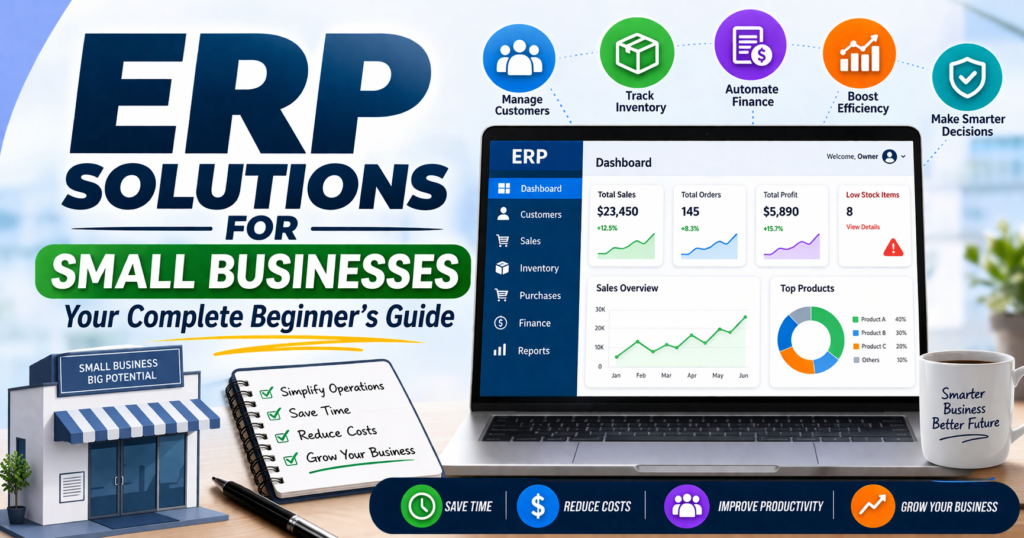
ERP (Enterprise Resource Planning) is a software system that manages different business operations through one centralized dashboard.
1.1 ERP removes manual work and improves accuracy
Most small businesses depend on spreadsheets and separate apps for billing, sales, and inventory. ERP systems combine everything into one place, reducing mistakes and improving workflow efficiency for daily operations.
1.2Better business visibility with real-time data
With ERP, owners can see stock levels, sales performance, expenses, and customer activity in real time. This helps make faster decisions and prevents delays that often hurt productivity and profit.
1.3 Helps small teams work smarter
ERP software automates routine activities and reduces communication gaps between departments. Even a small staff can manage work more effectively without stress or confusion.
2.Key Features Every Small Business ERP Must Have
To get maximum benefit, ERP systems must include essential features useful for daily business operations.
2.1 Inventory and stock management tools
A good ERP solution tracks stock levels, alerts when products go low, and prevents over-ordering. Small shops, distributors, and retailers save money by avoiding stock losses and maintaining accurate product data.
2.2 Accounting & invoice automation
ERP automatically generates invoices, tracks payments, records expenses, and manages taxes. This reduces time spent on manual accounting and ensures complete financial accuracy for audits and reporting.
2.3 CRM for customer communication
3. Why ERP Is Important for Small Business Growth
ERP is not just a tool — it is a growth engine for small businesses.
3.1 Improved productivity through automation
ERP reduces repetitive tasks such as manual billing, data entry, and stock updates. Employees focus more on customer service and business expansion instead of paperwork.
3.2 Better decision-making with analytics
ERP dashboards and reports show sales trends, high-demand products, low-performing items, and financial risks. Small business owners gain full clarity to plan growth strategies and stay competitive.
3.3 Reduces business costs long-term
While ERP requires initial investment, it drastically lowers operational costs. Fewer errors, faster processes, and improved customer management help businesses earn more profit over time.
4. Cloud ERP vs On-Premise ERP — Which Is Better for Small Businesses?
Choosing the right ERP setup plays a big role in performance and budget.
Cloud ERP is affordable and easy to set up
Cloud ERP works online without expensive hardware. Small businesses only pay monthly fees and can access the system anytime, making it perfect for startups and growing companies.
On-premise ERP needs high investment
It requires servers, IT staff, and maintenance. Though it provides full data control, the cost and technical requirements make it challenging for small businesses with limited budgets.
Cloud ERP offers scalability and remote access
As the business grows, features can be added easily. Owners and staff can work from anywhere using laptops or mobile apps, improving flexibility and convenience.
How to Choose the Right ERP Solution for Your Business
Selecting the best ERP software ensures smooth operations and long-term success.
Identify your business needs before selecting ERP
Every business is different — retailers need inventory tools, wholesalers need order management, and service companies need CRM. Clear requirements help choose the correct ERP features.
Check for mobile-friendly ERP systems
Modern businesses rely on smartphones. A mobile ERP app lets owners monitor sales, invoices, or inventory even when traveling. This increases efficiency and improves control.
Choose ERP with strong support and easy integration
Good ERP software must connect with your billing system, POS, online store, or CRM. Reliable customer support ensures issues are solved quickly, preventing downtime and workflow problems.
Conclusion
ERP solutions are no longer only for large enterprises — they are now essential for small businesses that want to grow faster, save time, and manage multiple tasks efficiently. With ERP, business owners get real-time visibility, improved productivity, accurate accounting, better customer management, and strong workflow automation. Choosing the right ERP ensures long-term success, reduces mistakes, and gives businesses a competitive edge. Whether you run a shop, agency, manufacturing unit, or service company, ERP can completely transform how your business operates.