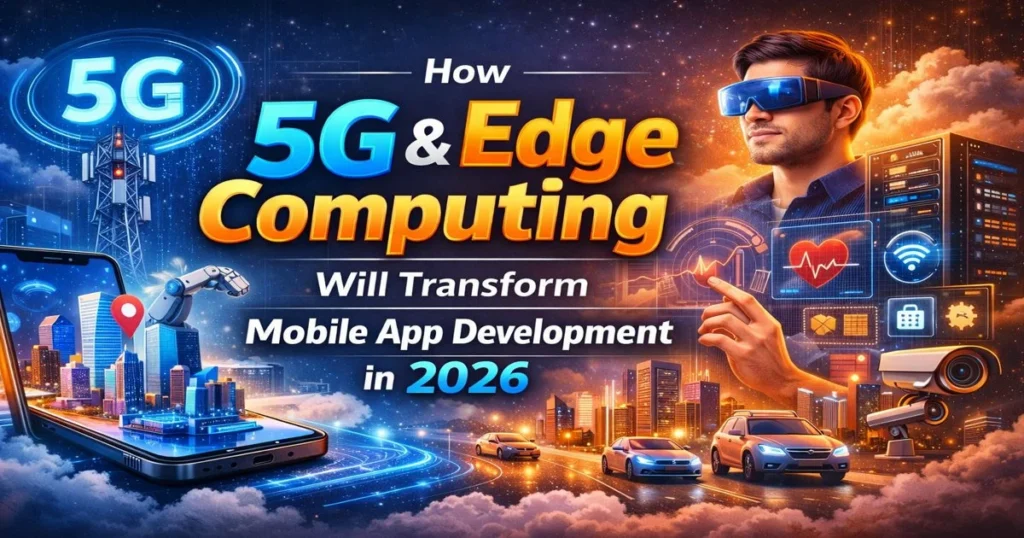
Mobile app development is entering a new era in 2026 driven by two powerful technologies — 5G and edge computing. These technologies are not just improving speed but completely changing how mobile apps are built, deployed, and experienced by users. With faster connectivity, ultra-low latency, and real-time data processing, businesses can now create apps that were simply not possible a few years ago. From real-time gaming and AR experiences to smart healthcare and connected devices, the impact is massive. In 2026, businesses that leverage 5G and edge computing effectively are gaining a serious competitive advantage. This blog explains how these technologies are transforming mobile app development and what it means for your business.
Why Mobile Apps Needed This Evolution
Traditional mobile apps have always depended heavily on cloud infrastructure, but this approach has limitations in modern use cases.
What is 5G and Why It Matters
5G is the fifth generation of mobile network technology designed to deliver faster speeds and lower latency than previous generations.
5G offers significantly higher speed, ultra-low latency, and the ability to connect a massive number of devices simultaneously. It also provides improved network stability and reliability.
With 5G, mobile apps become faster, smoother, and more responsive. High-quality video streaming, real-time gaming, and complex app interactions become seamless without buffering or lag.
What is Edge Computing
Edge computing is a technology that processes data closer to the user instead of relying entirely on centralized cloud servers.
Data is processed on local servers or nearby devices rather than being sent to distant data centers. This reduces the distance data needs to travel.
This approach significantly reduces latency, improves speed, and enables real-time decision-making which is critical for modern mobile applications.
Automating conversations reduces the need for large customer support teams.
How 5G and Edge Computing Work Together
5G provides ultra-fast connectivity while edge computing ensures that data is processed near the user.
Together, they create a powerful ecosystem that allows mobile apps to deliver real-time performance, reduce delays, and improve overall efficiency.
Key Transformations in Mobile App Development
Apps can now deliver instant responses without delays. This is crucial for applications like gaming, finance, and live streaming.
Augmented reality and virtual reality experiences become smoother and more immersive. Industries like real estate, education, and gaming benefit significantly.
Connected devices such as smart homes, wearables, and industrial systems can communicate faster and more efficiently.
Heavy processing tasks can be handled at the edge, reducing the load on mobile devices and improving speed and battery performance.
Processing data closer to the source reduces the risk of exposure during transmission and improves overall security.
Real-World Use Cases in 2026
Real-time remote consultations, patient monitoring, and even advanced procedures become more reliable with minimal delay.
Faster loading apps, personalized experiences, and AR-based product previews improve customer engagement and conversions.
Cloud gaming delivers high-quality, lag-free experiences similar to console-level performance on mobile devices.
Traffic systems, surveillance, and public services operate more efficiently using real-time data processing.
Challenges Businesses Should Consider
Implementing edge computing infrastructure and optimizing apps for 5G requires upfront investment.
Building apps that fully utilize these technologies requires advanced architecture and skilled developers.
Not all users have 5G-enabled devices yet, so apps must still support older networks for wider reach.
Choosing the Right Strategy
Businesses in gaming, healthcare, IoT, and real-time services should adopt these technologies early to gain a competitive advantage.
If your app does not require real-time processing, a gradual adoption approach is more practical.
Many businesses use a mix of cloud, edge, and traditional systems to balance performance, cost, and scalability.
Conclusion
In 2026, 5G and edge computing are transforming mobile app development at a fundamental level. Apps are becoming faster, smarter, and capable of delivering real-time experiences that modern users expect. Businesses that adopt these technologies early can unlock new opportunities, improve customer experience, and stay ahead of competitors. Ignoring these advancements means falling behind in an increasingly competitive digital landscape.