latest header logo

Let's Create Something Extraordinary Together

Your Trusted Partner in Digital Innovation

Reach out to explore tailored solutions designed to transform your business.

Transparent Project Insights

Understand your project’s scope clearly, with no unexpected surprises

Step Into the Future

Share your ideas, and we’ll connect with you within 16 hours (excluding holidays) to bring your vision to life.

Crafting Excellence for You

From mobile apps to web solutions and ERP systems, we’re here to build technology that works perfectly for you.

Quick and Reliable Response

Share your vision, and we’ll connect within 16 hours (excluding holidays).


    Mobile App

    Top-Cybersecurity-Threats-Facing-Mobile-Apps-in-2026-&How-To-Prevent-Them

    Top Cybersecurity Threats Facing Mobile Apps in 2026 & How To Prevent Them

    Top Cybersecurity Threats Facing Mobile Apps in 2026 & How To Prevent Them Prashant Padmani Edit Template Mobile apps handle sensitive user data such as payments, personal details, and login credentials, making them a prime target for cyberattacks. As mobile app development continues to grow, cybersecurity threats are becoming more advanced and frequent. In 2026, attackers are using smarter techniques to exploit weak security systems in mobile applications. For businesses and startups, understanding mobile app security threats and how to prevent them is extremely important. This blog explains the top cybersecurity threats facing mobile apps in 2026 and the best ways to protect against them. Table of content Add a header to begin generating the table of contents Data Leakage and Privacy Breaches Data leakage is one of the biggest mobile app security risks in 2026. Unsecured Data Storage Many mobile apps store sensitive data locally without proper encryption. Hackers can access this data through malware or device theft. Poor storage practices expose user credentials and personal information. Secure data storage is critical to prevent leaks. Weak API Security APIs connect mobile apps to backend servers, but insecure APIs can be easily exploited. Attackers use API flaws to steal or modify data. This can lead to large-scale data breaches. Proper API authentication and validation help reduce this risk. Over-Permission Access Apps that request unnecessary permissions create security gaps. Hackers misuse these permissions to access private data. Users also lose trust when apps ask for too much access. Limiting permissions improves both security and user confidence. Malware and Fake Mobile Apps Malicious apps are becoming more common in 2026. Fake Apps on App Stores Cybercriminals create fake versions of popular apps to trick users. These apps steal data or install malware silently. Users often download them without realizing the risk. Regular monitoring and brand protection help prevent this threat. Trojans and Spyware Malware hidden inside apps can track user activity and steal sensitive information. These threats work silently in the background. Users remain unaware until damage occurs. Strong app security testing helps detect such threats early. Third-Party SDK Risks Using unverified third-party SDKs increases malware risk. Some SDKs collect data without permission. This can expose user data and violate policies. Always use trusted and updated SDKs. Also to read:-   Top Fintech App Trends in 2026 That Every Startup Must Watch Weak Authentication and Authorization Poor login security makes mobile apps vulnerable. Weak Password Policies Simple passwords are easy targets for brute-force attacks. Hackers use automated tools to break weak credentials. This leads to account takeovers. Enforcing strong password rules reduces risk. Lack of Multi-Factor Authentication (MFA) Apps without MFA rely only on passwords. If credentials are leaked, accounts are easily compromised. MFA adds an extra security layer. It greatly improves mobile app security. Session Hijacking Attackers steal active user sessions to access accounts. This often happens due to insecure session handling. Proper session expiration and encryption help prevent hijacking. Secure session management is essential. Insecure Network Connections Public Wi-Fi Attacks Users often access apps using public Wi-Fi. Hackers intercept data on unsecured networks. This exposes login and payment details. Encrypted connections protect users on public networks. Man-in-the-Middle (MITM) Attacks Attackers intercept communication between app and server. They can read or modify data in transit. This is a serious mobile app security threat. SSL pinning helps block MITM attacks. Poor Encryption Practices Using outdated or weak encryption makes data vulnerable. Attackers can easily break weak encryption. Strong encryption standards protect data during transmission. Encryption is a must in 2026. Lack of Regular Security Updates Outdated App Versions Older app versions contain known vulnerabilities. Hackers exploit these weaknesses easily. Regular updates close security gaps. Timely updates are critical for safety. No Security Testing Apps without regular security testing miss hidden risks. Vulnerabilities remain unnoticed until exploited. Security audits help identify weak points early. Testing should be ongoing. Slow Patch Management Delayed fixes give attackers more time. Even small vulnerabilities can cause damage. Quick patching reduces exposure. Fast response improves overall app security. Conclusion Cybersecurity threats facing mobile apps in 2026 are more advanced than ever. From data leakage and malware to weak authentication and insecure networks, each threat can cause serious damage to users and businesses. By focusing on strong mobile app security practices, regular testing, secure authentication, and timely updates, companies can reduce risks effectively. Prevention is always better than recovery, especially in mobile app development. A secure app builds trust, protects data, and ensures long-term success. Frequently Asked Questions What are the biggest cybersecurity threats for mobile apps in 2026? Data breaches, malware, weak authentication, insecure networks, and outdated apps are the biggest threats. How can mobile apps protect user data?  By using encryption, secure APIs, strong authentication, and regular security updates. Are public Wi-Fi networks risky for mobile apps?  Yes, public Wi-Fi can expose data unless apps use secure and encrypted connections. Why is multi-factor authentication important for mobile apps? MFA adds an extra layer of security and prevents unauthorized access even if passwords are stolen. Which company helps secure mobile apps against cyber threats? NGD Technolab provides secure mobile app development with strong cybersecurity practices and regular security testing. Get Free consultation and let us know about your custom web and Mobile App project idea Over 13+ years of work experience, we have built 210+ web and mobile apps We can help you with Dedicated Developer delivering high-quality development Custom Mobile App Development Innovative Solution For Startups and Enterprise Contact Us Edit Template Latest Blogs Explore the Latest Blogs on Trends and Technology. Top Cybersecurity Threats Facing Mobile Apps in 2026 & How To Prevent Them Read More Top Fintech App Trends in 2026 That Every Startup Must Watch Read More Mobile App Development: From MVP to Monetization Read More Edit Template

    Top Cybersecurity Threats Facing Mobile Apps in 2026 & How To Prevent Them Read More »

    Top-Fintech-App-Trends-in-2026-That-Every-Startup-Must-Watch

    Top Fintech App Trends in 2026 That Every Startup Must Watch

    Top Fintech App Trends in 2026 That Every Startup Must Watch Harshid Patel Edit Template Fintech apps are changing how people save, spend, invest, and manage money. In 2026, users expect faster payments, better security, and smart financial features directly inside mobile apps. For startups, following the latest fintech app trends is very important to stay competitive and build user trust. New technologies like AI, digital banking, and embedded finance are shaping the future of fintech app development. This blog highlights the top fintech trends that every startup should focus on in 2026. Table of content Add a header to begin generating the table of contents AI-Powered Fintech Applications Artificial Intelligence is becoming a key part of modern fintech apps. Smart Money Insights AI helps fintech apps analyze user spending and income patterns. It gives suggestions for saving, budgeting, and investing based on real data. Users get personalized financial advice without manual effort. This makes money management easier and more accurate. AI Chatbots for Customer Support AI chatbots provide instant support inside fintech apps. Users can check balances, transaction history, or resolve issues without waiting. This improves customer experience and reduces support costs. Startups can scale support easily using AI. Fraud Detection Using AI AI detects unusual transactions and suspicious activity in real time. This helps prevent fraud before it causes damage. Users feel safer using apps with smart security systems. Strong fraud detection builds long-term trust. Digital-Only Banking Experience Digital-only banking is becoming more popular among users in 2026. Fully App-Based Banking Users can open accounts, transfer money, and manage cards directly from mobile apps. No physical branch visits are required. This saves time and offers convenience. Digital banking apps attract younger and tech-savvy users. Faster Account Setup Digital onboarding with KYC verification is quick and smooth. Users can start using services within minutes. This improves conversion rates for fintech startups. Faster onboarding leads to better user retention. Lower Fees for Users Without physical branches, digital banks reduce operational costs. These savings allow lower fees and better offers for users. Affordable services attract more customers. This helps startups grow faster. Also to read:-   Mobile App Development: From MVP to Monetization Embedded Finance in Everyday Apps Embedded finance is one of the fastest-growing fintech trends. Payments Inside Non-Finance Apps E-commerce, travel, and delivery apps now include payment options inside the app. Users do not need separate banking apps. This creates a smooth and convenient experience. Embedded payments increase usage and revenue. Buy Now Pay Later (BNPL) BNPL options allow users to split payments easily. This feature is popular among online shoppers. It improves purchase conversion rates. Startups benefit from higher transaction volume. Financial Services in Daily Life Apps Apps now offer insurance, loans, and wallets within their platforms. Users get multiple services in one place. This increases customer loyalty. Embedded finance improves overall app value. Stronger Security and Privacy Features Biometric Authentication Fingerprint and face recognition replace traditional passwords. These methods are faster and more secure. Users feel confident accessing financial apps. Biometric login reduces fraud risks. Advanced Data Encryption Fintech apps use encryption to protect user data and transactions. Secure APIs and compliance standards are followed strictly. This keeps sensitive information safe. Strong encryption builds user trust. Regulatory Compliance Apps follow financial regulations and data protection rules. Compliance avoids legal issues and penalties. Users prefer apps that meet security standards. Trust and reliability increase over time. Personalized User Experience Customized Dashboards Users see spending, savings, and investments in one clear view. Dashboards change based on user behavior. This helps users understand finances easily. Personalization improves engagement. Smart Notifications and Alerts Apps send alerts for payments, bills, and savings goals. Notifications are helpful, not spammy. Users stay informed without feeling disturbed. Smart alerts improve retention. Tailored Financial Offers Users receive offers based on their usage and preferences. This increases conversion chances. Relevant offers feel useful, not forced. Personalization boosts revenue. Conclusion Fintech app development in 2026 is focused on smart technology, user convenience, and strong security. Trends like AI-powered features, digital-only banking, embedded finance, enhanced security, and personalized experiences are shaping the future. Startups that adopt these fintech app trends early can build reliable, scalable, and user-friendly applications. Keeping up with these trends will help fintech startups grow faster and earn long-term user trust. Frequently Asked Questions What are the biggest fintech app trends in 2026? AI-powered apps, digital banking, embedded finance, strong security, and personalization are the biggest fintech trends in 2026. How does AI help fintech apps? AI helps with smart insights, fraud detection, and instant customer support, making fintech apps more reliable. Why is embedded finance important for startups? Embedded finance allows startups to offer payments and financial services inside their apps, increasing usage and revenue. Are fintech apps secure in 2026?  Yes, modern fintech apps use biometric security, encryption, and compliance standards to protect user data. Which company can help build fintech apps for startups? NGD Technolab helps startups develop secure and scalable fintech apps using the latest technologies. Get Free consultation and let us know about your custom web and Mobile App project idea Over 13+ years of work experience, we have built 210+ web and mobile apps We can help you with Dedicated Developer delivering high-quality development Custom Mobile App Development Innovative Solution For Startups and Enterprise Contact Us Edit Template Latest Blogs Explore the Latest Blogs on Trends and Technology. Top Fintech App Trends in 2026 That Every Startup Must Watch Read More Mobile App Development: From MVP to Monetization Read More The Rise of SaaS Platforms: Why Businesses Prefer Subscription Models Read More Edit Template

    Top Fintech App Trends in 2026 That Every Startup Must Watch Read More »

    How-SwiftUI-Is-Transforming-the-Future-of-iOS-App-Development

    How SwiftUI Is Transforming the Future of iOS App Development

    How SwiftUI Is Transforming the Future of iOS App Development Harshid Patel Edit Template SwiftUI is one of the biggest innovations Apple has introduced for iOS app development. It allows developers to build UI faster, write cleaner code, and create powerful iPhone, iPad, and Mac applications with less effort. Because SwiftUI supports live previews, reusable components, and modern animations, it has quickly become the preferred tool for building next-generation iOS apps. In this blog, we explore how SwiftUI is transforming the future of iOS app development and why businesses and developers are adopting it rapidly. Table of content Add a header to begin generating the table of contents Faster UI Development With Less Code SwiftUI makes UI development extremely efficient, reducing both time and complexity. Declarative syntax simplifies development SwiftUI uses a clean, declarative code style where developers describe what the UI should look like, not how to build it step by step. This reduces coding mistakes and makes app screens easier to create and maintain. The simpler coding structure allows faster development even for complex interfaces. Real-time previews save hours of testing Developers can instantly see UI changes on screen as they modify code. This eliminates the need to constantly run the app for small design adjustments. With real-time previews, teams iterate faster and deliver visually accurate designs more confidently. Reusable UI components reduce development time Buttons, forms, cards, and widgets can be created once and reused across the app. This ensures design consistency and speeds up multi-screen development. Reusable SwiftUI components also make future updates easier and more efficient. Cross-Platform Power: Build Once, Deploy Everywhere SwiftUI supports Apple’s entire ecosystem, making it a future-ready development framework. Shared UI for iOS, iPadOS, macOS, and watchOS Instead of building separate UIs for each Apple device, SwiftUI allows developers to build one core interface that adapts automatically. This unified structure reduces workload and lowers app development cost for businesses. Fewer bugs with one codebase  A single UI framework means fewer inconsistencies across platforms. The same logic and design patterns improve reliability across devices, reducing testing time and minimizing errors. Faster app updates across all platforms When new features are added, updates can be deployed simultaneously for iPhone, iPad, and Mac apps. Businesses benefit from faster releases and consistent user experiences across all Apple devices. Also to read:-   Why Startups in India Choose NGD Technolab for App Development Next-Level Animations & Modern User Experience SwiftUI is designed with animation and interactivity as core strengths, helping apps feel more modern. Smooth animations with minimal coding Developers can add transitions, effects, motion, and dynamic UI elements using simple SwiftUI commands. These animations enhance the user experience and make apps feel more polished and premium. Adaptive layouts for modern design needs SwiftUI automatically adjusts to different screen sizes, orientations, and device types. This ensures consistent UI quality across iPhones with notch screens, tablets with larger layouts, and even the latest Apple devices. Better accessibility support by default Text scaling, voice-over support, and system UI adjustments are built into SwiftUI. This ensures apps are usable for a wider audience, improving user satisfaction and meeting accessibility standards. Strong Integration With Apple’s Latest Technologies Apple builds every new feature with SwiftUI in mind, making it an essential tool for future apps. Deep support for iOS updates Every new iOS version comes with SwiftUI improvements and new UI components. Apps built with SwiftUI automatically get smoother compatibility with latest system updates, reducing maintenance efforts. Easy integration with CoreData, WidgetKit & Siri SwiftUI connects effortlessly with essential tools like CoreData for storage, WidgetKit for widgets, and SiriKit for voice commands. Businesses can offer advanced features without complex coding. Perfect match for Apple’s modern design direction Apple encourages developers to adopt SwiftUI because it aligns with future UI standards. Apps built using SwiftUI remain relevant and easily scalable as Apple updates system design patterns. Better Productivity for Developers & Faster Delivery for Businesses Improved team collaboration The simple structure helps teams understand designs quickly. Designers and developers work more closely because the UI is easier to visualize and update on the fly. Less debugging and cleaner architecture Because SwiftUI reduces code complexity, bugs become easier to detect and fix. Clean architecture leads to long-term stability and lower development cost for startups and enterprises. Ideal for rapid prototyping Businesses can test ideas quickly with SwiftUI prototypes. This helps validate concepts fast, collect early user feedback, and reduce the risk of investing in the wrong features. Conclusion SwiftUI is transforming iOS app development by offering faster development time, modern UI capabilities, and better integration with Apple’s future updates. Developers love it for its simplicity, while businesses value its speed and cost-effectiveness. As Apple continues investing heavily in SwiftUI, the framework will become the core foundation for all future iOS, iPadOS, macOS, and watchOS apps. For any business planning to build a powerful and modern iOS app, SwiftUI is the best choice for long-term success. Frequently Asked Questions Why is SwiftUI becoming popular among iOS developers? SwiftUI reduces development time, simplifies UI creation, and offers modern design features that improve app quality. Is SwiftUI better than UIKit?  SwiftUI is faster, easier, and more future-ready, while UIKit is still used for complex legacy projects. Can SwiftUI apps work on multiple Apple devices?  Yes, SwiftUI apps run smoothly across iPhone, iPad, Mac, Apple Watch, and Apple TV using one shared codebase. SwiftUI good for startups? Startups benefit from fast prototyping, lower development cost, and easy scalability — making SwiftUI ideal for new products. Is SwiftUI reliable for long-term app development? Yes, because Apple is building future frameworks and components around SwiftUI, making it a stable long-term investment. Get Free consultation and let us know about your custom web and Mobile App project idea Over 13+ years of work experience, we have built 210+ web and mobile apps We can help you with Dedicated Developer delivering high-quality development Custom Mobile App Development Innovative Solution For Startups and Enterprise Contact Us Edit Template Latest Blogs Explore the

    How SwiftUI Is Transforming the Future of iOS App Development Read More »

    Cybersecurity-Best-Practices-for-Secure-Cross-Platform-Applications

    Cybersecurity Best Practices for Secure Cross-Platform Applications

    Cybersecurity Best Practices for Secure Cross-Platform Applications Harshid Patel Edit Template Cross-platform applications are becoming a popular choice worldwide because they reduce development costs and help businesses launch faster on both Android and iOS. But with multiple platforms, multiple threats also appear including hacking, data theft, and malware attacks. Strong cybersecurity is now a must for protecting user information and maintaining app trust. In this blog, we explore the best cybersecurity practices every cross-platform app must follow to stay secure in 2026 and beyond. Table of content Add a header to begin generating the table of contents Data Encryption & Secure Communication To protect user-sensitive data, strong encryption methods must always be used. Protecting user data end-to-end Apps that store payment info, login details, or location data must ensure it is fully encrypted. Even if hackers intercept the data, encryption keeps it unreadable, protecting users from identity theft and fraud. Using latest HTTPS and SSL/TLS certificates Securing communication between the app and the server prevents cyber-attacks like eavesdropping. A secure connection builds trust and improves app reputation on both app stores. Data encryption during storage and transfer Not only during transmission — data must remain encrypted inside the database too. This double security reduces risks in case of unauthorized access or server breach. Strong Authentication & Login Security User access security helps stop unauthorized entry into apps. Multi-factor authentication improves protection Using OTP, fingerprints, face unlock, or email verification ensures only real users can access their accounts. It adds an extra shield against stolen passwords. Secure password policies Users should be guided to create strong passwords using special characters and numbers. Weak passwords are one of the biggest reasons for data breaches in cross-platform apps. Token-based authentication system Storing session data through secure tokens makes login safer and reduces risk of unauthorized account access even on shared or public devices. Also to read:-   Mobile App Development Cost in Canada: How Much Do You Need to Invest? Regular Security Testing & Threat Scanning App testing must continue even after the app is launched. Vulnerability scanning detects weak points Cyber attackers search for loopholes to break into apps. Regular security scans help developers fix issues before hackers find them. Penetration testing for stronger defense Security experts perform ethical hacking tests to check real-world attack possibilities. This ensures your app can survive advanced hacking attempts. Continuous monitoring after deployment Threats evolve daily, so real-time monitoring tools help track suspicious behavior. Quick alerts help businesses prevent major cyber damage in time. Safe API Integrations & Server Protection Cross-platform apps rely heavily on APIs — but unsafe ones invite risk. Secure API keys & authentication checks API keys should be hidden and protected. Exposed keys allow attackers to access important app data, so secure storage is essential for protection. Role-based access controls Every service and employee must access only the data they require. This prevents internal misuse and stops attackers from reaching sensitive information. Firewall and malware protection Servers must be protected by strong firewall rules and malware detection tools. This keeps the backend shielded from unauthorized system access. Compliance with Global Security Standards Security compliance builds trust and avoids legal risk. Following GDPR & data privacy laws Users must know how their data is collected and handled. Following regional data laws prevents penalties and builds a trusted brand identity. OWASP security guidelines for developers OWASP provides best rules to protect apps from common cyber-attacks like SQL injection and cross-site scripting. Using these improves overall software safety. Secure code review throughout development Instead of checking bugs later, code should be tested at every step. This reduces vulnerabilities and improves long-term app security performance. Conclusion Cross-platform apps make business growth easier but only when they are secure. Cybersecurity should always be a priority, not a final-minute task, because one data breach can destroy user trust forever. By focusing on secure login, encryption, API protection, testing, and compliance, businesses can build safe and reliable apps that users trust. Strong cybersecurity isn’t just protection it is a long-term investment in business success. Frequently Asked Questions Why is cybersecurity important for cross-platform apps?  It protects sensitive data, prevents hacking attempts, and ensures safe user experience across Android, iOS, and web. How can apps stay secure from hackers?  By using encryption, secure authentication, trusted APIs, and continuous monitoring for threats. Which industries need strong cybersecurity most? Fintech, ecommerce, healthcare, and education apps deal with critical user data, so they require the highest level of security. What are common cyber threats in apps?  Malware, data leaks, password stealing, fake login attempts, and server-level attacks are common in modern apps. How often should security testing be done?  It should be done regularly — especially before major updates or new feature releases — to prevent any risk. Get Free consultation and let us know about your custom web and Mobile App project idea Over 13+ years of work experience, we have built 210+ web and mobile apps We can help you with Dedicated Developer delivering high-quality development Custom Mobile App Development Innovative Solution For Startups and Enterprise Contact Us Edit Template Latest Blogs Explore the Latest Blogs on Trends and Technology. Cybersecurity Best Practices for Secure Cross-Platform Applications Read More Mobile App Development Cost in Canada: How Much Do You Need to Invest? Read More AI-Powered ERP & CRM: Smarter Automation for Modern Businesses Read More Edit Template

    Cybersecurity Best Practices for Secure Cross-Platform Applications Read More »

    AI-for-Real-Estate-in-2026-A-Detailed-Strategy-Guide-for-Businesses

    AI for Real Estate in 2026: A Detailed Strategy Guide for Businesses

    AI for Real Estate in 2026: A Detailed Strategy Guide for Businesses Harshid Patel Edit Template Artificial Intelligence (AI) is unlocking new opportunities for the real estate industry in 2026. From property search automation to investment forecasting and virtual tours, AI helps real estate companies work smarter. Businesses that use AI gain a competitive advantage with faster decision-making, better customer support, and improved lead conversions. In this strategy guide, we explain how AI can help real estate companies grow and provide a better buying and selling experience for customers. Table of content Add a header to begin generating the table of contents AI for Property Search and Smart Recommendations Personalized property suggestions AI studies user behavior such as budget, location, home size, and lifestyle needs. It recommends the right homes faster, helping buyers find properties without endless searching. Faster decision-making for customers Instead of checking hundreds of listings, AI filters properties based on accurate matching results. This saves time and improves the buying experience for busy clients. Real-time data updates AI updates property status instantly — available, sold, or under transaction — reducing confusion and disappointment among buyers. Location-based lifestyle prediction AI highlights nearby schools, hospitals, safety ratings, and future development plans, helping customers choose investment-friendly areas. Chat-based property discovery Users can simply ask a chatbot for suggestions, making the search experience friendly and accessible to everyone. AI-Powered Virtual Tours and AR/VR Experiences 360° home walkthroughs Virtual tours let buyers explore properties from their homes. This increases engagement and reduces travel costs for both agents and customers. Faster sales for builders Developers can showcase under-construction properties using 3D or augmented reality models. This helps close deals earlier and improves investor confidence. Strong customer interest When users visualize property interiors with realistic styling, it boosts trust and creates emotional connection with the space. Safe and convenient viewing International investors or remote customers can explore properties without physically visiting — a huge benefit in 2026 real estate trends. Smart design customization Customers can change furniture, colors, lighting, and layouts using AI tools, helping them imagine their future home more clearly. Also to read:-   Complete Cost Guide for Fintech App Development in 2026 AI for Real Estate Marketing & Sales Performance Automated lead nurturing AI identifies hot leads and sends them personalized messages automatically. Sales teams only focus on customers who are serious about buying. Better advertising results AI studies user behavior to show property ads only to the right audience. This reduces marketing cost and improves conversion rates. Customer behavior insights AI analytics reveals what type of properties users engage with more. Businesses can understand trends and plan better inventory and pricing. Smart CRM for real estate agents Lead follow-ups, reminders, and call tracking become automatic, helping agents stay more productive and efficient. Higher revenue with faster closures AI reduces the back-and-forth delays, helping close deals quickly and improving overall business earnings. AI-Enabled Property Valuation and Investment Analysis Data-driven pricing recommendations AI studies past sales, market demand, development growth, and location value to calculate the right property price instantly. Risk analysis for buyers  Customers can check long-term price appreciation and ROI before investing, reducing financial risks. Real-time market insights Investors get instant alerts about trending areas, making smarter decisions and gaining higher profits. Transparency in pricing discussion  Buyers and sellers trust data-backed valuation more than guesswork, leading to smooth negotiation. Better planning for developers Construction companies can plan future projects based on demand and pricing insights. Improved Tenant Management and Smart Property Maintenance Automated rent reminders & tracking AI keeps rental payments organized by reminding both landlords and tenants, reducing payment delays. Issue reporting with quick solutions AI helps tenants report maintenance issues through the app. Property managers get immediate alerts for faster action. Predictive maintenance AI detects equipment and building issues early, reducing repair cost and safety risks. Tenant background screening  AI verifies records to ensure reliable and secure tenant selection for property owners. Stronger tenant relations Automated communication improves satisfaction and reduces conflicts, increasing long-term occupancy. AI Chatbots for 24/7 Real Estate Customer Support Instant answers to property questions Chatbots respond in seconds, improving customer experience compared to slow manual responses. Appointment and site-visit booking  AI can book meetings, send reminders, and track schedules automatically — improving follow-ups. Support for multiple languages Customers across different regions can communicate easily and feel comfortable getting help in their language. No missed business opportunities Even when agents are offline, chatbots continue collecting leads and responding to inquiries. Lead qualification automation AI collects customer details and budget before agents contact them — saving time and increasing conversions. Conclusion AI is transforming the real estate industry in 2026 by improving search efficiency, pricing accuracy, customer service, and sales productivity. Businesses that adopt AI early will build stronger market trust and achieve higher profits. From marketing automation to property valuation and virtual tours, AI brings smarter solutions that help real estate companies grow faster in the competitive digital world. Frequently Asked Questions How can AI help real estate businesses grow faster?  AI automates customer support, improves marketing performance, and reduces time spent on manual tasks, helping companies close deals sooner. What are the best AI features for real estate apps?  Smart property recommendations, chatbots, virtual tours, investment forecasting, and automated follow-ups are highly useful for buyers and sellers. Can AI improve rental management?  Yes, AI keeps track of rent payments, tenant issues, and maintenance cycles to reduce workload and improve property management efficiency. Is AI safe for managing real estate data? AI systems use strong security and encryption standards to protect sensitive data related to property and customer financial details. Which company builds real estate apps with AI features? NGD Technolab helps real estate companies build AI-powered property apps and business automation solutions for faster and smarter operations. Get Free consultation and let us know about your custom web and Mobile App project idea Over 13+ years of work experience, we have built 210+ web and mobile apps We can help you with Dedicated Developer

    AI for Real Estate in 2026: A Detailed Strategy Guide for Businesses Read More »

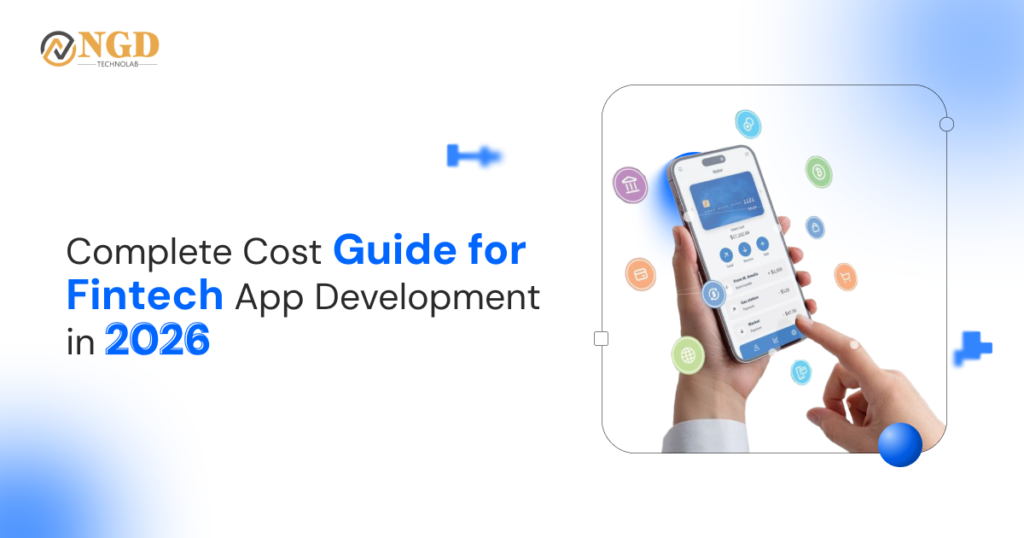
    Complete Cost Guide for Fintech App Development in 2026

    Complete Cost Guide for Fintech App Development in 2026 Harshid Patel Edit Template Table of content Add a header to begin generating the table of contents Fintech apps have completely changed how people handle banking, payments, investments, and financial services. In 2026, more businesses are building fintech apps because digital payments and mobile banking have become essential. But one important question every startup asks is: How much does fintech app development cost?Fintech pricing depends on features, security layers, compliance needs, platform choice, UI/UX design, and maintenance. In this blog, we break down the full cost structure so you can budget properly and build a competitive fintech app successfully. Android Studio: Unveiling the Power of Android App Development Development Complexity and Features Cost Basic fintech apps cost lower Simple apps like UPI payments or wallet-based services are affordable since they need fewer security layers and basic screens. They are ideal for businesses starting digital payment services with limited budgets. Advanced features increase pricing Investment tools, peer-to-peer lending, loan automation, and smart budgeting features require detailed coding and advanced functionality. The more features added, the more development hours required, increasing cost. Personalization and AI-based tools Fintech apps often offer smart suggestions to users such as spending analysis or credit score insights. These require AI and data analytics integration, which raises overall pricing but boosts user engagement. Fraud detection and KYC automation Real-time fraud detection systems and automated KYC verification require strong backend security and additional APIs, resulting in higher development investment but better safety. Cross-platform performance scaling Apps that support large user bases need scalable architecture to avoid server crashes during high usage. Extra cost ensures smooth performance and great user experience even under heavy load. Strong Security & Compliance Requirements Pricing Bank-level encryption Fintech apps handle sensitive data like card numbers and bank records. High-standard encryption protects users from hacking risks, making the app secure but increasing security cost. Multi-factor authentication systems  Features like OTP login, biometrics, and secure token verification improve app safety. Extra coding time and specialized testing raise development cost. Legal compliance & certifications Australian financial rules like AML (Anti-Money Laundering) and PCI-DSS compliance add mandatory expenses to keep the app legally approved for banking operations. Secure payment APIs integration Services such as Google Pay, PayPal, Stripe, or banking gateways require secure API integrations to ensure smooth transactions for users. Data backup & cyber attack protection Firewall, risk monitoring, and data backup systems are important to save the business from damage during security threats or system failure. Also to read:-   Detailed Cost Breakdown for Website Development in Australia UI/UX Design & User Flow Optimization Cost Simple and clean design required Fintech apps must be easy to use for people of all ages. Clear design improves trust and user retention but takes time to plan properly. Prototyping and user journey mapping Before coding, designers create app flows to reduce confusion during money transfer, bill payments, or loan requests. This design phase adds cost but improves success rate. Brand identity integration Custom icons, color themes, and typography help build strong brand recognition and trust in financial services, especially in Australia’s competitive digital banking market. Micro-interactions and animations Smooth animations during transactions help users feel secure and guide them throughout the app process. It enhances experience but needs expert-level UI skills. High accessibility standards Fintech apps must follow accessibility practices to support users with visual or physical limitations, improving usability for everyone. Backend Engineering & Data Infrastructure Cost Real-time performance handling Fast transactions and live account updates are must-have features. Servers, databases, and APIs must perform quickly under large traffic loads. Cloud hosting and database management Fintech apps require strong hosting setups like AWS or Google Cloud for secure data management. Higher hosting configuration increases the price but ensures reliability. Data analytics integration Smart dashboards help businesses monitor transactions, user behavior, and fraud detection — improving business decisions and customer support quality. API integration for banking operations  Fintech apps depend heavily on third-party data sources. Every external API added increases development resources and specialized talent requirements. DevOps & automated deployment  To maintain uptime and release quick updates, DevOps practices are used. This ensures stability but requires additional cost. Testing, Security Audits & QA Cost Functional and usability testing Developers test every button and transaction flow to ensure a smooth experience. This avoids app crashes and protects reputation. Performance stress testing Apps are tested under heavy usage to make sure servers don’t slow down when many transactions are happening at once — essential for fintech success. Penetration testing & bug fixing  Security professionals try hacking techniques to identify weak points. Fixing these issues ensures safety but increases the required hours. Regulatory testing checks Australian financial regulations require secure verification and documentation to prove the app protects customer data properly. Continuous quality improvement Even after launch, testing teams monitor feedback, update performance, and fix any newly discovered bugs. Testing, Security Audits & QA Cost Regular updates improve security Hackers always find new ways to break systems, so updating security measures is important. Continuous updates add monthly maintenance cost. New feature upgrades Fintech companies integrate new options like crypto wallets, EMI calculators, or investment plans. Extra features increase long-term development expense. OS version compatibility Mobile OS updates require regular testing and fixes to keep apps running smoothly across Android and iOS versions. Customer support systems In-app support chat, customer ticketing, and 24/7 help desks improve user trust and satisfaction but add operational cost. Scalability improvements As the app grows, more users means more servers and support tools — which increases budget needs. Conclusion Fintech app development cost in 2026 depends on security features, platform choice, complexity, and maintenance needs. Building a strong and secure fintech app is a smart investment because users trust reliable digital services for managing money. Choosing professional developers with fintech experience ensures high-level security, great user experience, and faster growth opportunities. Frequently Asked Questions What is needed to create a secure fintech app?  High-level encryption, KYC verification, multi-factor login,

    Complete Cost Guide for Fintech App Development in 2026 Read More »

    How-to-Use-AI-and-ML-to-Detect-and-Reduce-App-Crashes-and-Bugs

    How to Use AI and ML to Detect and Reduce App Crashes and Bugs

    How to Use AI and ML to Detect and Reduce App Crashes and Bugs Harshid Patel Edit Template App crashes and bugs are the top reasons users uninstall mobile apps within seconds of installation. Even a small performance glitch can destroy trust and reduce retention. Modern digital businesses must ensure apps work fast, stable, and error-free. Artificial Intelligence (AI) and Machine Learning (ML) make this possible by detecting issues before they impact users, speeding up debugging, and improving overall app performance. This blog explains how AI and ML can help reduce crashes, fix bugs automatically, and keep mobile apps running smoothly on all devices. Table of content Add a header to begin generating the table of contents AI Provides Real-Time Crash Detection and Quick Fix Actions AI monitors apps continuously and detects crashes the moment they occur. Instant Crash Alerts with Detailed Reports AI automatically tracks errors with exact details like device information, OS version, slow API responses, and user actions that triggered the crash. This saves hours of manual analysis and improves response time. Finds Root Causes Faster Machine Learning algorithms identify patterns behind recurring crashes. Instead of only showing the error, AI helps developers understand why the crash happened, leading to faster and more accurate fixes. Reduces User Impact Significantly With immediate error tracking, development teams can fix issues before large groups of users face the same problem. This prevents negative reviews and uninstall spikes. Predictive Analytics Prevent Crashes Before Release ML uses past data to predict future problems and avoid sudden failures.   ML Learns From Crash History AI analyzes all previous errors and identifies risky modules or actions. If a similar situation might happen again, AI alerts developers early to prevent crashes before users see them. Improves App Stability Across Devices Predictive models track behavior differences across operating systems, network conditions, and devices. This ensures smooth performance for Android and iOS users globally. Reduces User Churn and Protects Reputation Apps that rarely crash receive better ratings, more downloads, and stronger retention. Predictive protection plays a major role in keeping users satisfied long-term. Also to read:-   How to Enhance Your Mobile App Using Real User Feedback Automated Bug Fixing Saves Time & Development Cost AI automates repetitive debugging tasks and reduces developer workload. Self-Healing Capabilities in Apps ML can automatically correct minor bugs, optimize slow functions, and restart crashed components without user interruption. This ensures apps remain stable even before updates roll out. Faster Development Cycles Since AI handles repeated issues, developers can focus on building advanced features and UI improvements. This results in frequent updates and better user experience with lower cost. Better Quality Control Automated bug fixes reduce the risk of introducing new errors while editing code manually. AI ensures every update improves the app—not breaks it. Smarter QA Testing with AI Automation AI upgrades testing accuracy and performance during development. Advanced Test Coverage AI replicates real user behavior with simulations, helping uncover hidden UI/UX bugs that human testers may overlook. This ensures complete quality testing before launch. Continuous Testing With Every Update When developers add changes, AI re-tests the entire system automatically to ensure compatibility. This prevents crashes after new feature releases and OS updates. Saves Time & Improves Release Quality Test automation speeds up the delivery cycle, enabling quicker deployment while maintaining strong performance and reliability for all users. Performance and Security Optimization Through ML Insights AI helps apps perform better and stay secure from crash-inducing risks. Detects Performance Bottlenecks Early AI tracks issues such as slow APIs, memory leaks, and overheating. It highlights optimization points that help improve loading speed and screen response time. Prevents Security Bugs That Cause Failures  ML instantly identifies unusual login attempts, harmful requests, or suspicious behavior that could break the app. This ensures safe and crash-free user experience. Improves Device Compatibility AI ensures your app adapts smoothly to different models, screen sizes, and OS upgrades—delivering consistency to a wide audience with zero manual effort. Conclusion AI and ML bring a smarter, preventive approach to app maintenance. They detect crashes instantly, automate bug fixing, analyze performance, and prevent security threats. With these advanced technologies, businesses can avoid uninstall risks, improve user satisfaction, boost ratings, and deliver future-ready mobile apps. The companies that implement AI-powered app monitoring today will lead the competitive market tomorrow with confidence and trust. Frequently Asked Questions Why mobile apps crash frequently?  Common reasons include memory overload, coding issues, network problems, and device compatibility errors. How does AI help reduce app crashes? AI tracks errors in real time, predicts future bugs, and ensures quick fixes to deliver a stable experience. Does ML improve app security? Yes. Machine Learning detects suspicious activities and prevents attacks that may cause app failure. Can automation reduce app maintenance costs?  Absolutely. Automated debugging and testing save developer time and lower long-term maintenance expenses. How does AI improve app ratings on the Play Store or App Store? When users experience smooth performance and fewer crashes, they leave better reviews, improving ranking and installs. Get Free consultation and let us know about your custom web and Mobile App project idea Over 13+ years of work experience, we have built 210+ web and mobile apps We can help you with Dedicated Developer delivering high-quality development Custom Mobile App Development Innovative Solution For Startups and Enterprise Contact Us Edit Template Latest Blogs Explore the Latest Blogs on Trends and Technology. How to Use AI and ML to Detect and Reduce App Crashes and Bugs Read More How to Enhance Your Mobile App Using Real User Feedback Read More How Mobile Apps Use AI to Give Smart Replies and Quick Support Read More Edit Template

    How to Use AI and ML to Detect and Reduce App Crashes and Bugs Read More »

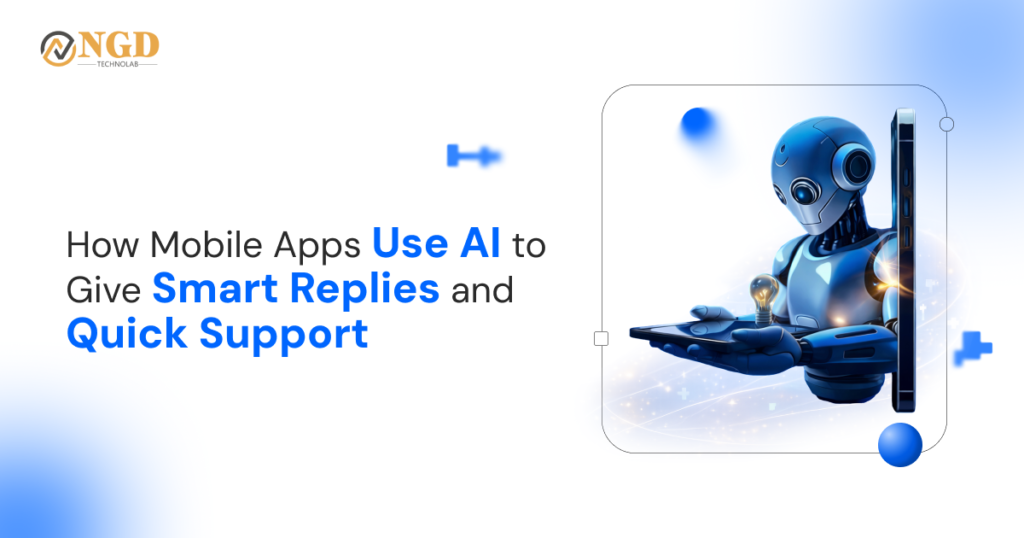
    How-Mobile-Apps-Use-AI-to-Give-Smart-Replies-and-Quick-Support

    How Mobile Apps Use AI to Give Smart Replies and Quick Support

    How Mobile Apps Use AI to Give Smart Replies and Quick Support Harshid Patel Edit Template Artificial Intelligence has become a key part of mobile app development. Users today expect instant replies, faster guidance, and friendly support without waiting. AI brings these features into apps through chatbots, smart replies, voice assistants, and predictive assistance. From e-commerce to finance apps, AI ensures users receive proper help quickly. It also reduces customer support costs and improves business performance. This blog explains how AI makes mobile apps smarter, more helpful, and essential for modern digital success. Table of content Add a header to begin generating the table of contents Android Studio: Unveiling the Power of Android App Development AI Chatbots Provide 24/7 Smart Customer Support Users receive help instantly without waiting for a human. Instant Replies Anytime AI bots reply in less than a second, solving common issues like login errors, order details, or general information. This keeps users happy and prevents them from uninstalling or leaving the app. Multiple Users Supported Together A human agent can chat with only a few people at the same time, but an AI chatbot handles hundreds or thousands of customers instantly. This improves service efficiency during high traffic hours. Support Across Multiple Channels AI chatbots work inside the app, websites, WhatsApp, and social platforms. Customers can reach support from wherever they prefer, which increases satisfaction and trust in the brand. Smart Replies Make Messaging Faster & Smoother Context-Based Suggestions The AI scans the conversation and suggests ready replies like “Check Status,” “Cancel Order,” or “Need Help?” This reduces the time users spend typing and keeps support smooth. Handles Messy Language Too Even if a user types short words, spelling mistakes, or emojis, AI understands the meaning and provides the right reply. This creates a more natural chat experience for all age groups. Can Transfer to Human Agent When the system detects a complicated issue, it smoothly forwards the chat to a human expert. This ensures users always get proper help without feeling stuck. Personalized AI Responses Improve Engagement & Conversions Learns User Behavior AI tracks what users search,click, save, or purchase to provide relevant support. This creates a more friendly connection and helps users complete tasks faster. Smarter Recommendations From suggesting food options to financial plans or product alternatives, AI responses guide users toward decisions that match their needs. This increases conversions and boosts business revenue naturally. Builds Long-Term Loyalty When support feels personalized and easy, users feel comfortable returning again and again. Strong personalization helps apps maintain high retention rates. Also to read:-   Why Your Business Website Needs Regular Security Checks in 2026 AI Reduces Support Costs & Improves Business Productivity Cuts Down Repetitive Tasks 70%+ of support questions are repeated. AI handles these automatically so staff can focus on real customer problems that need human decision-making. Improves Team Efficiency Support teams spend less time on small tasks and more time on high-value situations. This boosts response quality and overall productivity without hiring extra employees. Easy to Scale Anytime When user count increases suddenly (like sale events), AI can scale instantly. Startups save money as they grow because AI does not need breaks, salaries, or long training.   AI Voice Bots Make Support More Friendly & Human-Like Hands-Free Communication Users speak naturally like talking to a friend, which reduces effort and makes support easy for visually challenged and elderly users who struggle with typing. Faster Problem Solving Voice bots understand accent, tone, and intent to provide quick support. For tasks like checking booking details or bill payments, voice is faster than typing. Local Language Support AI supports multiple languages to help businesses expand globally. Customers feel comfortable when support speaks their native language. Conclusion AI has changed how mobile apps support users. Smart replies, chatbots, voice bots, and predictive automation ensure users always get fast help and easy navigation. Businesses save money, boost productivity, increase conversions, and build long-term customer loyalty. In 2026 and the future, any business using AI in mobile apps will grow faster, perform smarter, and win more customers. The world of app support is fully shifting toward Automation + AI — and there is no looking back. Frequently Asked Questions How does AI help mobile apps give quick support? AI replies instantly to questions and solves easy problems automatically, reducing waiting time for users. What is a smart reply feature in apps?  It is an AI-based suggestion tool that helps users reply faster with ready-made recommendations based on chat context. Can AI replace human support?  No. AI handles simple tasks while human teams focus on complex cases. Both work together for better results. Why should businesses add AI chatbots in apps?  AI improves user satisfaction, lowers support costs, boosts conversions, and gives 24/7 quick support to customers. Which company builds mobile apps with AI integration? NGD Technolab develops AI-powered mobile apps with chatbot support, smart replies, and automation for better experience and business growth. Get Free consultation and let us know about your custom web and Mobile App project idea Over 13+ years of work experience, we have built 210+ web and mobile apps We can help you with Dedicated Developer delivering high-quality development Custom Mobile App Development Innovative Solution For Startups and Enterprise Contact Us Edit Template Latest Blogs Explore the Latest Blogs on Trends and Technology. How Mobile Apps Use AI to Give Smart Replies and Quick Support Read More Why Your Business Website Needs Regular Security Checks in 2026 Read More Why Minimalist Website Design Works Better for Today’s Users Read More Edit Template

    How Mobile Apps Use AI to Give Smart Replies and Quick Support Read More »

    How-to-Build-an-eCommerce-Mobile-App-Using-Flutter-in-2025

    How to Build an eCommerce Mobile App Using Flutter in 2025

    How to Build an eCommerce Mobile App Using Flutter in 2025 Harshid Patel Edit Template The e-commerce sector is literally booming in 2025. People are purchasing everything from groceries to luxury items all via the internet. It is not just a choice anymore for businesses; they are simply the lifeline of successful digital enterprises. Customers want applications to be quick, safe, and user-friendly. In case your app is slow and old-fashioned, users will be at your rival’s doorstep in less than a minute. Google’s open-source framework, Flutter, is the answer to this problem. One single codebase for Android and iOS makes Flutter a great tool to save businesses time, reduce their expenses, and provide customers with a smooth shopping process. Flutter is one of the most clever methods for a startup and a company's 2025 eCommerce mobile app m-business to get the right way to work. Table of content Add a header to begin generating the table of contents 1. Android Studio: Unveiling the Power of Android App Development 1. Why eCommerce Apps Matter in 2025 Shoppers in 2025 spend over 4–5 hours a day on mobile apps. An eCommerce app allows businesses to connect directly with users, provide personalized deals, and simplify shopping journeys. Unlike websites, apps are faster, more interactive, and always accessible with a single tap. This direct presence on the customer’s phone builds stronger engagement and boosts sales. 2. Why Choose Flutter for eCommerce Apps Flutter gives startups a clear advantage. Instead of writing separate code for Android and iOS, businesses can launch apps for both platforms using the same codebase. This reduces development costs by up to 40% and shortens time-to-market. With Flutter’s hot reload, developers can instantly see changes while building, which speeds up testing and updates. Plus, its wide library of widgets ensures smooth, visually appealing designs. 3. Planning Your App 3.1 Defining Goals Before coding, define what your app should achieve. Are you targeting young fashion shoppers, families buying groceries, or B2B businesses? Clear goals help prioritize features. For example, a grocery delivery app must focus on live order tracking, while a clothing app may need filters and image search. 3.2 Doing Market Research In 2025, eCommerce is competitive. Study your rivals to see what they do right and where they fail. Check customer reviews to understand pain points. Track trends such as AR product try-ons, one-click checkout, and AI-driven recommendations. Research ensures your app isn’t just functional but also stands out. 3.3 Must-Have Features Essential features for eCommerce apps include: Login & Profiles: Easy sign-up with email, phone, or social accounts. Product Catalog: Well-organized categories with filters. Cart & Checkout: Seamless multi-payment options like UPI, cards, and wallets. Order Tracking: Live shipping updates. Push Notifications: Alerts for offers and order status. Adding extras like voice shopping or AI chatbots can make your app future-ready. 4. Designing the App 4.1 UI/UX Best Practices Design can make or break your app. Keep navigation simple and use clean layouts so users don’t get lost. Use high-quality product images and videos for realistic previews. Speed also matters—if your app takes more than 3 seconds to load, users may quit. 4.2 Mobile-First Approach Since most customers shop through phones, design should always be mobile-first. Responsive layouts, easy buttons, and thumb-friendly navigation ensure smooth use across screen sizes. A mobile-first strategy builds loyalty and reduces cart abandonment. 5. Developing with Flutter Setting Up the Environment Install Flutter SDK and choose a backend like Firebase or Node.js for managing user accounts, payments, and data storage. Set up APIs for shipping, analytics, and chat support. Building Core Features Begin with basics like login, catalog, cart, and secure checkout. Gradually add advanced features such as AR shopping, loyalty points, or personalized recommendations. Flutter’s flexibility allows you to upgrade easily as your business grows Also to read:-   Voice and Visual Search Optimisation The Next Big Thing in SEO 6. Security and Testing Essential Security Measures Security is non-negotiable in e-commerce. Add two-factor authentication, biometric login, and encrypted payments to protect sensitive information. Compliance with PCI DSS standards builds customer trust. Testing the App Test the app across devices and platforms to ensure speed, usability, and compatibility. Conduct beta testing with small user groups to gather real feedback. Fixing bugs before launch saves time and avoids bad reviews. 7.Launching and Marketing the App Once ready, launch your app on the Google Play Store and Apple App Store. Promote it with social media campaigns, influencer partnerships, and referral discounts. Encourage users to leave reviews—positive ratings improve trust and visibility in app stores. 8.Maintaining and Scaling An eCommerce app is never “finished.” Regular updates keep your app fast and secure. Add new features like reward programs, subscription plans, or advanced search as your customer base grows. A well-maintained app keeps users engaged and loyal. 9. Advantages of Flutter for eCommerce Apps One codebase for Android and iOS Faster development with hot reload Smooth performance close to native apps Highly customizable UI for modern designs Backed by a strong developer community Conclusion Building an eCommerce mobile app with Flutter in 2025 is still a wise business decision. Starting from a saved cost to speed and a rich user experience, Flutter allows startups the same tools required to survive in a mobile-first world. Frequently Asked Questions Why is Flutter the best choice for an eCommerce app? It is so because Flutter supports both Android and iOS with the same codebase, which results in a big saving of time and money and a service with no disruption. What is the time frame for building a Flutter app? Generally, a simple app goes for 3–4 months, and the one with features such as AR or AI can prolong up to 9 months. Do Flutter apps have the capability to execute safe payment transactions? Definitely, Flutter is compatible with several payment gateways and also supports the usage of secure code for payment. Is it recommended to use Flutter for the startup of the business? Of course! The brand's

    How to Build an eCommerce Mobile App Using Flutter in 2025 Read More »

    The-Cost-of- Maintaining-a-Mobile- App-What- Startups-Must-Know

    The Cost of Maintaining a Mobile App What Startups Must Know

    The Cost of Maintaining a Mobile App What Startups Must Know Harshid Patel Edit Template Building a mobile app is just the first milestone of your startup journey. The real effort begins after the app is launched. While many startups focus mainly on development costs, they often overlook the ongoing maintenance costs that come after release. A well-maintained app ensures smooth performance, better security, and user satisfaction. On the other hand, ignoring app maintenance can result in poor reviews, low ratings, app store removal, and even loss of customers. In this blog, we’ll explore the cost of maintaining a mobile app, what it includes, and what every startup must know before planning their budget. Table of content Add a header to begin generating the table of contents 1. Why Mobile App Maintenance Is Important Think of your app like a car — if you don’t service it regularly, it will break down. Mobile apps are the same. Regular updates ensure bug-free performance, stronger security, and a better user experience. Startups especially cannot afford negative reviews in their early days, so keeping apps updated is crucial for survival and growth. 2. What Does Mobile App Maintenance Include? Bug Fixes and Updates No app is perfect. After launch, users often report glitches like slow loading, crashes, or screen freezes. Regular bug fixes keep the app running smoothly. Updates also make sure the app works with the latest Android and iOS versions. Security Patches With rising cyberattacks, security cannot be ignored. Maintenance involves adding security patches to fix vulnerabilities. This helps protect sensitive user data and ensures compliance with data protection laws. A small security issue can damage your brand’s reputation, so startups must treat it as a top priority. Feature Enhancements User expectations change quickly. Startups need to keep improving features or adding new ones to stay competitive. For example, an e-commerce app may add new payment options, while a food delivery app may add live tracking. These enhancements fall under app maintenance. Server and Hosting Costs Every app depends on servers to handle user requests and store data. Maintenance includes paying for hosting, cloud storage, and backups. As the number of users grows, server costs also increase. Choosing scalable App Store Compliance Apple and Google regularly update their app store policies. If your app does not meet new requirements, it can be removed. Regular maintenance ensures your app remains compliant with all guidelines, preventing penalties or bans. 3. Factors Affecting App Maintenance Cost Type of App The complexity of the app directly impacts cost. For example, a simple calculator app may need little maintenance, while a fintech or gaming app will require continuous updates and security checks. Technology Stack The programming language, frameworks, and backend systems used can affect costs. Cross-platform apps may be cheaper to maintain since they use a single codebase, while native apps may require separate updates for iOS and Android. Frequency of Updates Apps that roll out monthly updates with new features will naturally cost more to maintain compared to apps that update occasionally. However, frequent updates also keep users engaged. User Base Size The more users you have, the higher the backend and server usage. A large user base means more data, more requests, and higher maintenance costs. 4. How Much Does App Maintenance Cost? On average, maintenance costs are around 15–20% of the original development cost per year. For example: If your app cost ₹10 lakh to build, expect about ₹1.5–2 lakh annually for maintenance. For simple apps, the cost may be lower, but complex apps like social media, gaming, or finance apps may require even more. 5. Tips for Reducing App Maintenance Expenses Use cross-platform development: This reduces costs since one codebase works for both Android and iOS. Plan features smartly: Avoid adding unnecessary features that increase long-term maintenance. Automate monitoring and testing: Automated tools can quickly detect bugs or security risks before they grow. Choose scalable hosting: Services like AWS, Azure, or Google Cloud adjust resources automatically so you only pay for what you use. 6. Why Startups Should Never Ignore App Maintenance  For startups, app maintenance is not an extra cost — it’s an investment. Neglecting it can lead to: User loss due to bugs and poor performance. Security risks like data leaks and hacking. App store removal for not following compliance rules. On the other hand, startups thatprioritize maintenance gain: Higher user retention Better app ratings and reviews Long-term brand trust Conclusion The cost of maintaining a mobile app depends on many factors, but startups should always plan for it. On average, expect about 15–20% of your development budget to go towards annual maintenance.   This cost covers updates, bug fixes, server costs, and new features — all of which are critical to keeping your app secure, smooth, and competitive. For startups, regular maintenance is the difference between sustaining growth and losing users. Frequently Asked Questions Why is app maintenance important for startups?  It keeps your app secure, updated, and bug-free, helping startups maintain good performance and user trust. Regular updates also prevent major technical issues later. How much does app maintenance cost yearly?  Usually, it costs around 15–20% of your app’s total development cost per year, depending on features and user size. Can I reduce app maintenance costs?  Yes, by using cross-platform tools, scalable cloud hosting, and automated testing to save time and long-term costs. What happens if I skip app maintenance? Your app may face crashes, slow performance, or security risks — which can lead to poor ratings or app store removal. Does a larger user base increase costs? Yes, more users mean higher server load and backend management, which slightly increases maintenance expenses. Get Free consultation and let us know about your custom web and Mobile App project idea Over 13+ years of work experience, we have built 210+ web and mobile apps We can help you with Dedicated Developer delivering high-quality development Custom Mobile App Development Innovative Solution For Startups and Enterprise Contact Us Edit Template

    The Cost of Maintaining a Mobile App What Startups Must Know Read More »

    Scroll to Top