latest header logo

Let's Create Something Extraordinary Together

Your Trusted Partner in Digital Innovation

Reach out to explore tailored solutions designed to transform your business.

Transparent Project Insights

Understand your project’s scope clearly, with no unexpected surprises

Step Into the Future

Share your ideas, and we’ll connect with you within 16 hours (excluding holidays) to bring your vision to life.

Crafting Excellence for You

From mobile apps to web solutions and ERP systems, we’re here to build technology that works perfectly for you.

Quick and Reliable Response

Share your vision, and we’ll connect within 16 hours (excluding holidays).


    Mobile App

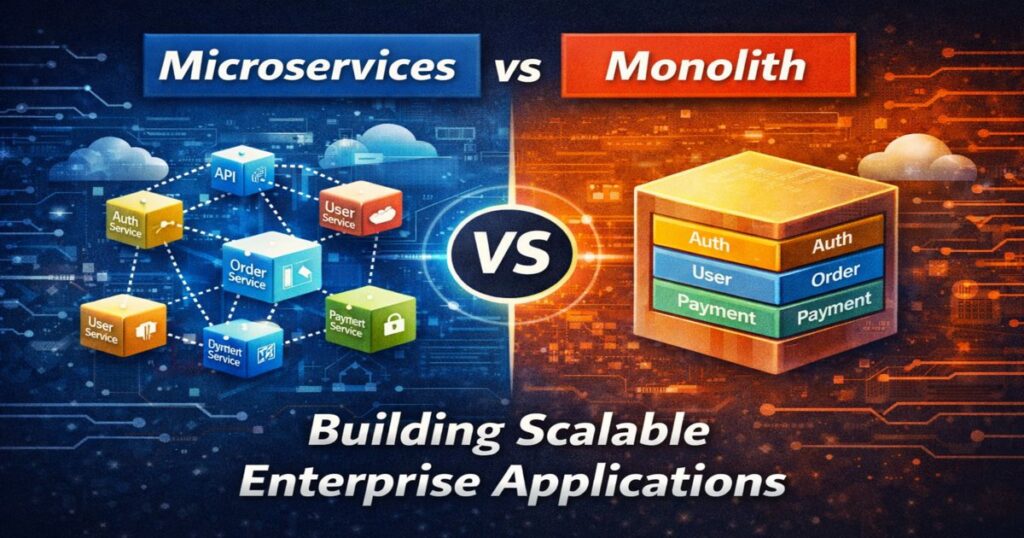
    Microservices vs Monolith: Building Scalable Enterprise Applications

    Microservices vs Monolith: Building Scalable Enterprise Applications Harshid Patel Edit Template In 2026, building scalable and high-performing applications is a top priority for businesses. As applications grow in complexity, choosing the right architecture becomes critical for long-term success. Two of the most common approaches are monolithic architecture and microservices architecture. Each has its own advantages, challenges, and use cases depending on the size and needs of the business. While monoliths offer simplicity and faster initial development, microservices provide flexibility, scalability, and better fault isolation. Table of content Add a header to begin generating the table of contents 1. Android Studio: Unveiling the Power of Android App Development 1. Why Architecture Choice Matters The architecture you choose directly impacts performance, scalability, and development efficiency. 1.1 Scalability Requirements As your application grows, it must handle increased traffic and data efficiently. 1.2 Development Speed The right architecture can speed up development and deployment processes. 1.3 Maintenance and Flexibility A good architecture makes it easier to update and maintain your application over time. 2. What is Monolithic Architecture 2.1 Definition A monolithic application is built as a single unified codebase where all components are tightly integrated. 2.2 How It Works All functionalities such as UI, business logic, and database operations are part of one system and deployed together. 2.3 Key Advantages Monoliths are easier to develop initially, simpler to deploy, and require less complex infrastructure. 2.4 Limitations As the application grows, it becomes harder to scale, maintain, and update without affecting the entire system. 3. What are Microservices 3.1 Definition Microservices architecture breaks an application into smaller, independent services that communicate through APIs. 3.2 How It Works Each service handles a specific function and can be developed, deployed, and scaled independently. 3.3 Key Advantages Microservices offer better scalability, flexibility, fault isolation, and faster deployment cycles. 3.4 Challenges They require more complex infrastructure, service management, and monitoring. 4. Key Differences Between Microservices and Monolith Scalability Monolith scales as a whole system, while microservices allow individual components to scale independently. Development Approach Monolith uses a single codebase, whereas microservices use multiple smaller services. Deployment Monolith is deployed as one unit, while microservices can be deployed independently. Maintenance Monolith becomes harder to maintain as it grows, while microservices are easier to manage in smaller parts. Technology Flexibility Microservices allow different technologies for different services, while monolith typically uses a single stack. Also to read:-   Cloud Cost Optimization: Best Practices to Reduce Your AWS/Azure Bill When to Choose Monolithic Architecture Small to Medium Applications Ideal for startups or small projects with limited complexity. Faster Initial Development Helps launch products quickly with minimal infrastructure. Limited Team Size Works well when you have a small development team. When to Choose Microservices Large-Scale Applications Best for enterprise systems with complex requirements. High Scalability Needs Allows scaling specific components without affecting the entire system. Continuous Deployment Supports faster updates and independent releases. Large Development Teams Enables multiple teams to work on different services simultaneously. Conclusion In 2026, there is no one-size-fits-all solution when choosing between microservices and monolith architecture. Monolith is ideal for simplicity and faster development, while microservices provide scalability, flexibility, and long-term growth advantages. The right choice depends on your business requirements, team capabilities, and future plans. Understanding both approaches helps you build a scalable, efficient, and future-ready enterprise application. Frequently Asked Questions What is the main difference between microservices and monolith? Monolith is a single unified application, while microservices consist of multiple independent services. Which architecture is better for startups? Monolith is usually better for startups due to simplicity and faster development.   Are microservices more scalable? Yes. Microservices allow individual components to scale independently. Is microservices architecture expensive? It can be more expensive due to infrastructure and management complexity. Can I switch from monolith to microservices later? Yes. Many businesses start with monolith and migrate to microservices as they grow. Get Free consultation and let us know about your custom web and Mobile App project idea Over 14+ years of work experience, we have built 210+ web and mobile apps We can help you with Dedicated Developer delivering high-quality development Custom Mobile App Development Innovative Solution For Startups and Enterprise Contact Us Edit Template Latest Blogs Explore the Latest Blogs on Trends and Technology. Microservices vs Monolith: Building Scalable Enterprise Applications Read More Cloud Cost Optimization: Best Practices to Reduce Your AWS/Azure Bill Read More Leveraging Chatbots and Conversational AI in Marketing Automation Read More Edit Template

    Microservices vs Monolith: Building Scalable Enterprise Applications Read More »
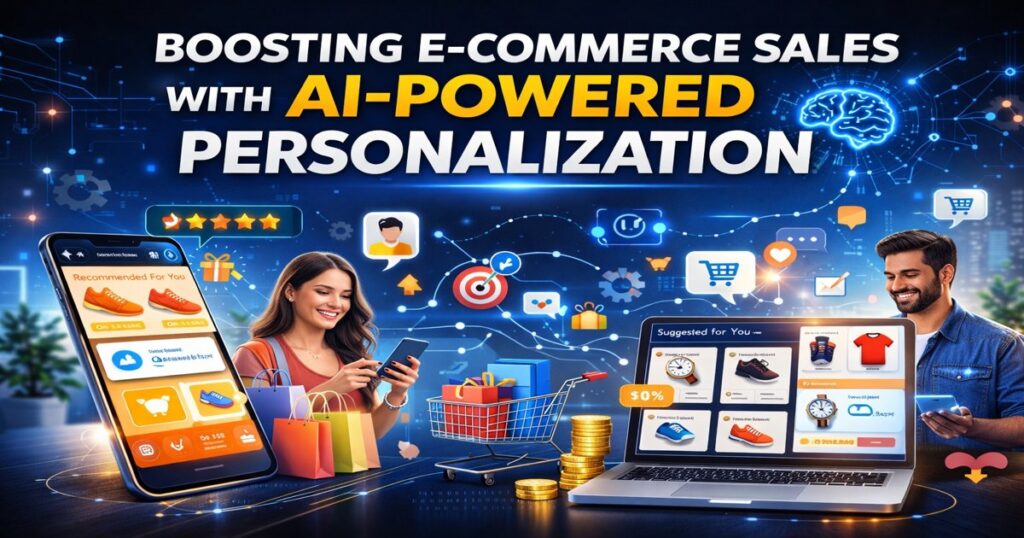
    Boosting E-commerce Sales with AI-Powered Personalization

    Boosting E-commerce Sales with AI-Powered Personalization Harshid Patel Edit Template E-commerce in 2026 is no longer just about listing products online — it is about delivering highly personalized shopping experiences that convert visitors into loyal customers. Customers today expect brands to understand their preferences, recommend relevant products, and provide a seamless shopping journey. Businesses that fail to personalize lose customers to competitors who offer smarter and more engaging experiences. Artificial Intelligence (AI) is making this possible at scale. From product recommendations to personalized offers and dynamic content, AI-powered personalization is helping e-commerce businesses increase sales and improve customer satisfaction. Table of content Add a header to begin generating the table of contents 1. Android Studio: Unveiling the Power of Android App Development 1. Why Personalization Matters in E-commerce Customer expectations have changed significantly, making personalization essential. 1.1 Changing Customer Behavior Customers prefer brands that understand their needs and show relevant products instead of generic listings. 1.2 Higher Competition With thousands of online stores offering similar products, personalization becomes a key differentiator. 1.3 Impact on Sales Personalized experiences increase conversion rates, average order value, and customer retention. 2. What is AI-Powered Personalization Understanding the concept helps businesses implement it effectively. 2.1 Role of Artificial Intelligence AI analyzes customer data such as browsing behavior, purchase history, and preferences to deliver tailored experiences. 2.2 How It Works Machine learning algorithms process large volumes of data to identify patterns and predict what customers are likely to buy next. 2.3 Key Benefits AI-powered personalization enables real-time recommendations, targeted marketing, and improved customer engagement. 3. Key AI Personalization Techniques 3.1 Product Recommendation Engines AI suggests products based on user behavior, similar purchases, and browsing history. Platforms like Amazon use this extensively to drive sales. 3.2 Dynamic Content Personalization Websites display different banners, offers, and product listings based on individual user preferences. 3.3 Personalized Email Marketing AI helps send targeted emails with product recommendations and offers tailored to each customer. 3.4 Smart Search and Filters AI improves search results by understanding user intent and showing the most relevant products. 3.5 Behavioral Targeting AI tracks user actions and triggers personalized offers or discounts at the right time to increase conversions. 4. How AI Increases E-commerce Sales Higher Conversion Rates Showing relevant products increases the chances of purchase. Increased Average Order Value Upselling and cross-selling become more effective with AI recommendations. Better Customer Retention Personalized experiences build stronger relationships and encourage repeat purchases. Reduced Cart Abandonment AI can trigger reminders, offers, or recommendations to bring customers back and complete purchases. Also to read:-   Top AI & Machine Learning Tools for Enhancing Customer Experience in 2026 Real-World Use Cases in 2026 Fashion E-commerce AI recommends outfits based on user style, preferences, and past purchases. Electronics Stores Customers receive personalized suggestions based on their browsing and buying patterns. Grocery Platforms AI suggests frequently bought items and creates personalized shopping lists. Beauty and Skincare AI recommends products based on skin type, preferences, and past usage. Challenges Businesses Should Consider Data Privacy Concerns Collecting and using customer data requires proper security and compliance with regulations. Implementation Cost Advanced AI tools may require investment in technology and expertise. Data Quality Personalization is only as good as the data collected. Poor data leads to poor recommendations. Choosing the Right Personalization Strategy Start Small Begin with basic recommendation engines and gradually expand to advanced personalization features. Focus on Customer Journey Identify key touchpoints where personalization can make the biggest impact. Use the Right Tools Choose AI platforms that integrate easily with your e-commerce system. Measure Performance Track metrics like conversion rate, average order value, and customer retention to evaluate success. Conclusion In 2026, AI-powered personalization is one of the most powerful tools for boosting e-commerce sales. Businesses that deliver personalized experiences can attract more customers, increase conversions, and build long-term loyalty. From product recommendations to targeted marketing, AI is transforming how e-commerce operates. Investing in personalization today is essential for staying competitive and maximizing revenue in the digital marketplace. Frequently Asked Questions What is AI-powered personalization in e-commerce? It is the use of AI to analyze customer data and deliver personalized shopping experiences, recommendations, and offers. How does personalization increase sales? By showing relevant products and offers, it improves conversion rates and encourages higher spending. Is AI personalization expensive? It can start with affordable tools and scale as your business grows. Can small businesses use AI personalization? Yes. Many tools offer scalable solutions suitable for small and medium businesses. Is customer data safe with AI systems? Yes, if proper security measures and compliance standards are followed. Get Free consultation and let us know about your custom web and Mobile App project idea Over 14+ years of work experience, we have built 210+ web and mobile apps We can help you with Dedicated Developer delivering high-quality development Custom Mobile App Development Innovative Solution For Startups and Enterprise Contact Us Edit Template Latest Blogs Explore the Latest Blogs on Trends and Technology. Boosting E-commerce Sales with AI-Powered Personalization Read More Top AI & Machine Learning Tools for Enhancing Customer Experience in 2026 Read More How 5G and Edge Computing Will Transform Mobile App Development in 2026 Read More Edit Template

    Boosting E-commerce Sales with AI-Powered Personalization Read More »

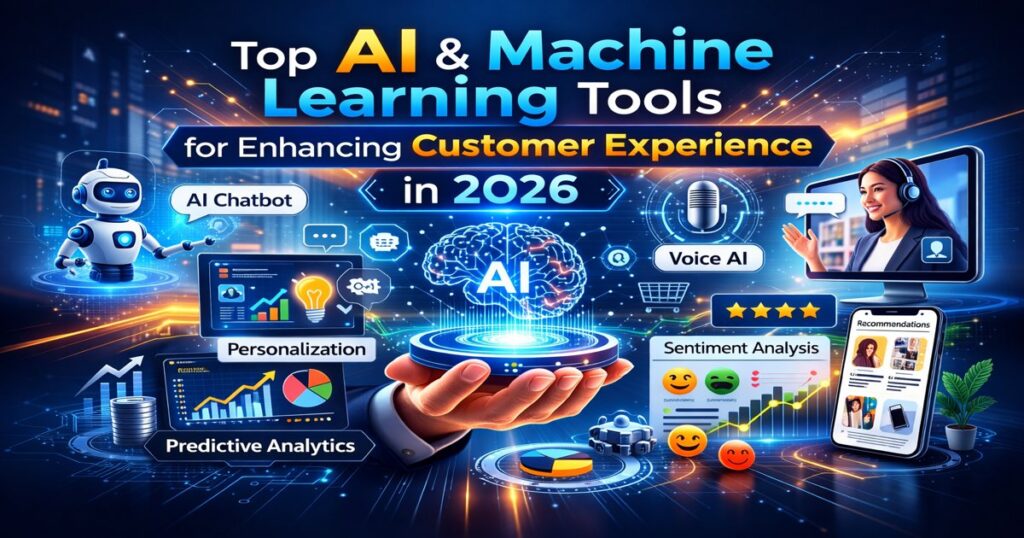
    Top AI & Machine Learning Tools for Enhancing Customer Experience in 2026

    Top AI & Machine Learning Tools for Enhancing Customer Experience in 2026 Harshid Patel Edit Template Customer experience has become the biggest competitive advantage for businesses in 2026. Customers no longer choose brands based only on price or product — they choose based on how smooth, fast, and personalized the experience is. Artificial Intelligence (AI) and Machine Learning (ML) are playing a major role in transforming how businesses interact with customers. From chatbots and recommendation engines to predictive analytics and automation, these technologies are helping companies deliver smarter and more personalized experiences. In 2026, businesses using AI-driven tools are seeing higher customer satisfaction, better retention, and increased revenue. This blog explores the top AI and machine learning tools that are enhancing customer experience and helping businesses stay ahead. Table of content Add a header to begin generating the table of contents 1. Android Studio: Unveiling the Power of Android App Development 1. Why Customer Experience Matters More in 2026 Customer expectations are higher than ever, and businesses must adapt quickly to stay competitive. 1.1 Rising Customer Expectations Customers expect instant responses, personalized recommendations, and seamless interactions across all platforms. 1.2 Increased Competition With more businesses offering similar products and services, experience has become the key differentiator. 1.3 Impact on Revenue A better customer experience leads to higher retention, more repeat purchases, and stronger brand loyalty. 2. What are AI and Machine Learning in Customer Experience Understanding how these technologies work helps businesses use them effectively. 2.1 Artificial Intelligence (AI) AI enables machines to simulate human intelligence, allowing systems to understand, learn, and respond intelligently. 2.2 Machine Learning (ML) ML is a subset of AI that allows systems to learn from data and improve performance over time without explicit programming. 2.3 Role in Customer Experience AI and ML help businesses analyze customer behavior, predict needs, automate interactions, and deliver personalized experiences at scale. 3. Top AI & Machine Learning Tools for Customer Experience 3.1 AI Chatbots and Virtual Assistants Tools like ChatGPT, Drift, and Intercom provide instant customer support 24/7. They handle queries, resolve issues, and guide users without human intervention. 3.2 Personalization Engines Platforms like Dynamic Yield and Adobe Target analyze user behavior to deliver personalized content, product recommendations, and offers. 3.3 Customer Data Platforms (CDPs) Tools like Segment and Salesforce CDP collect and unify customer data from multiple sources to create a complete customer profile. 3.3 Predictive Analytics Tools Platforms like IBM Watson and Google AI help businesses predict customer behavior, identify trends, and make data-driven decisions. 3.4 Voice and Speech Recognition Tools Tools like Amazon Alexa AI and Google Speech-to-Text enable voice-based interactions, improving accessibility and convenience. 3.5 Sentiment Analysis Tools AI tools analyze customer feedback, reviews, and social media to understand customer emotions and improve service quality. 4. How AI is Transforming Customer Experience Hyper-Personalization AI delivers highly personalized experiences based on user behavior, preferences, and past interactions. Faster Response Times Chatbots and automation reduce response times from hours to seconds, improving customer satisfaction. Proactive Customer Support AI can predict issues before they happen and provide solutions proactively. Omnichannel Experience Customers get a consistent experience across websites, apps, social media, and support channels. Also to read:-   How 5G and Edge Computing Will Transform Mobile App Development in 2026 Real-World Use Cases in 2026 E-commerce AI recommends products, personalizes offers, and improves checkout experiences. Banking and Finance AI-powered chatbots and fraud detection systems enhance security and customer support. E-Healthcare AI helps in patient support, appointment scheduling, and personalized treatment recommendations. SaaS Platforms AI improves onboarding, customer support, and user engagement through smart automation. Challenges Businesses Should Consider Data Privacy Concerns Handling customer data responsibly and complying with regulations is critical. Implementation Cost Advanced AI tools can require investment in infrastructure and expertise. Integration Complexity Integrating AI tools with existing systems can be challenging without proper planning. Choosing the Right AI Tools Based on Business Size Small businesses can start with simple tools like chatbots and analytics platforms, while larger enterprises can invest in advanced AI systems. Based on Customer Needs Choose tools that directly improve your customer journey and solve real problems. Scalability Ensure the tools can grow with your business and handle increasing data and users. Conclusion In 2026, AI and machine learning are no longer optional — they are essential for delivering exceptional customer experiences. Businesses that adopt these technologies can provide faster, smarter, and more personalized interactions that customers expect today. From chatbots to predictive analytics, AI tools are transforming how businesses connect with their customers. Investing in the right AI tools today will help you build stronger relationships, improve customer satisfaction, and drive long-term growth. Frequently Asked Questions What are AI tools for customer experience? AI tools help businesses automate interactions, analyze customer data, and deliver personalized experiences. Which AI tool is best for customer support? Chatbots like ChatGPT, Intercom, and Drift are widely used for customer support. Is AI expensive for small businesses? Many AI tools offer affordable plans, making them accessible for small businesses.   How does AI improve personalization? Market research helps identify user needs, competition, and trends, ensuring the app meets industry demands and attracts users. Is AI safe for handling customer data? Yes, if implemented properly with strong security and compliance measures. Get Free consultation and let us know about your custom web and Mobile App project idea Over 14+ years of work experience, we have built 210+ web and mobile apps We can help you with Dedicated Developer delivering high-quality development Custom Mobile App Development Innovative Solution For Startups and Enterprise Contact Us Edit Template Latest Blogs Explore the Latest Blogs on Trends and Technology. Top AI & Machine Learning Tools for Enhancing Customer Experience in 2026 Read More How 5G and Edge Computing Will Transform Mobile App Development in 2026 Read More Custom Software Development vs Ready-Made Software: Which is Better for Modern Businesses in 2026 Read More Edit Template

    Top AI & Machine Learning Tools for Enhancing Customer Experience in 2026 Read More »

    How 5G and Edge Computing Will Transform Mobile App Development in 2026

    How 5G and Edge Computing Will Transform Mobile App Development in 2026 Harshid Patel Edit Template Mobile app development is entering a new era in 2026 driven by two powerful technologies — 5G and edge computing. These technologies are not just improving speed but completely changing how mobile apps are built, deployed, and experienced by users. With faster connectivity, ultra-low latency, and real-time data processing, businesses can now create apps that were simply not possible a few years ago. From real-time gaming and AR experiences to smart healthcare and connected devices, the impact is massive. In 2026, businesses that leverage 5G and edge computing effectively are gaining a serious competitive advantage. This blog explains how these technologies are transforming mobile app development and what it means for your business. Table of content Add a header to begin generating the table of contents 1. Android Studio: Unveiling the Power of Android App Development 1. Why Mobile Apps Needed This Evolution Traditional mobile apps have always depended heavily on cloud infrastructure, but this approach has limitations in modern use cases. 2. What is 5G and Why It Matters 5G is the fifth generation of mobile network technology designed to deliver faster speeds and lower latency than previous generations. 2.1 Key Benefits of 5G 5G offers significantly higher speed, ultra-low latency, and the ability to connect a massive number of devices simultaneously. It also provides improved network stability and reliability. 2.2 Impact on Mobile Apps With 5G, mobile apps become faster, smoother, and more responsive. High-quality video streaming, real-time gaming, and complex app interactions become seamless without buffering or lag. 3. What is Edge Computing Edge computing is a technology that processes data closer to the user instead of relying entirely on centralized cloud servers. 3.1 How It Works Data is processed on local servers or nearby devices rather than being sent to distant data centers. This reduces the distance data needs to travel. 3.2 Why It Matters This approach significantly reduces latency, improves speed, and enables real-time decision-making which is critical for modern mobile applications. 4. How 5G and Edge Computing Work Together 5G provides ultra-fast connectivity while edge computing ensures that data is processed near the user. Together, they create a powerful ecosystem that allows mobile apps to deliver real-time performance, reduce delays, and improve overall efficiency. Also to read:-   Custom Software Development vs Ready-Made Software: Which is Better for Modern Businesses in 2026 Key Transformations in Mobile App Development Real-Time User Experience Apps can now deliver instant responses without delays. This is crucial for applications like gaming, finance, and live streaming. Advanced AR and VR Applications Augmented reality and virtual reality experiences become smoother and more immersive. Industries like real estate, education, and gaming benefit significantly. Smarter IoT Applications Connected devices such as smart homes, wearables, and industrial systems can communicate faster and more efficiently. Improved App Performance Heavy processing tasks can be handled at the edge, reducing the load on mobile devices and improving speed and battery performance. Enhanced Security Processing data closer to the source reduces the risk of exposure during transmission and improves overall security. Real-World Use Cases in 2026 Healthcare Real-time remote consultations, patient monitoring, and even advanced procedures become more reliable with minimal delay. E-commerce Faster loading apps, personalized experiences, and AR-based product previews improve customer engagement and conversions. Gaming Cloud gaming delivers high-quality, lag-free experiences similar to console-level performance on mobile devices. Smart Cities Traffic systems, surveillance, and public services operate more efficiently using real-time data processing. Challenges Businesses Should Consider Higher Initial Investment Implementing edge computing infrastructure and optimizing apps for 5G requires upfront investment. Development Complexity Building apps that fully utilize these technologies requires advanced architecture and skilled developers. Device Compatibility Not all users have 5G-enabled devices yet, so apps must still support older networks for wider reach. Choosing the Right Strategy When to Adopt Early Businesses in gaming, healthcare, IoT, and real-time services should adopt these technologies early to gain a competitive advantage. When to Wait If your app does not require real-time processing, a gradual adoption approach is more practical. Hybrid Approach Many businesses use a mix of cloud, edge, and traditional systems to balance performance, cost, and scalability. Conclusion In 2026, 5G and edge computing are transforming mobile app development at a fundamental level. Apps are becoming faster, smarter, and capable of delivering real-time experiences that modern users expect. Businesses that adopt these technologies early can unlock new opportunities, improve customer experience, and stay ahead of competitors. Ignoring these advancements means falling behind in an increasingly competitive digital landscape. Frequently Asked Questions What is the role of 5G in mobile app development? 5G provides faster speeds and lower latency, enabling apps to deliver smoother and more responsive user experiences. Are 5G and edge computing necessary for all apps? No. They are most beneficial for apps that require real-time data processing like gaming, IoT, and healthcare. How does edge computing improve mobile apps? Edge computing processes data closer to users, reducing delays and enabling real-time performance. Is it expensive to build apps using these technologies? Yes, initial costs can be higher, but long-term performance and scalability benefits make it worthwhile. Will 4G apps become obsolete in 2026? No. 4G will continue to exist, but 5G-enabled apps will offer significantly better performance. Get Free consultation and let us know about your custom web and Mobile App project idea Over 14+ years of work experience, we have built 210+ web and mobile apps We can help you with Dedicated Developer delivering high-quality development Custom Mobile App Development Innovative Solution For Startups and Enterprise Contact Us Edit Template Latest Blogs Explore the Latest Blogs on Trends and Technology. How 5G and Edge Computing Will Transform Mobile App Development in 2026 Read More Custom Software Development vs Ready-Made Software: Which is Better for Modern Businesses in 2026 Read More How CRM Helps Real Estate Businesses Manage Site Visits and Follow-Ups Efficiently in 2026 Read More Edit Template

    How 5G and Edge Computing Will Transform Mobile App Development in 2026 Read More »

    custom_vs_ready_software

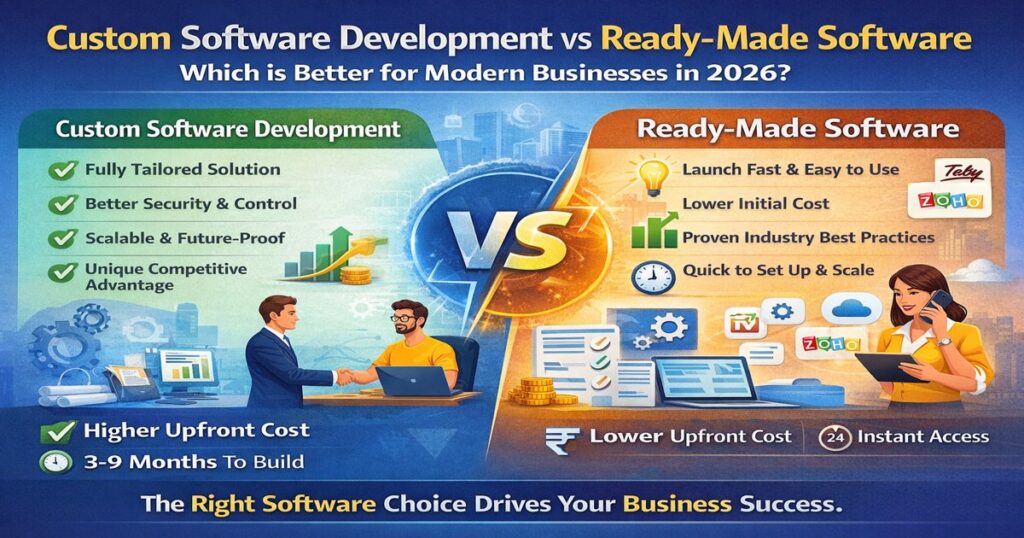
    Custom Software Development vs Ready-Made Software: Which is Better for Modern Businesses in 2026

    Custom Software Development vs Ready-Made Software: Which is Better for Modern Businesses in 2026 Harshid Patel Edit Template It looks like a simple decision but it actually has a big impact on your operations, costs, and long-term growth. In 2026 both options have become stronger than ever. Ready-made software has become more feature-rich and affordable. Custom software development has become faster and more accessible thanks to modern development tools and frameworks. Table of content Add a header to begin generating the table of contents 1. Android Studio: Unveiling the Power of Android App Development What is the Difference Between Custom and Ready-Made Software? Understanding both options clearly is the first step before making any decision. 2. Must-Have Features for a Bus Ticket Booking App 2.2 What is Ready-Made Software Ready-made software is a pre-built product designed for a broad range of businesses. You pay a subscription or licence fee and start using it immediately. Popular examples include Tally for accounting, Shopify for e-commerce, and Zoho for business operations. These tools are built for general use cases and work well for businesses with standard workflows. 2.2 What is Custom Software Custom software is built specifically for your business from scratch. Every feature, workflow, and integration is designed around how your team actually works. You own the software completely once it is delivered with no recurring licence fees. It is built by a development team using technologies that match your exact business requirements. 2.3 How Both Have Evolved in 2026 Ready-made software in 2026 offers more features and better integrations than ever before at affordable subscription prices. Custom software development has become faster thanks to modern frameworks like Node.js, Flutter, and low-code tools that reduce development time significantly. Both options are stronger and more accessible for Indian businesses today compared to even two years ago. 2.4 Why This Decision Matters More in 2026 Indian businesses are growing faster and depending more heavily on software for daily operations. A wrong software choice affects team productivity, customer experience, and business scalability. Making the right decision upfront saves months of wasted time and lakhs of rupees in switching costs later. 3. Cost and Time Comparison 3.1 Upfront Cost Difference Ready-made software has lower upfront cost with monthly subscriptions starting between ₹2,000 to ₹50,000 per month depending on the platform and number of users. Custom software has a higher upfront investment between ₹5 lakhs to ₹30 lakhs depending on complexity and features required. For businesses with tight initial budgets ready-made is clearly the easier starting point. 3.2 Long-Term Total Cost of Ownership Over 3 to 5 years ready-made subscription costs add up significantly and often exceed the one-time cost of custom development. Custom software has zero recurring licence fees once delivered which makes it more cost-effective in the long run. For growing businesses that plan to use software for 4 or more years custom development usually becomes the cheaper option overall. 3.3 Time to Get Started Ready-made software can be set up and running on the same day you sign up. Custom software takes 3 to 9 months to develop and deploy depending on scope and complexity. If your business needs an immediate solution ready-made is the practical short-term answer while custom development is a planned long-term investment. 3.4 Hidden Costs to Watch Out For Ready-made platforms often charge extra for additional users, advanced features, API access, and storage beyond the basic plan. These add-on costs can make the total monthly bill significantly higher than the advertised subscription price. Custom software has no such surprises because all features are built once and owned permanently by your business. 4. Flexibility and Scalability 4.1 Customisation Limitations of Ready-Made Software Ready-made software forces you to adapt your business process to fit the software which creates inefficiencies over time. Customisation options are limited to what the vendor allows and often require expensive add-ons or third-party integrations. Many Indian businesses end up using only 30 to 40 percent of ready-made software features while paying for the entire platform every month. 4.2 How Custom Software Grows With Your Business Custom software is built around your exact workflow so there is no compromise from day one. New features, modules, and integrations can be added anytime as your business needs evolve. There are no per-user charges which means scaling your team does not automatically increase your software costs every month. 4.3 Integration With Existing Business Tools Custom software integrates seamlessly with your existing tools, databases, and third-party platforms without any workarounds. Ready-made software sometimes struggles with integrations especially with India-specific tools like Tally, GST portals, and regional payment gateways. Smooth integrations save your team significant manual data entry time every single day. 4.4 Competitive Advantage Through Unique Software When your software is built specifically for your business your competitors simply cannot buy the same product. This gives you a genuine operational advantage in how efficiently you serve customers and manage internal processes. Ready-made software is available to every business in your industry including your direct competitors which means no differentiation benefit.   Also to read:-   How CRM Helps Real Estate Businesses Manage Site Visits and Follow-Ups Efficiently in 2026 Security and Data Control 5.1 Data Control With Custom Software Custom software gives you complete control over where your data is stored, who can access it, and how it is protected. You decide whether data lives on your own servers or a private cloud environment of your choice. This level of control is especially important for businesses in healthcare, finance, legal, and government sectors that handle highly sensitive information. 5.2 Security Risks of Ready-Made Platforms Ready-made software stores your business data on shared infrastructure alongside data from thousands of other companies. If the vendor faces a security breach your business data is at risk even though you did nothing wrong. In 2026 several high-profile SaaS platform breaches have made Indian businesses more cautious about where their critical data is stored. 5.3 Compliance Requirements for Indian Businesses Certain industries in India have strict data localisation

    Custom Software Development vs Ready-Made Software: Which is Better for Modern Businesses in 2026 Read More »

    How to Build an Online Payment App Like BHIM UPI in 2026

    How to Build an Online Payment App Like BHIM UPI in 2026 Harshid Patel Edit Template India is the world’s largest real-time payments market in 2026. UPI transactions crossed 18,000 crore transactions in the last financial year and the numbers keep growing every single month. From small tea stalls in tier 3 cities to large e-commerce platforms, UPI has completely changed how India sends and receives money. This massive adoption has inspired many entrepreneurs and businesses to build their own UPI-based payment apps. Whether you want to build a standalone payments app, embed payments inside your existing platform, or create a fintech product for a niche audience, understanding how to build a UPI payment app is essential. Table of content Add a header to begin generating the table of contents How Does a UPI Payment App Actually Work? Understanding the system behind UPI helps you build the right product. The UPI Infrastructure UPI or Unified Payments Interface is built and managed by NPCI — the National Payments Corporation of India. It works as a layer on top of existing bank accounts. Users link their bank account to a UPI ID and can then send or receive money instantly 24 hours a day 365 days a year.   Apps like BHIM, Google Pay, PhonePe, and Paytm are not payment processors themselves. They are UPI-enabled front-end applications that connect to NPCI’s UPI rails through licensed payment service provider partnerships. This is a very important distinction when planning your own payment app. Regulatory Requirements Before You Start Building Compliance is the foundation of any payment app in India. NPCI and RBI Licensing You cannot build a UPI app and go live without proper regulatory approvals. In 2026, there are two main paths. First, you can become a Third Party Application Provider or TPAP by partnering with a bank that is a UPI member. Second, you can apply directly to NPCI for membership which requires significant capital, compliance infrastructure, and technical capability. For most startups and businesses, partnering with an existing payment aggregator like Razorpay, PayU, or Cashfree is the faster and more practical route in 2026. They handle the NPCI licensing while you build the product experience on top of their APIs. Data Localisation Compliance RBI mandates that all payment data of Indian users must be stored in India. Your entire backend infrastructure including databases and logs must be hosted on Indian servers. This is a non-negotiable regulatory requirement and must be built into your architecture from day one. Also to read:-   CDN Configuration Guide: Global Content Delivery for Indian Apps in 2026 Must-Have Features of a UPI Payment App in 2026 The right features create a product users trust and return to. Core Payment Features Bank account linking with UPI ID creation is the starting point. Send and receive money using UPI ID, mobile number, or QR code scanning must work flawlessly. Transaction history with detailed status tracking builds user confidence. Split bill and request money features are now standard expectations in 2026. Security Features Two-factor authentication with UPI PIN is mandatory for every transaction. Biometric login using fingerprint or face recognition adds a convenient security layer. Real-time fraud detection that flags suspicious transactions protects users. Transaction limits and spending alerts help users stay in control of their money. Value-Added Features Bill payments for electricity, mobile recharge, and DTH directly inside the app increase daily usage. Merchant QR code payments with instant settlement attract small business users. Rewards, cashback, and offers drive user acquisition and retention effectively in the competitive payments market. Technology Stack for Building a UPI Payment App Mobile App Development Flutter is the best choice for building a UPI payment app in 2026 as it delivers a smooth native-like experience on both Android and iOS from a single codebase. Security-focused features like certificate pinning, root detection, and screen capture prevention must be implemented at the app level. Backend Development Node.js or Java Spring Boot are the most widely used backend technologies for payment applications. Java is particularly popular for fintech because of its strong security ecosystem and enterprise-grade reliability. All API communication must happen over HTTPS with end-to-end encryption. Database and Infrastructure PostgreSQL handles transactional data reliably with ACID compliance which is critical for financial records. Redis manages session data and real-time transaction status updates. All infrastructure must be hosted on AWS Mumbai, Azure India, or any RBI-compliant Indian data center to meet data localisation requirements. Development Cost of a UPI Payment App in 2026 Budget planning helps set realistic expectations before starting. A basic UPI payment app with core send and receive features, bank linking, transaction history, and QR code payments typically costs between ₹5 lakhs to ₹9 lakhs in India. A full-featured payments platform with bill payments, merchant tools, rewards engine, and advanced fraud detection costs between ₹11 lakhs to ₹20 lakh depending on complexity. Development timeline for a basic version is 6 to 9 months. A complete platform with all compliance and security requirements takes 12 to 18 months. Biggest Challenges in Building a Payment App Knowing challenges in advance helps you prepare better. Security is the number one challenge. Payment apps are high-value targets for fraud and cyberattacks. Investing in a dedicated security audit before launch is non-negotiable. User trust is another major challenge getting users to link their bank account to a new app requires strong brand credibility and visible security messaging. Regulatory compliance is ongoing and not a one-time activity. RBI guidelines update regularly and your team must stay current with every change. Conclusion Building a payment app like BHIM UPI in 2026 is a significant but very rewarding opportunity. India’s digital payments market is still growing and there is genuine space for apps that serve specific audiences or solve payments problems better than existing solutions. Success in this space requires three things equally a technically solid and secure product, full regulatory compliance from day one, and a user experience that makes people feel safe trusting you with their money. Starting with

    How to Build an Online Payment App Like BHIM UPI in 2026 Read More »

    App Store Algorithm Updates: Visibility Strategies for 2026

    App Store Algorithm Updates: Visibility Strategies for 2026 Harshid Patel Edit Template Getting your app built is just half the work. The real challenge in 2026 is making sure people actually find it. There are over 5 million apps across the Apple App Store and Google Play Store combined. Every day thousands of new apps get added. If your app does not show up when users search for it, it simply does not exist for them no matter how good it is. App Store Optimisation or ASO has changed a lot in 2026. Both Apple and Google have updated their algorithms significantly in the last one year. AI-based ranking signals and real user engagement patterns now play a much bigger role in deciding which apps get visibility and which ones stay buried. Table of content Add a header to begin generating the table of contents How App Store Algorithms Work in 2026 Understanding the algorithm helps you work with it instead of against it. Google Play Store Algorithm Google Play’s algorithm in 2026 is heavily driven by user behaviour. It looks at how many people search for a keyword and then install your app, how long users stay in your app after installing, uninstall rates within the first 7 days, crash rates, and review sentiment. Google now uses AI to understand your app listing contextually and match it with relevant searches even without exact keyword matches. Apple App Store Algorithm Apple’s algorithm focuses more on conversion rate. It tracks how many people view your app page and actually download it, ratings and review quality, engagement after download, and in-app purchase behaviour. Apple’s custom product pages and in-app events are now strong ranking signals that directly impact visibility in 2026. Most Important ASO Ranking Factors in 2026 App Title and Keywords Your app title is still the strongest ranking signal in 2026. Include your primary keyword naturally in the title. Apple gives 30 characters for title and 30 for subtitle. Use both wisely. Google Play gives 50 characters. Apps with a clear keyword in the title rank 20 to 30 percent higher on average compared to apps without one. Ratings and Review Quality In 2026, review sentiment is a direct ranking factor on both platforms. It is not just about the star rating anymore. Google and Apple now read the actual content of reviews and understand what users are saying. Apps with detailed positive reviews mentioning specific features rank higher than apps with generic five star ratings. Responding to reviews also signals active developer engagement which both algorithms reward. Conversion Rate from Store Listing How many people who see your app page actually download it is one of the most powerful ranking signals in 2026. A higher conversion rate tells the algorithm your app is relevant for that search. Improving your icon, screenshots, preview video, and description directly improves this number and your ranking. Also to read:-   How to Build an Online Payment App Like BHIM UPI in 2026 App Store Visibility Strategies That Work in 2026 Strategy 1 — Optimise for AI-Powered Search Both platforms now use AI to understand search intent rather than just matching keywords. Write your app description in natural language explaining what problem your app solves and who it is for. Do not stuff keywords. Write clearly for your user and the algorithm will understand the context on its own. Strategy 2 — Improve Day 1 and Day 7 Retention Apps that users keep using after installing rank significantly higher. In 2026, Day 1 retention above 35 percent and Day 7 retention above 15 percent are the benchmarks that signal a healthy app to both algorithms. Your onboarding experience and core feature delivery in the first session directly impact these numbers. Strategy 3 — Use In-App Events on Apple App Store In-app events show up directly in App Store search results and on the Today tab. Festivals, new feature releases, and seasonal promotions can all be published as in-app events. Apps that regularly publish events get significantly more organic impressions from Apple in 2026. Strategy 4 — A/B Test Your Store Listing Both Google Play and Apple App Store offer built-in A/B testing for your icon, screenshots, and short description. Regularly testing different creative assets is one of the fastest ways to improve conversion rate. Even a 5 percent improvement in conversion rate can meaningfully move your ranking for competitive keywords. Strategy 5 — Build a Smart Review Generation Strategy Trigger in-app review prompts at the right moment — after a user completes a positive action like finishing a task or reaching a milestone. Timing matters a lot. Never ask for a review right after the app opens or when a user faces an error. Strategy 6 — Localise for Indian Languages Localisation is one of the most underused ASO strategies for Indian apps. Translating your listing into Hindi, Tamil, Telugu, Kannada, and Bengali opens a massive audience that searches the App Store in regional languages. Google Play rewards localised listings with higher rankings in regional searches which is a huge and growing segment of Indian smartphone users in 2026. Technical Factors That Impact Rankings App crash rate below 1 percent is an unofficial threshold both platforms use for ranking eligibility. Apps with crash rates above 2 percent see measurable drops in search visibility. App size matters too — lighter apps perform better in markets where storage is limited. Regular app updates signal active development and both algorithms prefer frequently updated apps over ones not touched in months. Conclusion App Store algorithms in 2026 are smarter, more AI-driven, and more focused on real user experience than ever before. Keyword stuffing and old school ASO tricks no longer work. The apps that win in 2026 are the ones that solve a real user problem, deliver a great first experience, keep users engaged after install, and maintain their listing with fresh creatives and regular updates. ASO is a continuous process and not a one-time setup. Treat your

    App Store Algorithm Updates: Visibility Strategies for 2026 Read More »

    Home Services App Like Urban Company: Multi-Service Platform Guide 2026

    Home Services App Like Urban Company: Multi-Service Platform Guide 2026 Harshid Patel Edit Template The home services industry in India is booming in 2026. From AC repair and plumbing to salon services and deep cleaning, people today want everything at their doorstep with just a few taps on their phone. Urban Company has shown the entire market what a well-built home services app can do. The platform today serves millions of customers across India and has expanded to UAE, Saudi Arabia, and Singapore. Its success has inspired hundreds of entrepreneurs and businesses to build their own multi-service platform.   The Indian online home services market is projected to reach $13 billion by 2027. That is a massive opportunity for anyone looking to enter this space. But building a home services app like Urban Company is not just about copying the idea. It is about understanding the right technology, the right features, and the right business model. Table of content Add a header to begin generating the table of contents What is a Multi-Service Home Services App? Understanding the platform model helps plan better. How It Works A multi-service home services app connects customers who need home-related services with verified professionals who provide those services. The app acts as a marketplace — customers book a service, a nearby professional gets assigned, the work gets done, and payment happens through the app. Types of Services Covered A platform like Urban Company typically covers home cleaning, appliance repair, salon and beauty services, painting, pest control, plumbing, electrical work, and carpentry. The more service categories your platform covers, the more valuable it becomes for customers in day-to-day life. Must-Have Features of a Home Services App in 2026 The right features make your platform easy to use and trustworthy for both customers and service professionals. Customer App Features The customer app should have simple service browsing with clear categories and pricing. Real-time professional tracking after booking is now a standard expectation. Multiple payment options including UPI, cards, wallets, and buy now pay later are important for Indian users. In-app chat and calling with the assigned professional adds safety and convenience. Ratings and reviews after every service help build trust on the platform. Service Professional App Features The professional side of the app needs a clean job dashboard showing available bookings nearby. Earnings tracker and weekly payout summary motivates professionals to stay active on the platform. Navigation and route guidance built into the app saves time. Service history and customer feedback helps professionals improve their quality over time. Admin Panel Features A strong admin panel is the backbone of any home services platform. Real-time booking management, professional verification and onboarding, dispute resolution tools, revenue and commission tracking, and promotional campaign management are all essential for smooth operations. Also to read:-   CDN Configuration Guide: Global Content Delivery for Indian Apps in 2026 Technology Stack for Building a Home Services App in 2026 Choosing the right technology is as important as choosing the right features. Frontend Development Flutter is the top choice for building the customer and professional apps in 2026. It delivers near-native performance on both Android and iOS from a single codebase which reduces development cost by 30 to 40 percent. React Native is another strong option especially for teams with JavaScript experience. Backend Development Node.js with Express is widely used for building fast and scalable backend systems for on-demand apps. Python with Django is a good choice if your platform plans to use AI-based service matching or dynamic pricing. A microservices architecture is recommended for large platforms handling thousands of daily bookings. Database PostgreSQL works well for structured data like bookings, payments, and user profiles. MongoDB handles unstructured data like service listings and reviews efficiently. Redis is used for caching and real-time features like live tracking and notifications. Business Models for Home Services Platforms Commission-Based Model This is the most common model used by platforms like Urban Company. The platform charges a commission of 15 to 25 percent on every completed service booking. It is easy to understand and scales naturally as the platform grows. Subscription Model for Professionals Professionals pay a monthly or yearly subscription fee to list themselves on the platform and receive bookings. This gives the platform predictable revenue and motivates professionals to complete more jobs to justify their subscription cost. Freemium Model Basic listings and bookings are free but professionals pay for premium visibility, priority job assignments, and promotional features. This model works well during the early growth phase when you are trying to attract service professionals to your platform. Key Challenges in Building a Home Services App Professional Quality and Trust The biggest challenge for any home services platform is maintaining consistent service quality. Background verification, skill testing, rating-based ranking, and regular training programs are necessary to keep quality high across all service categories. Hyperlocal Operations Home services are deeply hyperlocal. Managing service availability, professional density, and pricing across different cities and neighbourhoods requires smart technology and strong operations. Starting with two or three cities before expanding is always a better strategy. Customer Retention Getting a customer to download your app is the easy part. Getting them to book again is harder. Loyalty programs, subscription plans like Urban Company’s membership, and proactive communication through push notifications and WhatsApp are effective retention strategies in 2026. Conclusion Building a home services app like Urban Company in 2026 is a real business opportunity. The market is growing, smartphone penetration in India is at an all-time high, and customers are increasingly comfortable booking services through apps.   Success in this space comes from three things — a reliable technology platform, a strong network of verified professionals, and a customer experience that people trust and come back to again and again. Frequently Asked Questions How much does it cost to build a home services app like Urban Company in India? basic home services app costs between ₹3 lakhs to ₹5 lakhs in India. A full-featured platform with AI matching, real-time tracking, and multi-city support

    Home Services App Like Urban Company: Multi-Service Platform Guide 2026 Read More »

    UPI Payment Integration: Accepting Digital Payments in India

    UPI Payment Integration: Accepting Digital Payments in India Harshid Patel Edit Template Table of content Add a header to begin generating the table of contents India’s digital payment revolution is moving faster than ever in 2026. UPI has crossed 500 crore monthly transactions making it the most used payment method across the country. Every business from small kirana shops to large enterprises now needs UPI payment integration to stay competitive. Customers expect instant, seamless payments without cash or card hassles. If your app or website still lacks UPI support you are losing real customers every single day. This blog explains UPI payment integration costs, process, and everything businesses need to know before getting started. Why UPI Payment Integration Matters in 2026 Understanding Android Studio Android Studio UPI processed over 18 lakh crore rupees in transactions in 2025 alone. NPCI data shows more than 400 million active UPI users across India today. This number is growing every month in tier 2 and tier 3 cities as smartphone adoption increases. Businesses without UPI acceptance are directly missing this massive customer base. Customer Expectations Have Changed Modern Indian customers open PhonePe, Google Pay, or Paytm before reaching for their wallet. Checkout friction is the number one reason customers abandon online purchases. One-tap UPI payment reduces drop-offs significantly increasing your conversion rate. Businesses report 30-40% better payment completion after adding UPI support. Government Push for Cashless Economy Boasts numerous benefits, it’s essential to acknowledge its limitations. The heavyweight nature of the software might lead to slower performance on lower-end systems. Additionally, the learning curve associated with mastering Android Studio can be steep, especially for newcomers to the Android development landscape. Types of UPI Integration for Businesses UPI Payment Gateway Integration Third-party payment gateways like Razorpay, PayU, Cashfree, and Instamojo provide ready-made UPI integration. These gateways handle technical complexity including bank connections, security, and compliance. Integration typically takes 3-7 days and costs approximately 50,000 to 1.5 lakhs depending on customization needed. Gateway charges range from 0% to 2% per transaction based on payment method used Direct UPI API Integration Large enterprises can integrate directly with NPCI through PSP bank partnerships. This gives complete control over payment flow and branding without third-party dependency. Direct integration costs approximately 3-8 lakhs and requires RBI compliance certification. This route suits high-volume businesses processing thousands of daily transactions. UPI AutoPay for Subscription Businesses UPI AutoPay allows businesses to collect recurring payments automatically with customer consent. Subscription apps, SaaS platforms, and insurance companies benefit greatly from this feature. Integration costs approximately 1-3 lakhs extra beyond standard UPI setup. AutoPay reduces payment failure rates significantly compared to manual monthly collections. Also to read:-   How Much Does It Cost to Develop a Food Delivery App UPI Integration Cost Breakdown Development and Technical Setup Basic UPI integration in existing app or website costs approximately 40,000 to 1.2 lakhs. This covers API connection, payment flow design, webhook setup, and basic testing. Complex integrations with custom UI and multiple UPI apps cost 1.5 to 3 lakhs. Experienced developers complete standard integration in 2 to 4 weeks timeframe. Security and Compliance Requirements PCI DSS compliance and data security implementation adds approximately 50,000 to 1.5 lakhs. SSL certificates, encryption, and secure data storage are non-negotiable requirements. NPCI mandates specific security standards for all UPI payment implementations. Skipping security investments creates serious legal and financial risks for businesses. Testing and Quality Assurance Testing UPI payments across different banks, devices, and network conditions costs approximately 30,000 to 80,000. Bank-specific failures are common without thorough testing causing poor customer experience. Load testing ensures payment system handles peak traffic during festivals and sales. Proper QA prevents transaction failures that directly hurt business revenue. Smart Tips to Maximise UPI Payment Success Offer Multiple UPI Options Support all major UPI apps including PhonePe, Google Pay, Paytm, BHIM, and Amazon Pay. Different customer segments prefer different apps so limiting options reduces conversions. Displaying familiar UPI app logos at checkout builds instant trust with customers. Use UPI QR Codes for Offline Payments Static and dynamic QR codes work perfectly for retail stores, restaurants, and events. Dynamic QR generates unique payment link per transaction enabling automatic reconciliation. QR code implementation is fastest and most affordable UPI integration option available. Monitor Payment Analytics Regularly Track success rates, failure reasons, and peak payment times using gateway dashboards. Understanding failure patterns helps businesses fix specific bank or network issues quickly. Data-driven optimization improves payment success rates from 85% to 95%+ over time. Conclusion UPI payment integration in 2026 is not optional for Indian businesses it is absolutely necessary for growth. Integration costs range from 40,000 rupees for basic setup to 8 lakhs for enterprise-grade direct API connections. Payment gateways like Razorpay and Cashfree make integration fast and affordable for small businesses. Security, compliance, and thorough testing are non-negotiable investments protecting both business and customers. Zero MDR policy makes UPI the most cost-effective digital payment method available in India today. Businesses that prioritize smooth UPI experience build customer loyalty and drive significantly higher revenue in competitive markets. Frequently Asked Questions What is the cost of UPI payment integration for a small business? For a small business, basic UPI payment integration costs approximately 40,000 to 1.2 lakhs. Using third-party payment gateways like Razorpay or Cashfree is the most affordable option. How long does UPI payment integration take to complete? Standard UPI integration using a payment gateway takes approximately 3 to 7 working days. Custom integrations with unique UI and advanced features take 2 to 4 weeks. Which payment gateway is best for UPI integration in India? Razorpay, Cashfree, PayU, and Instamojo are the top choices for Indian businesses in 2026. Razorpay is most popular for startups and mid-size companies due to easy documentation and fast onboarding. Is UPI payment integration safe and RBI compliant? Yes, UPI is built and regulated by NPCI under RBI guidelines making it one of the safest payment systems globally. All transactions use two-factor authentication with UPI PIN protection. Reputed payment gateways maintain PCI DSS compliance and

    UPI Payment Integration: Accepting Digital Payments in India Read More »

    How Much Does It Cost to Develop a Food Delivery App

    How Much Does It Cost to Develop a Food Delivery App Harshid Patel Edit Template Food delivery apps have become essential services in Indian cities with Swiggy and Zomato leading the market. Many businesses want their own food delivery platforms but struggle understanding actual development costs. In 2026, building a food delivery app is more affordable than ever with improved technology and experienced developers. However, costs vary dramatically based on features, design complexity, and platform choices. A basic app costs very different from comprehensive platform matching major players. Understanding what drives costs helps businesses budget correctly and avoid expensive surprises. This blog breaks down actual food delivery app development costs in simple language explaining what affects the final price. Table of content Add a header to begin generating the table of contents Basic App vs Full-Featured Platform The biggest cost driver is how many features your app includes. MVP with essential features A minimum viable product with basic ordering, payment, and delivery tracking costs approximately 8-15 lakhs. This includes customer app, delivery partner app, and restaurant admin panel. MVP launches quickly in 3-5 months testing market demand before bigger investment. Full-featured comprehensive platform Complete platforms matching Swiggy or Zomato with advanced features cost 25-60 lakhs or more. This includes AI recommendations, loyalty programs, multiple payment options, and detailed analytics. Full platforms take 8-12 months to develop and launch. What drives feature costs Each feature added increases development time and complexity. GPS tracking, real-time notifications, and payment gateway integration each add costs. Complex features like AI recommendations and dynamic pricing require specialized expertise increasing expenses. Platform Choice Impact on Cost Building for Android, iOS, or both significantly affects budget. Android-only development Starting with Android only costs approximately 8-18 lakhs for full platform. Android dominates Indian market with 95%+ smartphone users. Many successful apps launch Android-first adding iOS later. Android and iOS together Building native apps for both platforms costs approximately 18-35 lakhs. Each platform needs separate development, testing, and maintenance. Native development delivers best performance and user experience. Cross-platform development React Native or Flutter reduces costs to approximately 12-25 lakhs for both platforms. Single codebase works on Android and iOS cutting development time. Cross-platform saves 30-40% compared to separate native development. Also to read:-   Cloud-Based Web Applications: AWS vs Azure for Indian Companies Essential Feature Cost Breakdown Understanding individual feature costs helps prioritize within budget. User registration and profiles Basic login and profile creation costs approximately 50,000-1.5 lakhs. Adding social media login and profile customization increases costs. This foundational feature is necessary for any app. Restaurant listings and menus Displaying restaurants with menus, photos, and details costs approximately 1-2.5 lakhs. Advanced filtering, search, and categorization add functionality. Quality implementation affects user experience significantly. Order placement and tracking Order flow from cart to checkout with real-time tracking costs approximately 2-4 lakhs. This core functionality requires careful design and testing. Poor implementation frustrates users causing abandonment. Hidden Costs Often Overlooked Design and user experience Professional UI/UX design costs approximately 2-5 lakhs depending on complexity. Good design significantly impacts user adoption and retention. Skimping on design hurts long-term success. Backend infrastructure and APIs Server setup, database design, and API development cost approximately 3-8 lakhs. Scalable infrastructure prevents problems as user base grows. Infrastructure quality affects performance and reliability. Testing and quality assurance Comprehensive testing across devices and scenarios costs approximately 1.5-4 lakhs. Testing prevents bugs frustrating users after launch. Proper QA reduces maintenance costs significantly. App store submission and compliance Preparing apps for store submission including compliance requirements costs approximately 50,000-1.5 lakhs. Meeting store guidelines prevents rejection delays. Initial submission is just beginning of compliance journey. Ongoing Monthly Costs Server and hosting costs Cloud hosting typically costs approximately 30,000-1.5 lakhs monthly depending on users. Costs scale with traffic and data storage needs. Efficient architecture reduces hosting expenses. Payment gateway charges Payment processors charge 1.5-2.5% per transaction plus fixed fees. These costs increase proportionally with order volume. Gateway selection affects transaction profitability. Maintenance and updates Monthly maintenance including bug fixes and updates costs approximately 40,000-1.2 lakhs. Operating system updates require app compatibility changes. Neglecting maintenance causes performance degradation. Ways to Reduce Development Costs Starting with a single city Launching in one city reduces complexity and initial investment. Proving model in limited area before expansion reduces risk. Geographic focus enables better service quality initially. Using proven technology stacks Standard technologies cost less than experimental ones requiring specialized expertise. React Native, Node.js, and MongoDB are reliable choices. Proven stacks have more developers available. Phased feature rollout Launch with core features adding advanced capabilities later based on feedback. Progressive enhancement spreads investment over time. Users appreciate steady improvements over time. Conclusion Food delivery app development costs in 2026 range from approximately 8-15 lakhs for basic MVP to 25-60 lakhs for comprehensive platforms. Platform choice between Android-only, both platforms, or cross-platform significantly impacts budget. Essential features like ordering, payments, and tracking each contribute specific costs totaling significant amounts. Hidden costs including design, infrastructure, testing, and compliance add 30-40% beyond pure development. Ongoing monthly costs for hosting, maintenance, and marketing continue indefinitely. Smart strategies like starting single-city, using proven technology, and phased rollout reduce expenses without compromising quality. Experienced development partners prevent costly mistakes while accelerating time to market. Frequently Asked Questions What is the minimum budget needed to launch a food delivery app? Minimum viable food delivery app requires approximately 8-15 lakhs for development. Additional 2-3 lakhs covers initial hosting, marketing, and operations. Starting lean with essential features minimizes initial investment. How long does food delivery app development take? Basic MVP takes approximately 3-5 months from planning to launch. Comprehensive platform requires 8-12 months including all features and testing. Timeline depends on feature complexity and team size. Can we build just one app instead of separate customer, restaurant, and delivery apps? Three separate apps work better as each user type has different needs. Customer, restaurant, and delivery partner interfaces require specialized features. Single app trying to serve all becomes confusing and inefficient. What are typical monthly operational costs

    How Much Does It Cost to Develop a Food Delivery App Read More »

    Scroll to Top