Headless CMS and the Future of Website Development
Prashant Padmani2026-05-28T05:30:45+00:00Website development in 2026 is rapidly evolving as businesses demand faster performance, better flexibility, and seamless multi-platform experiences. Traditional content management systems (CMS) are no longer enough to meet modern digital needs. This is where Headless CMS is transforming the way websites and applications are built. By separating the frontend and backend, businesses can deliver content across multiple platforms like websites, mobile apps, and IoT devices more efficiently. In 2026, companies adopting headless architecture are gaining better scalability, improved performance, and greater control over user experience. This blog explains what Headless CMS is and why it represents the future of website development.
Traditional CMS platforms are struggling to keep up with modern requirements.
UserMonolithic Architecture
Traditional CMS combines frontend and backend, making it difficult to scale and customize.
Developers are restricted by predefined templates and structures, limiting creativity and innovation.
Heavy backend processes can slow down website performance and affect user experience.
Delivering content across web, mobile, and other platforms becomes complex and inefficient.
What is Headless CMS
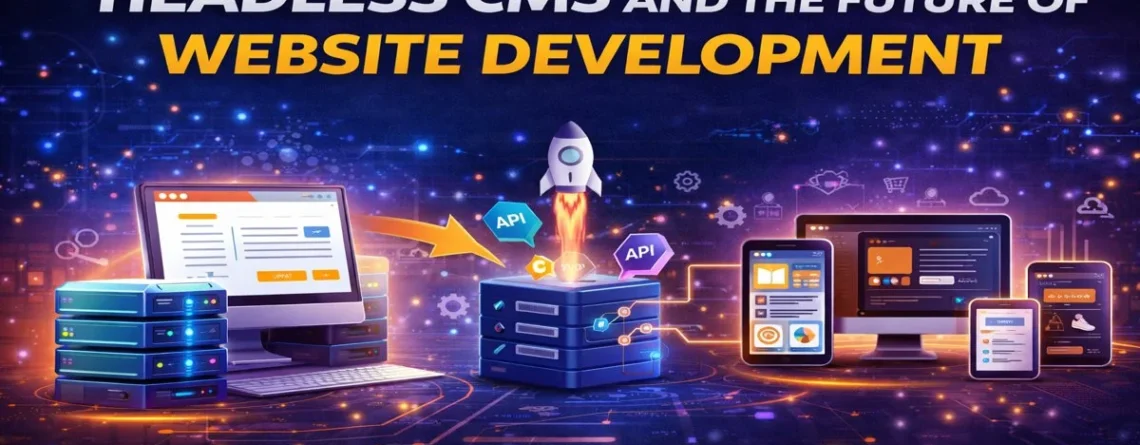
Headless CMS is a content management system where the backend (content storage) is separated from the frontend (presentation layer).
Content is managed in the backend and delivered via APIs to any frontend application such as websites, mobile apps, or smart devices.
Unlike traditional CMS, Headless CMS does not control how content is displayed. Developers have full freedom to design the frontend using modern frameworks.
Flexibility in Development
Developers can use any frontend technology like React, Vue, or Angular without backend limitations.
Content is delivered via APIs, allowing faster loading and better performance.
Content can be reused across websites, mobile apps, and other digital platforms seamlessly.
Headless architecture allows easy scaling as your business grows.
Separating frontend and backend reduces attack surfaces and improves overall security.
How Headless CMS is Transforming Website Development
Teams can work independently on frontend and backend, speeding up development.
Developers can create highly optimized and interactive interfaces without CMS limitations.
Headless CMS integrates easily with APIs, AI tools, and third-party services.
Businesses can adapt to new technologies without rebuilding their entire system.
Real-World Use Cases in 2026
Deliver consistent product content across web, mobile apps, and marketplaces.
Use the same content backend for both websites and mobile apps.
Manage dynamic content efficiently across multiple user interfaces.
Publish content instantly across multiple channels and devices.
Challenges Businesses Should Consider
Headless CMS requires more development effort compared to traditional CMS.
Implementation requires knowledge of APIs and modern frontend frameworks.
Non-technical users may find it slightly more complex compared to traditional CMS interfaces.
Choosing the Right Approach
Choose headless CMS when you need multi-platform delivery, high performance, and flexibility.
For simple websites or blogs, traditional CMS can still be a practical and cost-effective option
Some businesses use a hybrid CMS that combines headless flexibility with traditional ease of use.
Conclusion
In 2026, Headless CMS is shaping the future of website development by offering flexibility, performance, and scalability that traditional systems cannot match. Businesses that adopt headless architecture can deliver better user experiences, integrate modern technologies, and stay ahead in a competitive digital landscape. As digital platforms continue to evolve, Headless CMS is becoming a key foundation for building future-ready websites and applications.
Frequently Asked Questions
What is a Headless CMS?
A Headless CMS is a content management system where the backend is separated from the frontend, allowing content to be delivered via APIs.
Is Headless CMS better than traditional CMS?
It depends on your needs. Headless CMS offers more flexibility and performance, while traditional CMS is simpler to use.
Which companies use Headless CMS?
Many modern businesses, especially in e-commerce and SaaS, use headless CMS for better scalability and multi-platform delivery.
Which companies use Headless CMS?
It can have a higher initial cost but offers long-term benefits in scalability and performance.
Do I need developers for Headless CMS?
Yes, implementing and managing headless CMS typically requires skilled developers.