On-Demand Healthcare App for a US-Based Clinic Network
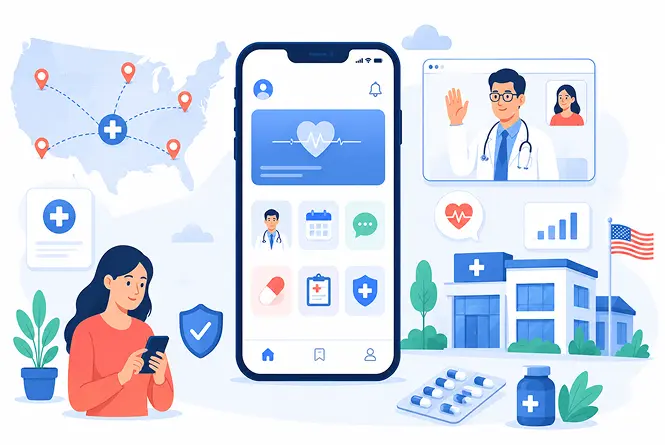
A prominent primary care network running eighteen clinics across four states watched their waiting rooms overflow completely every single day. While serving over sixty thousand active patients annually, their legacy telehealth system became a severe operational liability. Front desks were constantly overwhelmed by frantic patient phone calls because their clunky, makeshift web portal failed to handle basic medical scheduling or remote appointments completely and reliably.
Platform
Mobile Application
Industry
Social Media
& Messaging
Country
India
Services
UI/UX Design &
App Development
Client's Problem Statement
- Patients trying to schedule routine medical follow-up appointments had to navigate nine confusing screens on a clunky browser portal not optimized for mobile, causing a massive spike in user drop-offs.
- Busy physicians lost an average of eighteen minutes during every single video consultation manually copying patient notes from standalone video tools back into their primary, unintegrated electronic health record database.
- Over one-third of automated appointment reminder emails landed straight into patient spam folders, leaving individuals completely unaware of upcoming visits and causing clinic no-show rates to skyrocket across all locations.
- The internal IT department encountered weekly compliance issues because unencrypted third-party video conferencing links sent through regular email channels posed serious HIPAA risks to vulnerable patients' protected health information.
Challenges
- Building a video consultation architecture that guarantees complete HIPAA compliance without relying on standard, off-the-shelf conferencing SDKs that risk caching sensitive patient data on local devices.
- Supporting rural and suburban patients using unstable LTE connections or weak home Wi-Fi networks, ensuring video and audio feeds remain resilient enough to survive critical clinical conversations.
- Migrating massive historical patient records from an aging, complex legacy electronic medical records system into a modern frontend without corrupting data or bottlenecking on-premise servers.
- Designing an interface so genuinely intuitive that non-technical clinicians would easily embrace the new platform and comfortably alter their established daily medical workflows without resistance.


Solution
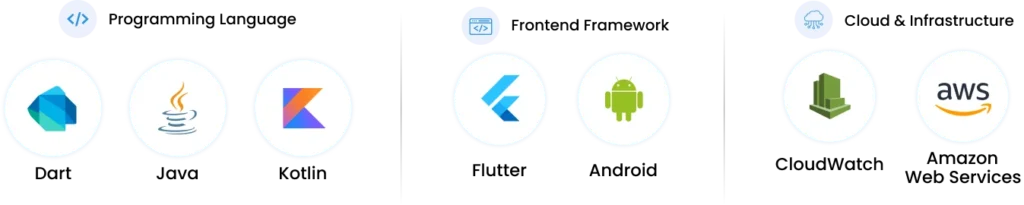
- Deployed a Flutter-first cross-platform mobile development strategy, delivering a single unified codebase natively to both iOS and Android stores to slash initial engineering timelines in half.
- Bypassed the clinic’s outdated on-premise physical infrastructure to architect an encrypted cloud environment on AWS that handles real-time scheduling, secure messaging, and live video routing.
- Developed a secure video conferencing framework from scratch using WebRTC, enforcing end-to-end encryption in transit and ensuring zero protected health information is stored on client devices.
- Conducted a focused pilot program with tech-forward healthcare providers, using their real-world clinical feedback to refine the final interface and eliminate platform adoption barriers for staff.
Execution And Development Journey
- Our first major engineering hurdle involved the clinic network's legacy EMR database. Thousands of historical patient medical records had to transition smoothly into our modern Flutter frontend. To achieve this without server lag, we built lightweight custom middleware microservices using Node.js as a swift translation layer, successfully shrinking heavy database payload sizes by over sixty percent almost immediately right now.
- Mitigating bandwidth issues for rural users required building an adaptive quality engine directly into the video pipeline. When our software detects a degraded mobile network connection, it immediately downscales video resolution to protect the audio stream. Real-world testing across remote clinic sites proved audio continuity holds up perfectly on connections as low as a single bar of cell LTE service.
- Crafting the secure video conferencing framework demanded our most careful development focus. While native WebRTC efficiently streams the interactive session, we wrapped it with an advanced custom session management layer. This architecture strictly enforces end-to-end encryption on every call, automatically executing a thorough patient data purge on the active device the moment a doctor finishes a telehealth consultation session fully.
Technologies We Used
Our Results
No-Show Rates Decreased
Attendance dropped from 28% to 12% within six months of launch, heavily driven by an incredibly seamless mobile medical scheduling experience alongside dependable in-app notifications that always reached primary user email inboxes.
Provider Workflow Improved
Administrative documentation time per consultation shrank from eighteen minutes to just five minutes, because our automated two-way EMR data synchronization completely eliminated manual note-copying that previously bled valuable daily clinical work hours.
Lobby Congestion Reduced
Physical clinic waiting room crowds dropped significantly by 55% as routine check-ins shifted entirely to the mobile application, freeing front-desk staff to focus on critical patient care coordination efforts every single day.
Patient Satisfaction Enhanced
Overall clinic experience scores climbed from 3.8 to 4.7 out of 5, with overwhelming feedback highlighting that our custom telemedicine platform made seeing local doctors feel completely effortless
Frequently Asked Questions
Explore answers to the most common questions about our services, workflows, and support. Clear information, all in one place.
Why build a custom telemedicine app instead of using an existing platform?
Off-the-shelf video tools weren’t built to handle protected health information inside a HIPAA-regulated environment. The clinic network needed scheduling, triage, prescriptions, and EMR documentation under one roof. A custom-built telemedicine solution was the only path to doing that without creating a patchwork of compliance risks.
How did choosing Flutter keep the project on budget and on schedule?
Flutter lets us write codebase for both iOS and Android. Instead of running two parallel development tracks, we shipped both platforms simultaneously. Security patches and new features deploy to every user at the same time, which also cuts long-term maintenance costs significantly.
What happens if a patient has a weak connection during a live consultation?
The platform runs an adaptive quality engine powered by WebRTC. When signal strength dips, the system automatically reduces video resolution to prioritize the audio feed. In real-world testing across rural clinic sites, audio continuity held on connections as low as a single bar of LTE.
How does the app perform on older Android devices?
Flutter’s rendering engine runs independently of the native OS, which means performance stays consistent even on devices that are four or five years old. Paired with an optimized Node.js backend that processes data synchronization in milliseconds, the interface stays sharp and responsive for every user regardless of their device.
Is the platform secure enough to handle patient data across multiple states?
The answer covers: AES-256 + TLS 1.2+ encryption, role-based access control (RBAC), immutable audit logging, HIPAA-eligible AWS infrastructure, and multi-state scalability all written in plain US business English, no jargon pile-up, story flows naturally from one point to the next.
More Proven Case Studies
We showcase additional real-world projects that highlight our expertise, problem-solving approach, and measurable results delivered for clients across different industries.