
Why Customer Experience Matters More in 2026
Customer expectations are higher than ever, and businesses must adapt quickly to stay competitive.
Customers expect instant responses, personalized recommendations, and seamless interactions across all platforms.
With more businesses offering similar products and services, experience has become the key differentiator.
A better customer experience leads to higher retention, more repeat purchases, and stronger brand loyalty.
What are AI and Machine Learning in Customer Experience
Understanding how these technologies work helps businesses use them effectively.
AI enables machines to simulate human intelligence, allowing systems to understand, learn, and respond intelligently.
ML is a subset of AI that allows systems to learn from data and improve performance over time without explicit programming.
AI and ML help businesses analyze customer behavior, predict needs, automate interactions, and deliver personalized experiences at scale.
Top AI & Machine Learning Tools for Customer Experience
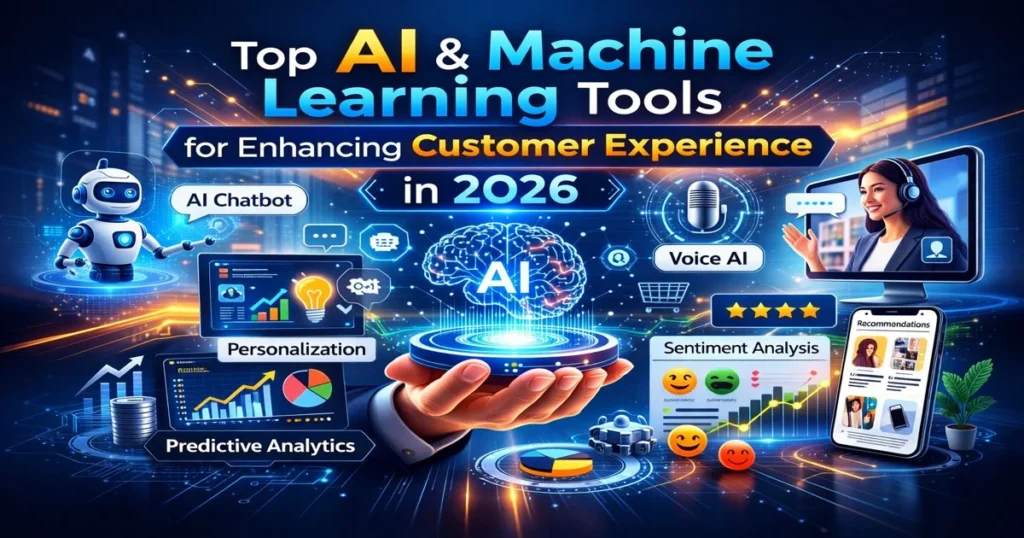
Tools like ChatGPT, Drift, and Intercom provide instant customer support 24/7. They handle queries, resolve issues, and guide users without human intervention.
Platforms like Dynamic Yield and Adobe Target analyze user behavior to deliver personalized content, product recommendations, and offers.
Tools like Segment and Salesforce CDP collect and unify customer data from multiple sources to create a complete customer profile.
Platforms like IBM Watson and Google AI help businesses predict customer behavior, identify trends, and make data-driven decisions.
Tools like Amazon Alexa AI and Google Speech-to-Text enable voice-based interactions, improving accessibility and convenience.
AI tools analyze customer feedback, reviews, and social media to understand customer emotions and improve service quality.
How AI is Transforming Customer Experience
AI delivers highly personalized experiences based on user behavior, preferences, and past interactions.
Chatbots and automation reduce response times from hours to seconds, improving customer satisfaction.
AI can predict issues before they happen and provide solutions proactively.
Customers get a consistent experience across websites, apps, social media, and support channels.
Real-World Use Cases in 2026
AI recommends products, personalizes offers, and improves checkout experiences.
AI-powered chatbots and fraud detection systems enhance security and customer support.
AI helps in patient support, appointment scheduling, and personalized treatment recommendations.
AI improves onboarding, customer support, and user engagement through smart automation.
Challenges Businesses Should Consider
Handling customer data responsibly and complying with regulations is critical.
Advanced AI tools can require investment in infrastructure and expertise.
Integrating AI tools with existing systems can be challenging without proper planning.
Choosing the Right AI Tools
Small businesses can start with simple tools like chatbots and analytics platforms, while larger enterprises can invest in advanced AI systems.
Choose tools that directly improve your customer journey and solve real problems.
Ensure the tools can grow with your business and handle increasing data and users.
Conclusion
In 2026, AI and machine learning are no longer optional — they are essential for delivering exceptional customer experiences. Businesses that adopt these technologies can provide faster, smarter, and more personalized interactions that customers expect today. From chatbots to predictive analytics, AI tools are transforming how businesses connect with their customers. Investing in the right AI tools today will help you build stronger relationships, improve customer satisfaction, and drive long-term growth.
Frequently Asked Questions
What are AI tools for customer experience?What are AI tools for customer experience?
AI tools help businesses automate interactions, analyze customer data, and deliver personalized experiences.
Which AI tool is best for customer support?
Chatbots like ChatGPT, Intercom, and Drift are widely used for customer support.
Is AI expensive for small businesses?
Many AI tools offer affordable plans, making them accessible for small businesses.
How does AI improve personalization?
Market research helps identify user needs, competition, and trends, ensuring the app meets industry demands and attracts users.
Is AI safe for handling customer data?
Yes, if implemented properly with strong security and compliance measures.