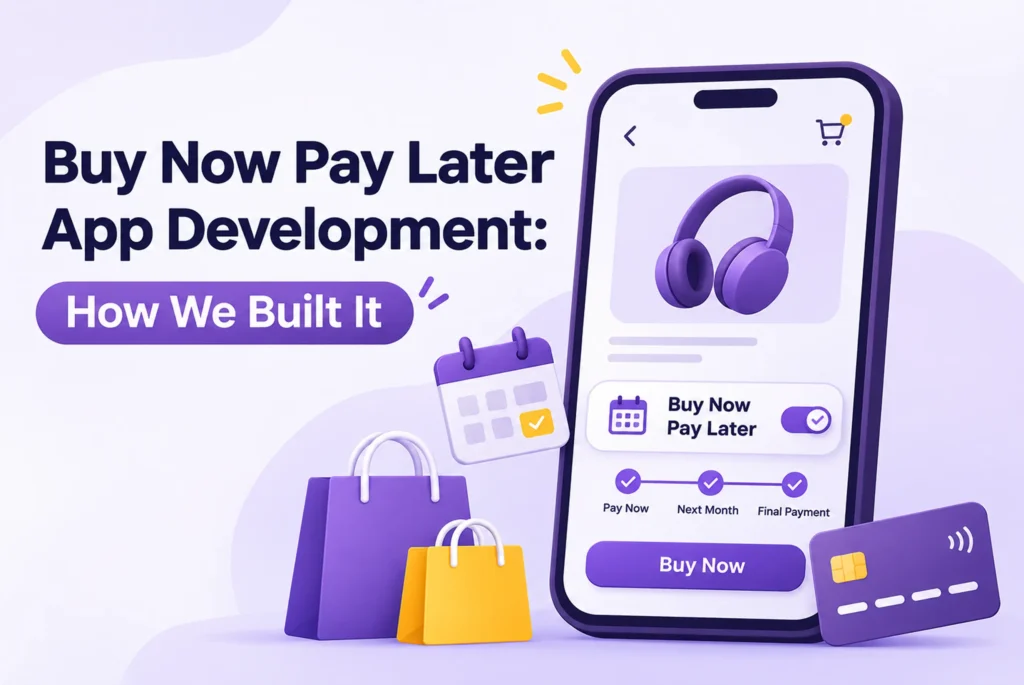




Buy Now Pay Later App Development: How We Built It
More shoppers want to split big purchases into smaller payments at checkout. This buy now pay later app development case study shows how we built a fast, safe BNPL platform that approves buyers in seconds and helps stores sell more.
We used cloud microservices, an instant credit decisioning engine and a simple checkout plugin for stores. Read on to see the problem, our build steps, the tools we chose and a clear before-and-after KPI table that shows the full results.
Platform
Pay Later (BNPL) FinTech Application
Industry
Customer Service, Contact Center
Country
United States (USA)
Services
Custom BNPL App Development
Client's Problem Statement
- Checkout financing depended on slow manual credit reviews. Shoppers often gave up before approval, so many carts were abandoned and average order values stayed low across high-ticket online partner stores.
- Fragmented banking systems could not verify identity or run quick soft credit checks instantly. This caused painful sign-up friction and let more fraud slip through during busy high-volume sales events.
- The old all-in-one backend could not handle flash sales. Checkouts often timed out, payments failed, and shoppers lost trust in the platform in the middle of an active buying session.
- A rigid payment gateway made installment collection hard to automate. Loan default rates stayed high, matching payments to loans was complex and staff had to chase overdue accounts by hand.
Challenges
- Decisions in under two seconds: The platform had to judge a borrower using alternative data and credit bureau data almost instantly, without raising the risk of loan defaults.
- Rules and card security: The team had to comply with lending disclosure rules, credit reporting regulations, data privacy laws and payment security standards, while state BNPL laws kept changing.
- Easy store plugins: Checkout widgets for Shopify, WooCommerce and Magento had to stay very light, loading in under 100 milliseconds so they never slowed down a merchant’s site.
- Repayments and payouts at scale: The system had to run many ACH and debit card installments at once, while also handling daily merchant payouts and refund matching without errors.
Solution
- AI decisioning engine: An instant credit decisioning engine combines device fingerprinting, a soft credit pull and open banking API data. This BNPL credit decisioning software integration approves or declines buyers in seconds.
- Cloud microservices: A Kubernetes-based BNPL architecture splits loan origination, ledger accounting and merchant payouts into separate services, so the platform can handle ten times more traffic.
- Embeddable checkout SDK Web scripts and mobile plugins show a clear pay in 4 installment schedule inside the merchant’s own checkout page, so shoppers see exactly what they will pay.
- Automated repayment and recovery: An event-driven engine built on Redis and Celery runs ACH(Automated Clearing House) and card charges, sends reminders, and retries failed payments, which reduces manual work for the support team.
Execution And Development Journey
- We began by mapping the lending and privacy rules, setting the unit economics for pay in 4 plans and separating customer data into safe zones. Then our architects designed a double-entry ledger so every loan and every merchant payout could be traced, checked and audited.
- Developers then built the core credit decisioning service. It uses a Plaid integration for open banking data and Experian for soft credit pulls, while machine learning models trained on transaction data and device fingerprinting estimate default risk and block fraud before a loan is approved.
- Front-end engineers built a very light Preact checkout widget and mobile SDKs for Flutter and React Native, aiming for page loads under 100 milliseconds. REST webhooks and GraphQL APIs keep orders, stock and refund requests in sync between each merchant store and our backend ledger.
- We ran security audits, penetration tests and heavy load tests to check PCI DSS compliance, payment security and speed. After sandbox testing with partner stores, the platform launched live on auto-scaling Kubernetes clusters and stayed online through peak holiday shopping surges, with no downtime reported.
Technologies We Used
- Mobile and web SDKs

React.js

Futter
- Backend Framework

Node.js

Python
- Ledger and data

Postgresql

Redis
Our Results
Checkout Conversion Improved:
Merchant checkout conversion rose from 2.4% to 3.3%, a 38% relative lift. Clear, upfront pay in 4 installment options reduced cart abandonment and helped price-sensitive shoppers finish larger purchases right at checkout.
Approval Speed Improved:
Credit decisions now take 1.4 seconds instead of 24 to 48 hours, a drop of over 99.9%. Soft credit pulls, risk scoring and loan approval all happen instantly while the shopper waits.
Order Value Increased:
Average order value grew 41%, from $72.00 to $101.52, across fashion, electronics and lifestyle stores. Installment previews on product pages helped shoppers see a small payment and add more to their carts.
Default Rates Reduced:
Non-performing loans fell from 4.8% to 1.1%, a 77% risk reduction. AI risk scoring, open banking data, device fingerprinting and smart debit card retries all work together to keep repayments on track.
Key Performance Indicator
| Key Metric | Legacy Baseline | Custom BNPL Platform | Change |
|---|---|---|---|
| Credit decision speed | 24–48 hours (manual review) | 1.4 seconds | Over 99.9% faster |
| Merchant checkout conversion | 2.4% | 3.3% | +38% relative lift |
| Average order value | $72.00 | $101.52 | +41% |
| Non-performing loan rate | 4.8% | 1.1% | 77% lower |
| Merchant onboarding time | 5–7 business days | Under 15 minutes (self-service) | 99% faster |
| Peak throughput | 100 transactions per minute | 10,000+ per minute | +36 percentage points100x capacity |
Frequently Asked Questions
Explore answers to the most common questions about our services, workflows, and support. Clear information, all in one place.
How does buy now pay later work?
At checkout, the shopper picks an installment plan, such as pay in 4 and gets an instant decision. The store is usually paid up front and the BNPL provider collects the small payments from the shopper over the following weeks.
How do you build a custom buy now pay later app like Klarna?
Start with a loan origination system, an instant credit decisioning engine and a double-entry ledger. Then add a store checkout plugin, automatic repayment collection and security controls. Plan for compliance from day one, not after launch.
What is credit decisioning in fintech?
Credit decisioning is how a lender decides in seconds whether to approve a buyer. It checks a soft credit pull, open banking data and device signals, then a risk model scores the request. Teams aim for a sub second credit scoring microservices architecture, and ours averaged 1.4 seconds.
How much does buy now pay later app development cost?
Published estimates range from about $40,000 for a basic MVP to $250,000 or more for a full platform, with most builds taking 4 to 8 months. Buy now pay later app cost depends on features, compliance and integrations. To hire fintech developers for a BNPL app, pick the best BNPL app development company by checking its lending and compliance experience.
What are the BNPL regulations in the US?
BNPL rules are changing. The CFPB withdrew its 2024 rule that treated BNPL like credit cards, but states such as New York and Illinois now regulate BNPL lenders with TILA-style disclosures. FCRA rules apply when you use credit reports and PCI DSS applies to card data. Check with a lawyer.
More Proven Case Studies
We showcase additional real-world projects that highlight our expertise, problem-solving approach, and measurable results delivered for clients across different industries.