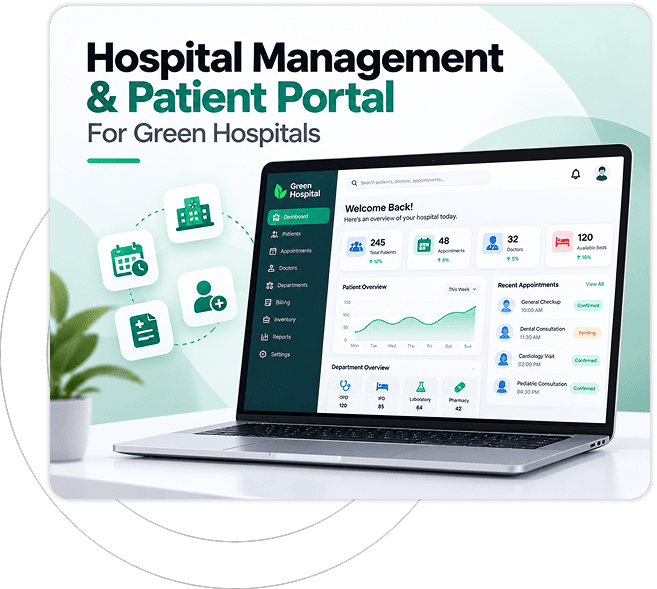

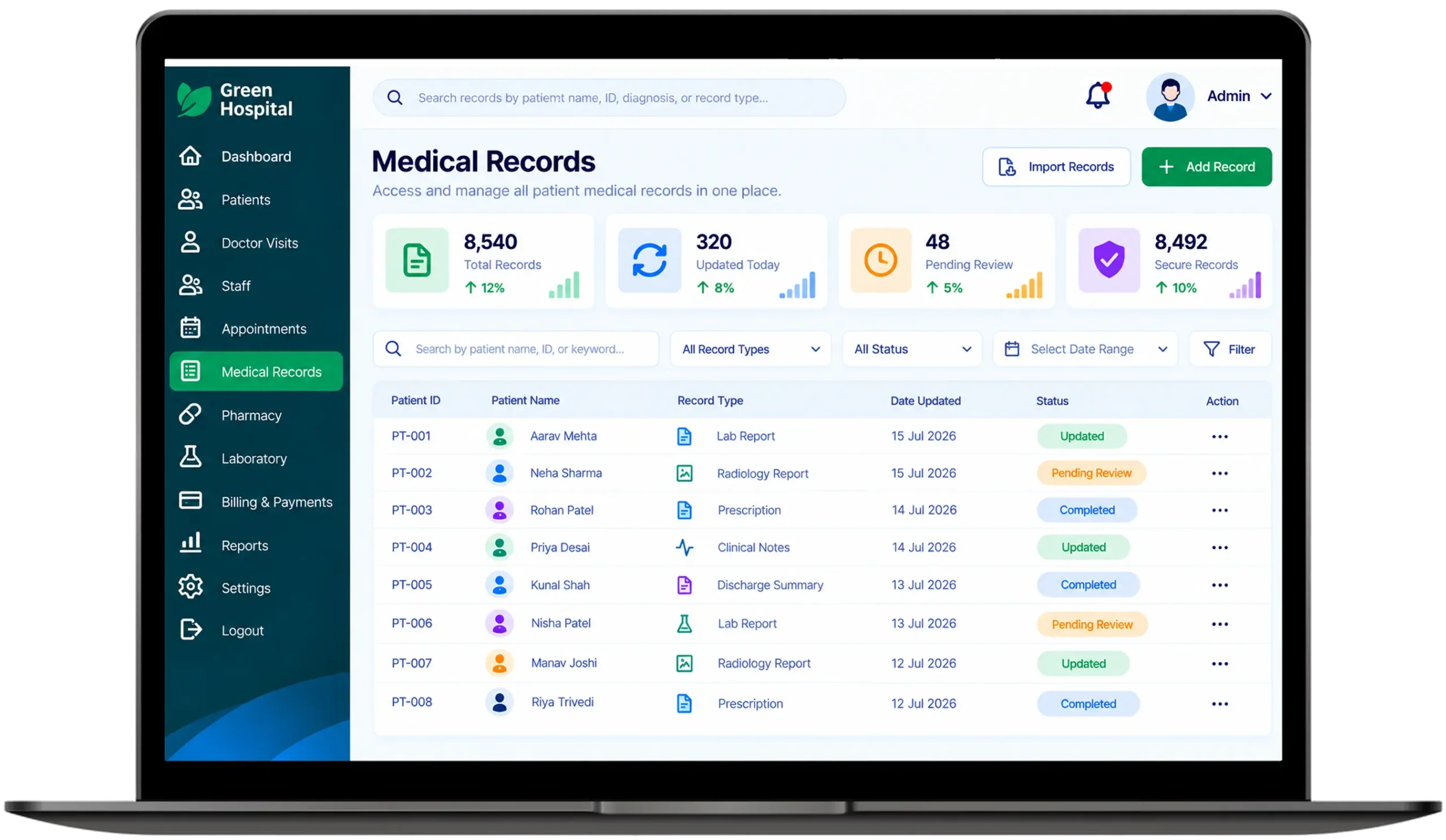



Hospital Management & Patient Portal For Green Hospitals
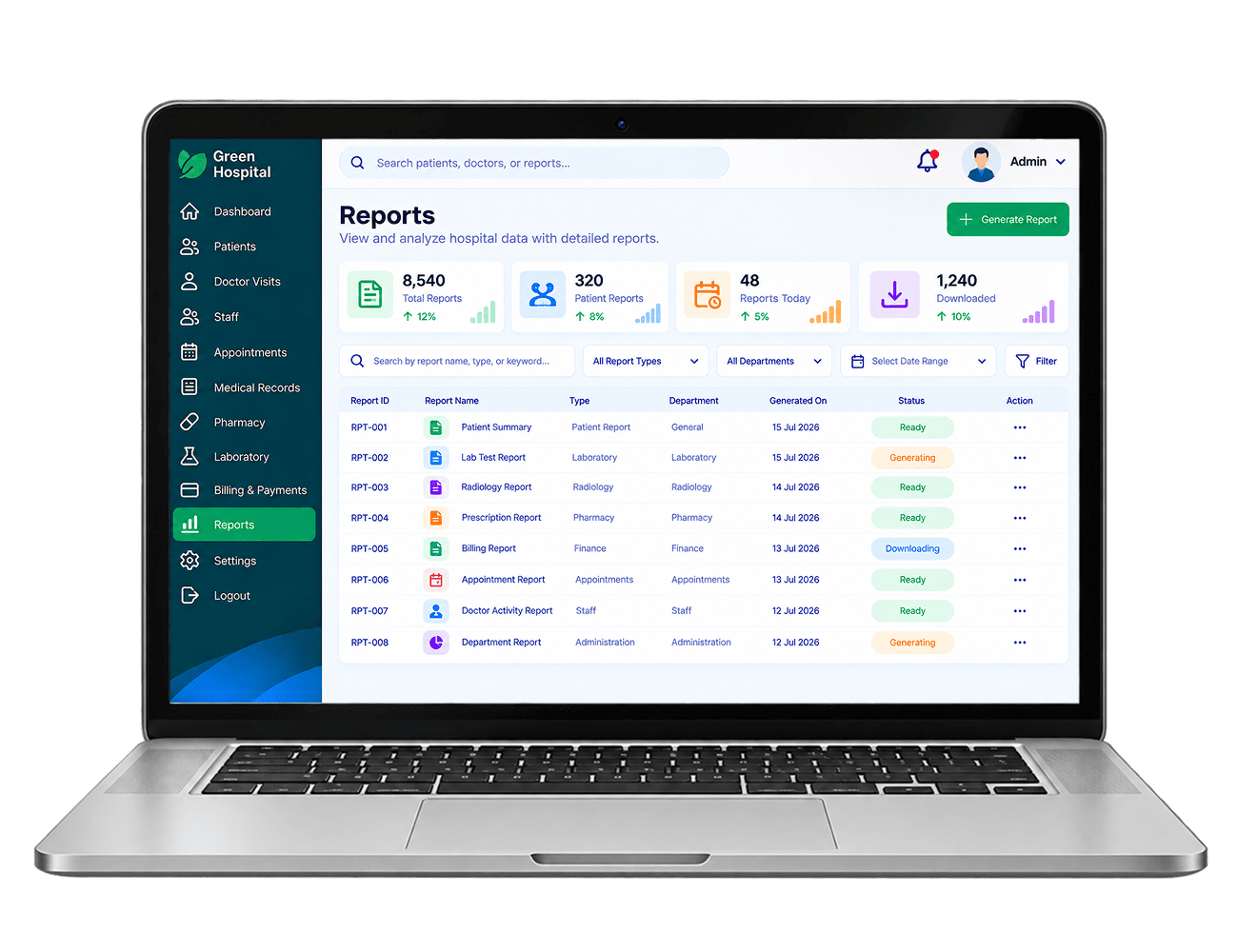
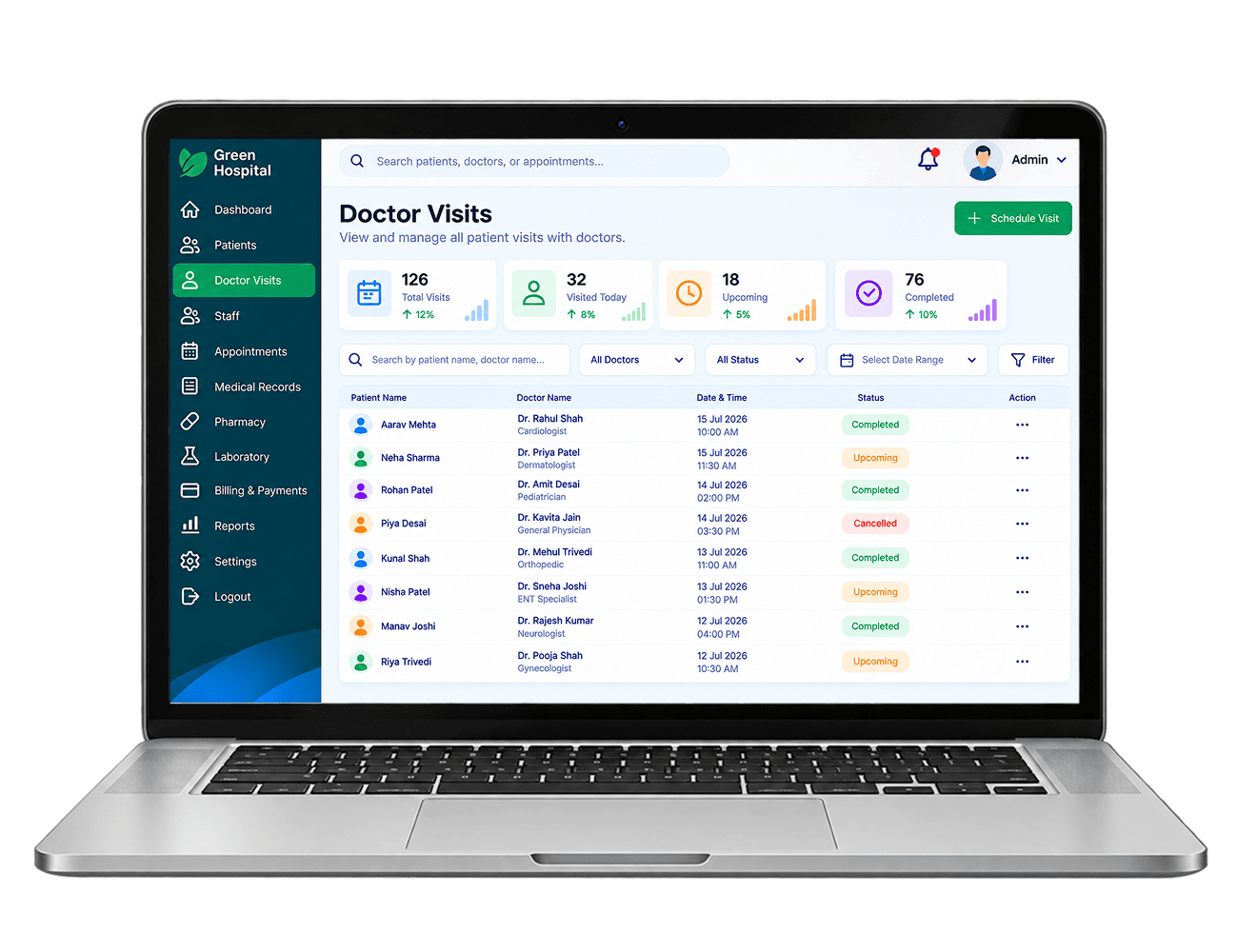
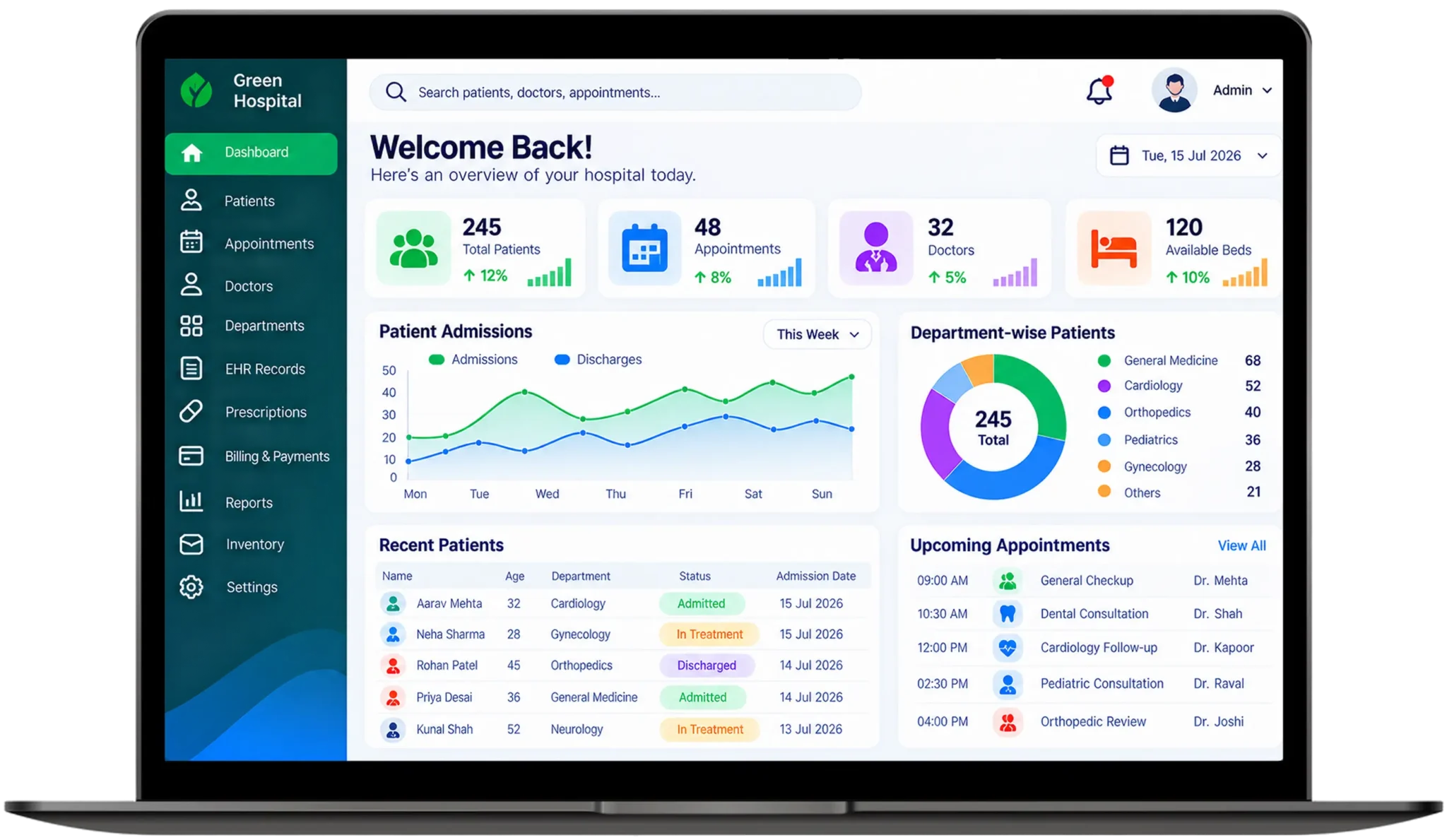
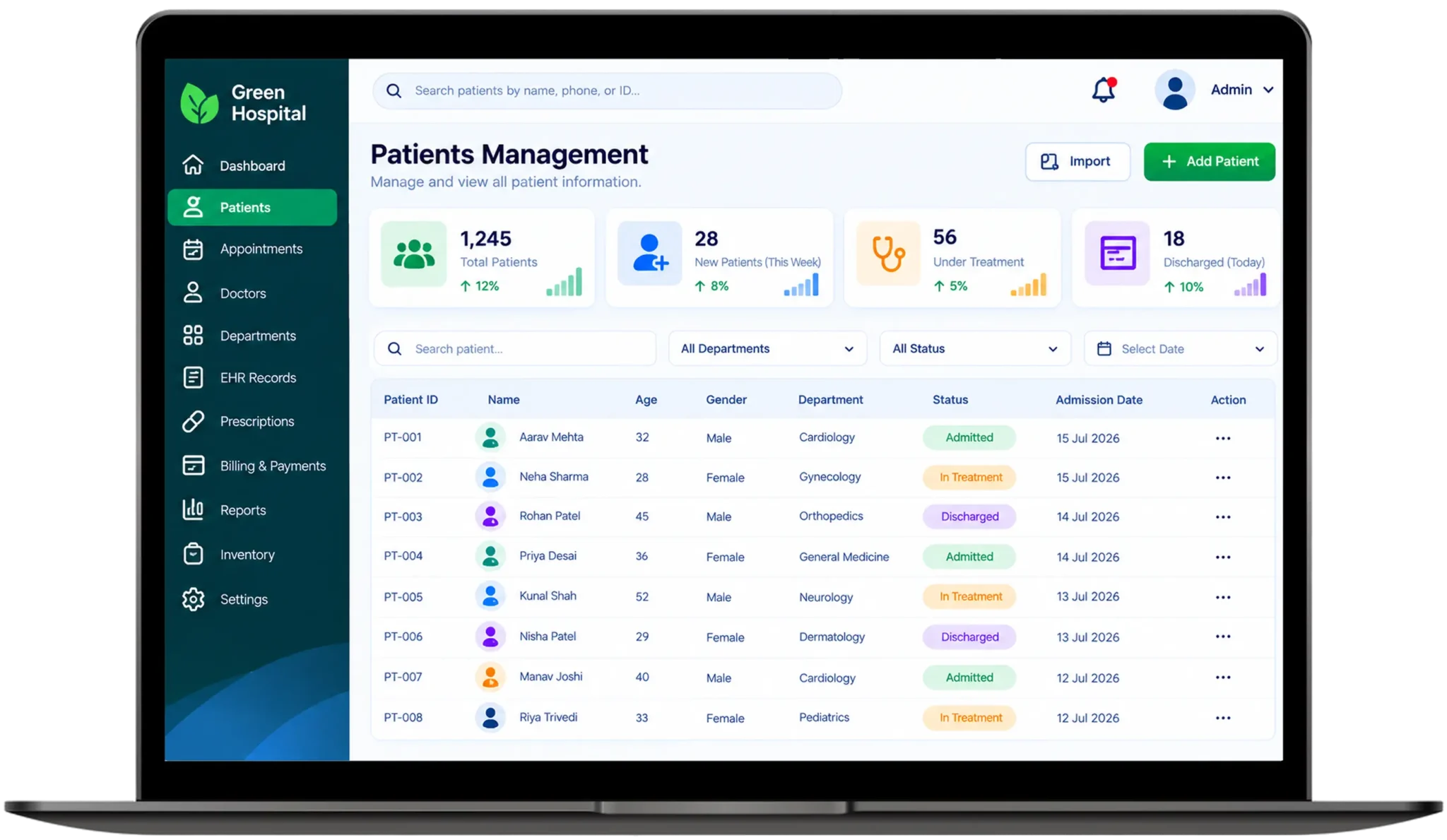
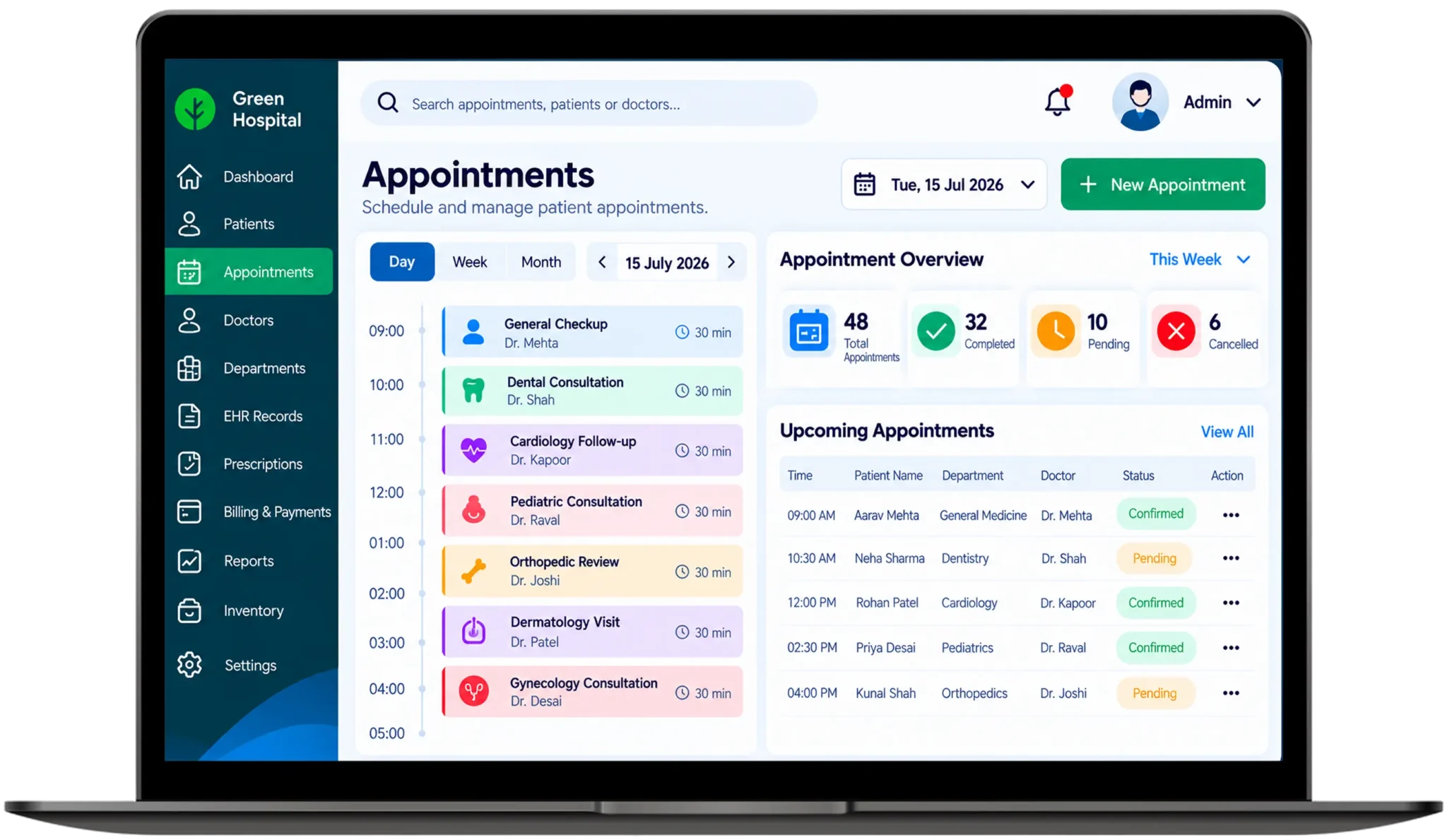
This hospital management and patient portal brings registration, appointments, doctor schedules, records, billing, and prescriptions into one HIPAA-compliant web app for all modern health systems now.
Client Requirement
Hospitals ran registration and scheduling through scattered tools and old paper intake, slowing both patients and busy front-desk teams too.
They needed live doctor scheduling, fast onboarding, direct record access, e-prescribing and billing in one HIPAA-compliant browser app now.
The Solution
We built one secure web app on a modular backend, bringing scheduling, records, billing and prescriptions together for the hospital team.
Calendars sync live, dashboards update at once, and records connect through Health Level 7, so clinicians and patients both get a fast experience.
Our Development Process
Workflow Study:
Role-Based Screens:
Live Scheduling:
EHR Integration:
Testing and Launch:
Visual Showcase
Key Features
Faster Pages:
Page loads dropped by 40%. Server-side rendering and smarter database indexing cut rendering delays sharply, so the portal stays quick during the busiest hospital hours of the day.
Fewer No-Shows:
Missed visits fell by 50%. Automatic SMS and email reminders tied to live doctor calendars let patients confirm or reschedule instantly, so slots rarely sit vacant, anymore at all.
Faster Check-In:
Check-in time dropped from 9 to 3 minutes. Patients fill out forms and verify insurance before arrival, so front-desk staff stop retyping and waiting rooms stay much, less crowded.
Instant Records:
EHR sync delays fell by 90%. HL7 adapters link the portal straight to existing records, so medical data stays accurate instantly without manual retyping ever being needed now.
Technology We Used
- Frontend Framework

Next.js

React.js
- Backend Framework

Node.js

Express.js
- Database

Postgresql
Frequently Asked Questions
Explore answers to the most common questions about our services, workflows, and support. Clear information, all in one place.
What is a hospital management system used for?
It centralizes patient registration, appointment scheduling, medical records, billing and prescriptions into one platform, replacing paper intake and disconnected tools with a single digital workflow for staff and patients.
How does a patient portal reduce appointment no-shows?
Automated SMS and email reminders tied to real-time physician calendars let patients confirm or reschedule instantly, which closes scheduling gaps and can cut missed visits by roughly half.
Is a HIPAA-compliant patient portal required by law?
Any system that stores or transmits protected health information must meet HIPAA’s technical safeguards, including encrypted data, access controls and audit logging, regardless of whether it’s a portal, EHR or billing tool.
How does HL7 FHIR help hospital software connect to EHR systems?
HL7 FHIR is a standardized data-exchange format that lets a hospital web app and an existing electronic health record system share patient, schedule and medication data automatically, without manual re-entry.
What features should a hospital management web app include?
Core features typically include doctor scheduling, patient registration, EHR access, e-prescribing, billing and role-based security, all built to work together instead of as separate, disconnected administrative tools.