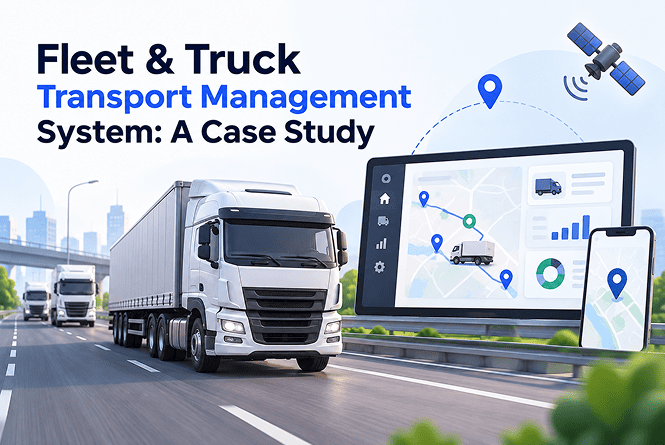




Fleet & Truck Transport Management System: A Case Study

Fleet operators juggling paper logs, spreadsheets and disconnected telematics tools lose visibility when it matters most. A unified fleet management system replaces that chaos, connecting trucks, drivers, routes, fuel and maintenance into one trusted operational view teams rely on daily.


This case study examines how a custom-built Fleet and Truck Transport Management System transformed a regional carrier’s operations. Centralized dispatching, IoT telematics and automated compliance tracking replaced manual processes, cutting fuel waste, reducing downtime and lifting on-time delivery performance measurably.

fleet-truck-transport-management-system-a-case-study

Platform

Mobile Application

Industry

Social Media
& Messaging

Country

India

Services

UI/UX Design &
App Development

Client's Problem Statement

Challenges

1. Speech_bubble
2. Solution

Solution

Execution And Development Journey

Technologies We Used

technologies-react

React.js

technologies-css

Tailwind CSS

technologies node.js

Node.js

technologies-express

Express.js

technologies-postgresql

postgresql

technologies-redis

Redis

Our Results

Performance Improved:

Page load times decreased by 40%. The centralized dashboard now renders live vehicle tracking updates within milliseconds, letting dispatchers monitor high-density fleet activity across complex regional distribution networks without any noticeable system lag.

Fuel Consumption Reduced:

Annual fuel spend dropped by 22%. Dynamic route optimization minimized detour mileage and unnecessary engine idling, cutting wasted fuel burn across every long-haul freight route throughout the carrier's entire operating footprint nationwide.

Fleet Downtime Reduced:

Unplanned mechanical failures fell by 33%. Automated predictive maintenance alerts paired with real-time OBD-II diagnostics enabled proactive servicing, extending vehicle life while eliminating costly roadside repair expenses during every active delivery run.

On-Time Deliveries Increased:

Service fulfillment accuracy reached 95%. Automated dispatching, turn-by-turn driver navigation and live customer delivery tracking together strengthened overall service reliability, improving client retention and brand reputation across the carrier's key enterprise accounts.

Key Performance Indicator

Metric Before Deployment After Deployment Change
Unplanned Fleet Downtime 12 hrs/vehicle/week 8 hrs/vehicle/week 33.3% reduction
On-Time Delivery Rate 82.0% 95.0% 15.8% increase
Fuel Efficiency Baseline burn 22.0% improvement 22.0% fuel cost drop
Delivery Delays Baseline 25.0% reduction 25.0% fewer delays
Dashboard Load Time 3.5 seconds 2.1 seconds 40.0% faster
Maintenance Cost per Mile $0.48 $0.35 27.1% reduction
Fleet Utilization 61.5% 84.2% 36.9% growth

Frequently Asked Questions

Explore answers to the most common questions about our services, workflows, and support. Clear information, all in one place.

What is a fleet and truck transport management system?

A fleet and truck transport management system is a software platform that centralizes vehicle tracking, driver management, route planning, fuel monitoring, maintenance scheduling and delivery tracking into one dashboard, replacing manual logs and disconnected tools with real-time operational data.

Real-time GPS truck tracking gives dispatchers live visibility into vehicle location and status, enabling accurate delivery estimates, faster response to delays and better route decisions. Combined with automated status updates, it reduces customer inquiry calls and strengthens delivery reliability.

Dynamic route optimization software analyzes live traffic, road conditions, vehicle weight and delivery windows to calculate the most efficient path for each trip. By minimizing detours and idle time, fleets commonly see fuel consumption drop by around 20-25%.

Predictive maintenance uses OBD-II telematics data to flag mechanical issues before they cause breakdowns, allowing teams to schedule repairs proactively instead of reactively. This approach typically cuts unplanned downtime by 30% or more and lowers maintenance cost per mile.

A well-implemented transport management platform typically pays for itself within 10-12 months by reducing fuel spend, lowering unplanned downtime, cutting delivery delays and raising on-time delivery rates, translating directly into lower operating costs and stronger client retention.

More Proven Case Studies

We showcase additional real-world projects that highlight our expertise, problem-solving approach, and measurable results delivered for clients across different industries.

hr-payroll-management-platform
hospital-healthcare-management-platform
banking-operations-platform-a-case-study