




Multi-Vendor Marketplace App for a US-Based B2B Wholesale Platform
A fast-growing Midwest B2B wholesale network faced a massive crisis when their patched-together e-commerce plugins started actively sabotaging business growth. Pushing millions in monthly transactions, the fragile digital architecture simply collapsed under heavy enterprise-level wholesale traffic right before Q4 hit.
They desperately needed a custom B2B SaaS platform development strategy to eliminate three-hour inventory lags and stop selling ghost stock. We built a high-performance Laravel multi-vendor marketplace featuring real-time data sync to permanently protect their retail relationships and bottom line.
Platform
Mobile Application
Industry
Social Media
& Messaging
Country
India
Services
UI/UX Design &
App Development
Client's Problem Statement
- Selling ghost stock became a critical issue because the blind middleman platform failed to update sudden warehouse shortages, severely damaging trust with major retail partners during high traffic sales periods.
- The system relied entirely on basic open-source plugins to manage highly complex data feeds, which predictably collapsed under the immense weight of tracking thousands of active marketplace SKUs daily nationwide.
- A devastating three-hour data blind spot caused massive order cancellations because vendor stock levels only updated through a slow batch cron job exactly every one hundred and eighty minutes consistently.
- Fulfilling false wholesale promises triggered strict automated vendor compliance fines from large US retailers, ultimately costing the struggling client devastating chargeback penalties reaching up to twenty-five thousand dollars weekly overall.
Challenges
- The 3-Hour Blind Spot: Vendor stock levels relied entirely on a sluggish 180-minute batch cron job, resulting in an unsustainable 8% order cancellation rate whenever multiple buyers snagged the exact same physical inventory.
- Big-Box Compliance Fines: Large US retailers run a tight ship; failing to fulfill promised wholesale orders due to "ghost stock" triggered massive automated chargeback penalties reaching up to $25,000 every single week.
- Monolithic Database Row Locks: Utilizing synchronous API calls meant that when multiple large manufacturers pushed CSV inventory updates simultaneously, the MySQL database completely locked up, causing severe frontend server timeouts for buyers.
- Legacy Plugin Bottlenecks: Relying on basic, off-the-shelf software to act as a complex B2B network proved fatal, as the fragile architecture was incapable of handling high-frequency data without permanently damaging major retail contracts.
Solution
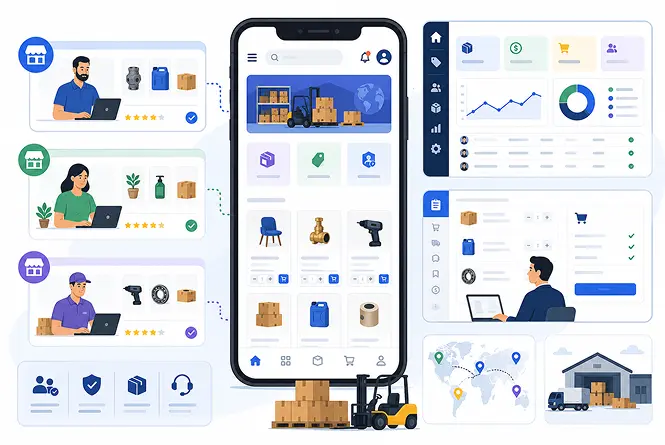
- Custom Laravel SaaS Model: We completely tore down the fragile monolithic storefront to pivot to a true custom Laravel SaaS marketplace capable of gracefully handling $4.2M in monthly volume and 3 million SKUs.
- Asynchronous Background Queue: To completely fix the database lockups, we designed an event-driven queue system so that when manufacturers update warehouse stock, the request instantly drops into a high-speed processing queue.
- Real-Time Inventory Sync: Powered by modern WebSockets and Redis, this decoupled engine drives updated stock counts directly to a retail buyer’s screen in under 800 milliseconds, completely eliminating the dreaded data lag.
- Isolated Multi-Vendor Architecture: Every single manufacturer received a highly secure, isolated portal to plug their warehouse software into a new API gateway, allowing automated inventory and pricing flow without manual spreadsheets.
Execution And Development Journey
- Designing a responsive frontend was highly straightforward, but effortlessly connecting our custom Laravel core system to the vastly different technical setups of fifty standalone United States manufacturers provided a massive engineering beast during the initial three months of this intensive wholesale web app development phase.
- Each vendor utilized entirely innovative software solutions, ranging from modern inventory tools like ShipStation to traditional legacy ERP software systems from the late two thousands. Connecting fifty external inventory feeds simultaneously created an operational nightmare that threw constant gateway timeouts and dropped crucial data immediately.
- The vendor servers completely failed to handle the massive data volume, hitting strict API rate limits instantly. We simply could not build standard data pathways; we desperately had to design an advanced ERP integration for custom SaaS networks completely from scratch to survive this ordeal.
Technologies We Used
- Frontend Framework
- Backend Framework
- Cloud & DevOps

HTML

Vue.js

React.js

Laravel

Php

PostgreSQL
Our Results
Ghost Stock Eliminated:
Thanks to our sub-800ms background queue processing, order cancellations due to phantom inventory dramatically dropped from an unsustainable eight percent straight down to absolute zero during the incredibly intense holiday shopping season.
Transaction Volume Tripled:
Because well-known big-box retail buyers could eventually verify the live inventory data, they securely placed much larger bulk orders, immediately driving a huge 3x increase in total sales volume over last year.
Vendor Onboarding Accelerated:
The automated custom API gateway effectively cut complex vendor setup times from three tedious days of manual mapping down to a remarkably simple fifteen-minute streamlined plugin process, enabling rapid massive network scaling.
Compliance Fines Erased:
By firmly prioritizing this comprehensive technical overhaul, the wholesale brand completely wiped out their massive twenty-five thousand dollar weekly compliance chargebacks, easily establishing themselves as a truly dominant tier-one marketplace industry player.
Frequently Asked Questions
Explore answers to the most common questions about our services, workflows, and support. Clear information, all in one place.
How does the platform handle simultaneous inventory updates without crashing the storefront database?
When pushing massive transaction volumes, owning your proprietary source code entirely eliminates expensive per-user or per-transaction software licensing costs. It also grants complete architectural freedom to build high-security API pipelines tailored to your exact operations.
Why is a custom Laravel SaaS marketplace a safer investment than off-the-shelf platforms?
When pushing massive transaction volumes, owning your proprietary source code entirely eliminates expensive per-user or per-transaction software licensing costs. It also grants complete architectural freedom to build high-security API pipelines tailored to your exact operations.
How did this real-time Laravel inventory sync eliminate "ghost stock"?
By ditching slow, legacy cron jobs in favor of automated event-driven webhooks, any item sold or updated at an Ohio manufacturer’s warehouse is securely broadcasted directly to a Texas retail buyer’s screen in under 800 milliseconds.
Can this custom architecture securely handle legacy ERP integration for custom SaaS networks?
Yes, absolutely. The decoupled API gateway handles complex ERP integrations by communicating via isolated, heavily encrypted JSON payloads, passing strict corporate penetration testing instantly without ever exposing client databases to the public web.
Can a scalable B2B marketplace platform support 3 million SKUs without slowing load times?
Yes, heavily relying on a decoupled architecture makes this possible. By completely isolating the Vue.js single-page application frontend from the massive PostgreSQL database backend, dashboard load times for buyers remain at a blistering 1.2 seconds.
More Proven Case Studies
We showcase additional real-world projects that highlight our expertise, problem-solving approach, and measurable results delivered for clients across different industries.