






AI Product Catalog& Asset Library For JM Enterprise

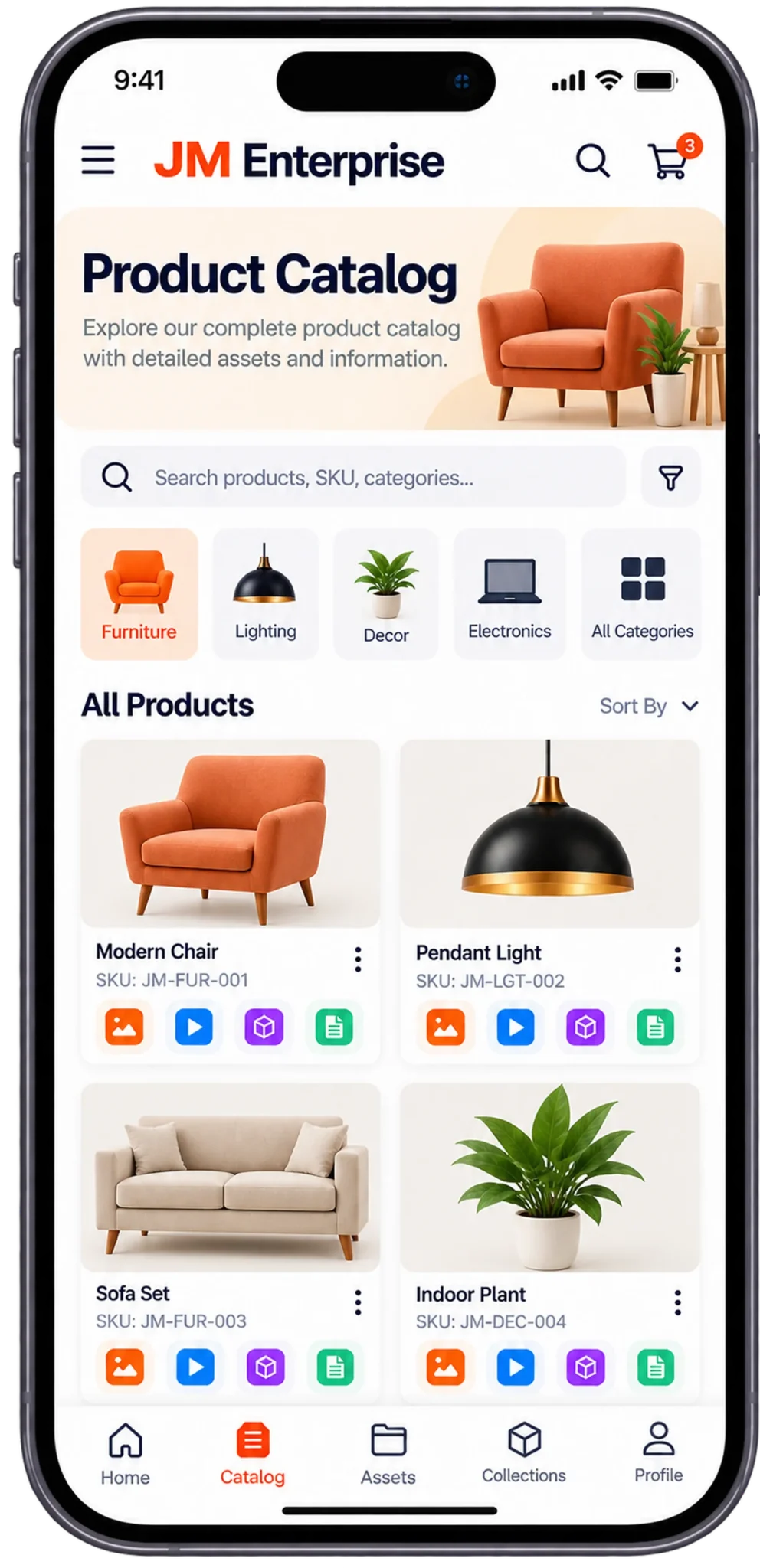
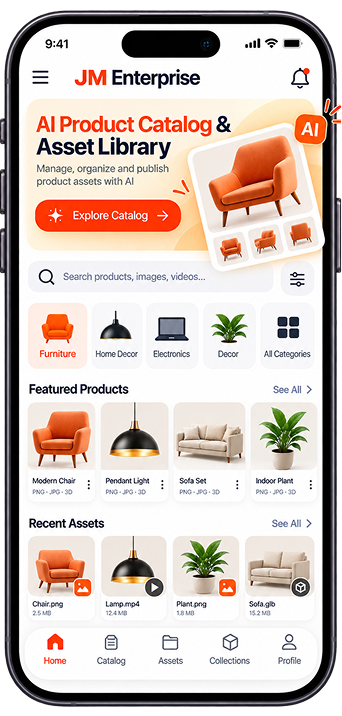
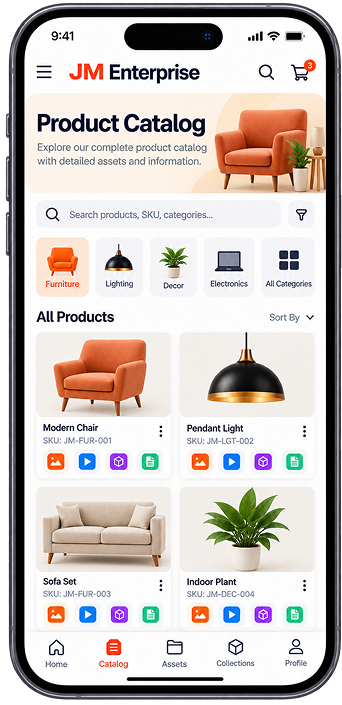
This AI product catalog and asset library gives e-commerce and retail teams one web app for product data and media. Automated tagging, background removal and omnichannel sync replace scattered spreadsheets and disconnected asset folders across brands.

ai-product-catalog-and-asset-library

About

AI Product Catalog & Asset Library

Managing product catalogs across many sales channels often means fragmented data, inconsistent media and slow launches. This enterprise web application bridges Product Information Management and Digital Asset Management in one place. Generative AI automates asset tagging, background removal, metadata extraction and multi-channel content localization, so merchandising teams launch products faster with catalog data that stays consistent everywhere it appears.

jm-enterprise-client-requirment

Client Requirement

The client needed a scalable, cloud-native web application to organize thousands of product SKUs and high-resolution media files in one repository. Priorities included AI-powered image auto-tagging, fast semantic search, real-time cross-channel metadata sync and strict role-based access control. The platform also had to remove manual data entry, cut time-to-market for new collections and connect smoothly with existing e-commerce platforms and marketplaces already in use.

The Solution

We built an AI-driven web application on a centralized PIM-DAM architecture using a modern microservices framework. Computer vision pipelines handle automatic media tagging, background refinement and SKU matching without manual review. A fast GraphQL API moves data between services, while elastic cloud infrastructure handles bulk asset transformations, letting merchandising teams publish accurate product catalogs across global channels in seconds.

jm-enterprise-solution

Our Development Process

01

AI Visual Tagging Automated:

Computer vision detects product attributes, color schemes and media categories the moment a file uploads. Manual tagging disappears from the workflow, producing accurate, searchable metadata across millions of SKUs without added staff hours.

02

Semantic Search Precision Improved:

Vector-based semantic search lets teams find media and product records using natural language instead of exact filenames. The engine understands context and visual similarity, so fuzzy or incomplete search terms still surface the right assets.

03

Background Removal Automated:

Deep-learning vision models strip backgrounds, crop and standardize canvases in real time as images upload. Merchandisers get web-ready product photos instantly, skipping external editing software and speeding up new inventory launches.

04

Omnichannel Catalog Sync Enabled:

Automated sync connectors publish enriched product data and optimized assets directly to storefronts, marketplaces and ERP systems. Catalog data stays consistent everywhere it appears and stock messaging discrepancies across channels disappear.

05

Role-Based Asset Governance Strengthened:

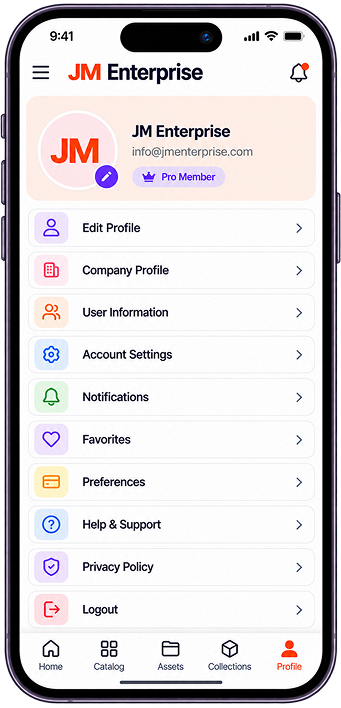
Granular permissions, dynamic watermarking and version control protect proprietary media from unauthorized use. Administrators manage internal team access and vendor usage rights while keeping brand assets consistent across every touchpoint.

Application Visual Showcase

Technology We Used

technologies-next.js

Next.js

technologies-react

React.js

technologies node.js

Node.js

technologies-python

Python

technologies-postgresql

Postgresql

technologies-redis

Redis

Frequently Asked Questions

Explore answers to the most common questions about our services, workflows, and support. Clear information, all in one place.

What is an AI product catalog and asset library?

It is a web application that combines Product Information Management and Digital Asset Management into one workspace, using AI to automate media tagging, metadata extraction, background removal and multi-channel publishing for e-commerce teams.

DAM organizes and distributes digital files like images and videos, while PIM manages structured product information like descriptions and specifications for multiple sales channels. This platform combines both, so teams work from one catalog instead of two separate systems.

Computer vision indexes images automatically, applies descriptive tags, strips backgrounds and flags duplicate files, while semantic search lets teams find assets using natural language. Here, that automation increased metadata indexing speed by 75%.

Automated tagging removes manual data entry, so thousands of SKUs get accurate, searchable metadata as soon as media uploads. Teams launch new collections faster, and search precision across the catalog improved 60% in this deployment.

Automated connectors push enriched product data and optimized media directly to storefronts, marketplaces, and ERP systems as soon as changes happen. This platform cut multi-channel update latency by 85%, so listings stay accurate everywhere at once.

Other Projects We’ve Developed

learn-Korean-feature-image
dogo-health-portfolio-feature-image
skin_care_face_care_ feature image