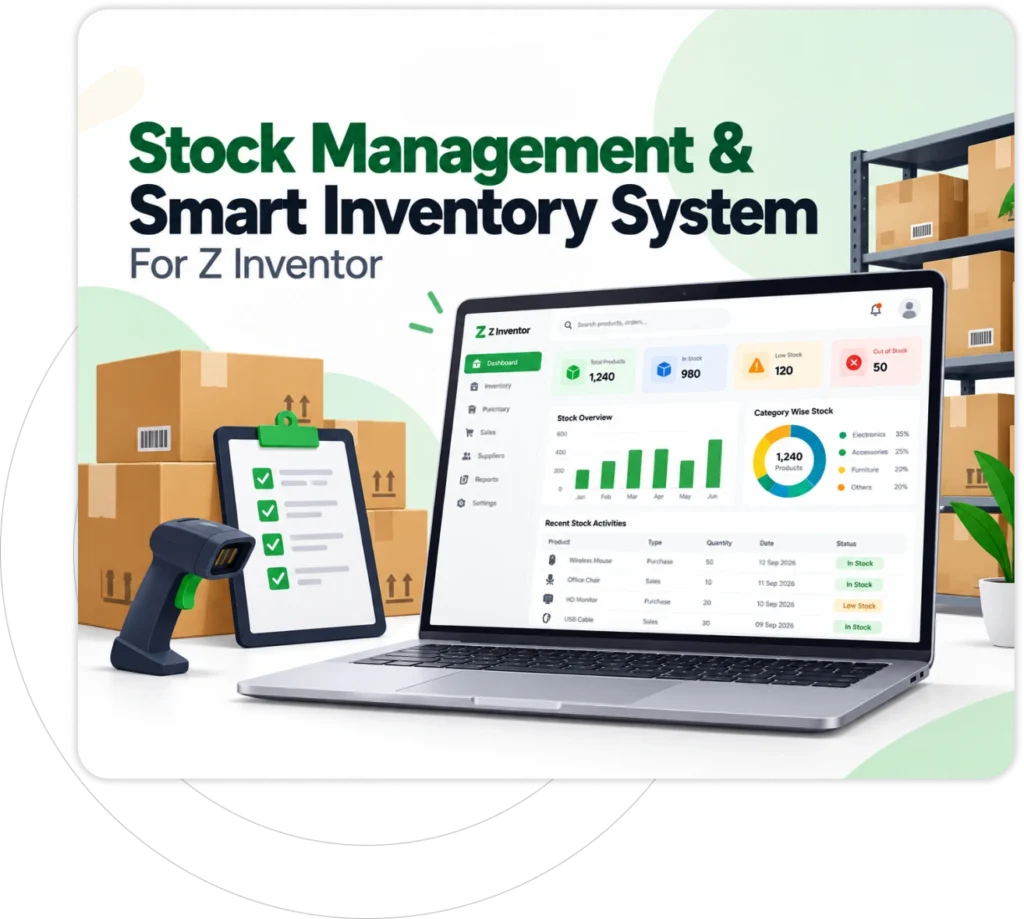


Stock Management & Smart Inventory System For Z Inventor
This smart inventory and stock management system gives operations teams one web dashboard for every warehouse. Real-time stock sync, demand forecasting and automated reorder triggers replace scattered spreadsheets across multi-location distribution networks.
About
Stock Management & Smart Inventory System
Built as a centralized SaaS enterprise management system, this web application streamlines end-to-end inventory operations for multi-location businesses. It handles multi-location tracking, automated purchase order generation, supplier management and role-based access control in one place. By pulling disjointed warehouse data into a single cloud architecture, it gives operations managers real-time visibility, predictive analytics and dynamic safety stock thresholds across every distribution center.
Client Requirement
The client needed a centralized web dashboard to replace fragmented spreadsheet-based inventory tracking across several distribution centers. Key requirements included real-time stock synchronization across web terminals, automated low-stock notifications and integration with existing ERP software, alongside custom role-based permissions. The platform also had to deliver detailed reports on demand velocity, batch expiration schedules and purchasing bottlenecks without slowing down under heavy administrative traffic.
The Solution
We built a cloud-native SaaS web application with a centralized dashboard powered by real-time database synchronization. The system automates purchase order triggers using rule-based low-stock thresholds paired with machine-learning demand forecasting. Responsive UI architecture, modular admin workflows and RESTful API integrations give operational teams complete oversight of stock movement across every warehouse, without needing separate reporting tools.
Our Development Process
Stock Accuracy Optimized:
Automated stock ledger updates replace manual spreadsheet entry almost entirely. Real-time reconciliation keeps counts accurate across multi-location distribution hubs, so audit teams close inventory checks faster with far fewer corrections to chase down.
Page Load Accelerated:
Server-side rendering and automatic code splitting in Next.js serve data-dense reporting pages almost instantly. Optimized database queries keep response times fast even during high-concurrency administrative traffic across multiple warehouse locations at once.
Holding Costs Reduced:
Automated reorder points based on Economic Order Quantity math prevent both overstocking and stockouts. Predictive algorithms study historical demand trends to hold safety stock buffers precisely, freeing up working capital tied up in excess inventory.
Order Processing Streamlined:
Batch picking protocols and automated sales order sync trigger warehouse fulfillment queues the moment an order comes in. Automated workflow management removes manual bottlenecks between digital sales channels and physical dispatch teams on the floor.
Manual Workload Lowered:
The platform automates supplier purchase order generation, invoice matching and low-stock alert distribution. Rules engines handle routine stock adjustments automatically, freeing operational staff to focus on broader logistics and supplier strategy instead.
Application Visual Showcase
Technology We Used
- Frontend Framework

Tailwind CSS

React.js

- Backend Framework

Node.js

GraphQL
- Relational Database

Postgresql

Redis
Frequently Asked Questions
Explore answers to the most common questions about our services, workflows, and support. Clear information, all in one place.
What is a smart inventory and stock management system?
It is a centralized SaaS platform that replaces spreadsheets with a live dashboard tracking stock across every warehouse. Real-time synchronization, automated reorder rules and role-based access give operations teams one connected view of inventory.
How does a smart inventory management system improve operational stock accuracy?
It replaces manual spreadsheets with automated cloud database tracking, real-time ledgers and dynamic reorder rules. In this system, that combination cut inventory discrepancies by 99% across warehouses while speeding up audit completion.
What technology stack works best for a high-concurrency SaaS inventory dashboard?
A strong option pairs Next.js and React.js on the frontend for fast server-side rendering with a Node.js backend and PostgreSQL database. This architecture handles concurrent queries from multiple warehouses while keeping dashboard load times low.
How does predictive demand forecasting lower warehouse carrying costs?
It studies historical sales data, seasonal patterns and supplier lead times to calculate safety stock and Economic Order Quantity levels automatically. Automating reorder triggers this way cut annual carrying costs by 35% in this deployment.
Can an inventory management system integrate with existing ERP software?
Yes, through RESTful and GraphQL APIs that sync stock levels, purchase orders and supplier data between systems. This platform connects to existing ERP tools without requiring teams to abandon their current accounting or procurement software.