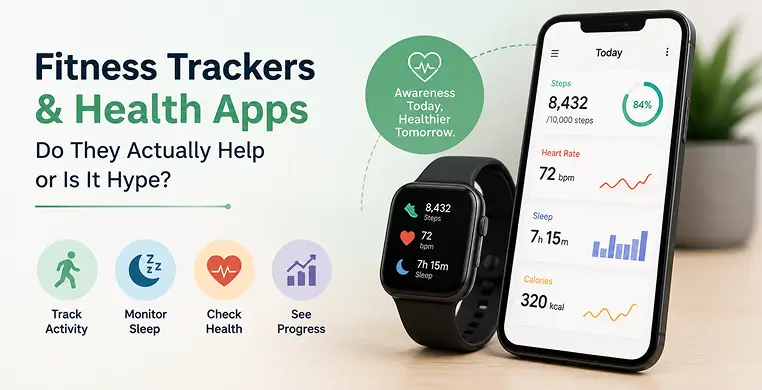
Imagine this familiar scenario. It is a brand new month, and you have finally decided to focus on your health. You go online and buy a shiny new device, excited to try out all the smartwatch health features.
For the first two weeks, you are highly motivated. You constantly check your screen to see if you hit your daily step count goal. You actually listen to those little move reminders and inactivity alerts telling you to stand up. You look like you are on the correct track.
But fast forward two months later. The initial excitement fades away. The device is still on your wrist, but you start to wonder: do fitness trackers really help you get fit, or is it all just a trend? Are you actually getting healthier, or is your watch just buzzing at you while you sit on the couch?
When it comes to wearable devices fitness and health, we all want a simple solution. We download the most popular fitness trackers and health apps hoping they will act like a personal trainer in our pocket. But it is very normal to pause and ask yourself, do fitness trackers actually work in the long run?
This is the exact question we are going to answer today. We are going to look past the shiny marketing and look at the real facts. If you are standing in an electronics store right now asking, “are fitness trackers worth it?”, you are in the right place.
Let’s dive in and find out if these tools truly deliver real fitness tracker benefits, or if they are just expensive hype.
The Big Question: What Do Fitness Trackers Actually Do?
When people ask, do fitness trackers actually work, they often misunderstand what the device is built to do. To figure this out, we need to look at what these gadgets are at their core.
What is a Fitness Tracker?
Think of a fitness tracker as a digital mirror. It does not do the hard work for you; it simply shows you a clear picture of your current habits. Just like a real mirror shows your reflection, a tracker takes your daily actions and turns them into personal health data you can easily read.
Many of us buy fitness trackers and health apps thinking they are magic wands. We secretly hope that simply strapping a piece of tech to our wrist will automatically make us healthier. But the reality is much simpler. Your smartwatch cannot lift heavy weights for you, and it cannot force you to go for a run when you feel tired.
Instead, these devices exist to give you honest activity monitor feedback. They just watch what you do and report the truth.
A Familiar Real-World Example
Imagine a normal workday. You are sitting at your desk, deeply focused on typing an email or reading a screen. Without realizing it, you have been sitting in the exact same spot for three straight hours.
Suddenly, you feel a small buzz on your wrist. It is one of those helpful move reminders and inactivity alerts from your Apple Watch, gently nudging you to stand up and stretch your legs.
This tiny buzz did not physically pull you out of your office chair. However, it instantly created sedentary behavior awareness. It showed you a blind spot in your day and gave you the immediate choice to fix it.
So, do fitness trackers help people move more? The answer is yes, but only because they make you aware of what you are actually doing. By showing you the plain facts, they help you see exactly how fitness trackers change daily habits not through magic, but through one small decision at a time.
Guessing vs. Tracking: What’s the Difference?
Our brains are wonderful at many things, but they are not very good at remembering exact numbers. When we do not use fitness trackers and health apps, we have to rely completely on our memory and our feelings to judge our health.
Think about a typical day. You feel tired in the afternoon, so you assume you had a bad night of sleep. Or, you feel exhausted after running errands, so you assume you must have walked miles. The problem is that our feelings can easily trick us.
This is where the strength of data enters into play. When you switch from guessing to tracking, your entire approach to health changes. Let’s look at how a normal day looks when you are just guessing versus when you have actual numbers on your wrist.
Life with a Tracker vs. Life Without a Tracker
| Daily Situation | Guessing (Without a Tracker) | Tracking (With a Tracker) |
|---|---|---|
| Daily Movement | "I spent all afternoon running around the house, so I think I walked a lot today." | "My screen shows I only walked exactly 4,500 steps so far. I need to take a short evening walk." |
| Night-time Rest | "I feel incredibly sluggish today. I must have slept terribly last night." | "My app shows I only got 4 hours of deep sleep. Now I understand why my body feels tired." |
| Exercise Calories | "That home workout was so sweaty! I easily burned 600 calories, so I can eat a big treat." | "My device says I burned 280 calories. I will stick to my normal, healthy dinner instead." |
Moving from Feelings to Real Facts
As you can see from the table above, the biggest difference is clarity. Guessing always leaves room for doubt and excuses. When you see real numbers, it triggers a natural shift in fitness tracker habit formation.
For example, if you want to increase daily steps with tracker support, you no longer have to guess if you hit your daily step count goal. You know the truth instantly.
The same applies to your rest. People often ask, do sleep trackers really work to improve your life? They might not change your sleep automatically, but they offer great sleep quality tracking. Instead of wondering why you are tired, you gain clear sleep patterns recognition that helps you adjust your bedtime.
In short, guessing makes you passive. Tracking gives you the exact data you need to take control of your day.
The "Help" Part: 4 Ways They Actually Work
Now that we know these devices are just digital mirrors, let us look at the positive side. When used correctly, there are undeniable fitness tracker benefits that can genuinely transform your lifestyle.
They might not be magic, but they use simple psychology to help you make better daily choices. Here are four real ways that fitness trackers and health apps actually help you get healthier.
They Keep You Entirely Honest
It is very easy to finish a busy day at work and tell yourself, “I walked a ton today.” But your tracker does not have feelings, and it does not forget. If you only walked from your desk to the breakroom, the screen will show you the exact, unvarnished truth. You cannot lie to a step counter. Seeing that low number acts as instant step goals motivation, pushing you to get up and move before the day ends.
They Turn Fitness Into a Fun Game
Most modern apps are experts at using gamification fitness challenges. This simply means they turn your health goals into a video game. When you see your activity rings closing, or when you hit a 5-day workout streak, your brain gets a small hit of happiness. Celebrating these tiny, daily wins is often the best way to use health apps for habit change because it makes staying active feel like fun rather than a chore.
They Reveal Hidden Health Signs
You cannot consciously feel your heart rate change while you are fast asleep, but your device is always watching. Many built-in smartwatch health features quietly track your body’s vitals during the night. Even though people often debate the exact heart rate accuracy wearables provide, these tools are excellent at showing your overall trends—like how your resting heart rate slowly drops as your heart gets stronger and healthier.
They Give You Built-In Community Support
Exercising completely on your own can feel lonely, making it easy to quit. Most fitness apps solve this by letting you share your progress with friends, family, or online groups. When you get a notification that your friend just completed a morning run, or when you see someone pass your step count, it sparks a friendly desire to catch up. This social connection is a primary reason why these gadgets do fitness trackers help people move more over the long haul.
The "Hype" Part: Where Gadgets Fall Short
While the benefits are real, looking at only one side of the coin does not give you the whole truth. To fully understand fitness tracker pros and cons, we have to talk about the hype.
Companies spend millions making us believe these gadgets solve every health problem. But if you rely too heavily on fitness trackers and health apps, you will quickly run into their limitations. Here is a serious, simple look at where these tools fall short.
The Calorie Trap
Many people buy a smartwatch to see exactly how much energy they burn during a workout. But a major issue is health app accuracy. If you are wondering, are fitness trackers accurate for calories burned, the honest answer is usually no. Your watch cannot see inside your muscles or know your exact metabolism. It just makes an educated guess based on your movement. Relying on these numbers can lead to frustration due to basic calorie counter inaccuracies, especially if you use them to justify eating extra treats.
The Rise of Tracker Anxiety
Technology can sometimes play negative mind tricks on us. Imagine waking up, feeling completely refreshed, and stretching out in bed. Then, you look at your wrist, and your app gives you a terrible sleep score. Suddenly, you start feeling exhausted just because a screen told you to. This is where can fitness trackers cause anxiety becomes a real problem. Constantly checking your numbers can create tracking streaks stress. You might ask yourself, why do fitness trackers make me feel guilty when I rest? If missing a step goal makes you feel bad, you are facing the hidden wearable fitness tracker mental health risks of over-tracking.
The Sudden Motivation Drop
When you first open a new gadget, it feels like a toy. You want to track everything. But after few months, the novelty wears off. The watch stops being exciting and just becomes an object that buzzes. This is the ultimate test of the device: do fitness trackers really help you get fit on their own? No, they cannot. An app can send you a dozen alerts, but it still cannot force you to put on your sneakers and walk out the front door once the initial excitement is gone.
The Big Takeaway: A gadget can give you data, but it cannot give you discipline. If you rely on a screen to tell you how you feel, the technology is managing you, instead of you managing the technology.
Types of Health Tracking Tools You Can Choose From
Imagine opening the app store on your phone or walking into a tech shop. You are instantly hit with hundreds of different screens, colorful straps, and blinking lights. It is incredibly easy to feel overwhelmed by all the choices.
To pick the right tool, you first need to realize that not all health tech is the same. Different tools solve different problems. By breaking down the options into three simple categories, you can easily find the one that fits your daily life.
1. Wearables (Smartwatches and Smart Rings)
These are the physical gadgets you tie to your wrist or slip onto your finger. When exploring wearable devices fitness and health companies offer, you will find options ranging from luxury smartwatches to simple bands.
- Best For: Tracking your physical movement throughout the day, checking your heart rhythm, and monitoring your rest.
- What They Do: They focus heavily on built-in smartwatch health features like counting your steps, sending you vibrating alerts to stand up, and tracking your bedtime habits.
- What to Keep in Mind: While they are great for daily habits, users often question things like sleep tracker accuracy. If you are wondering, are cheap fitness trackers accurate compared to expensive ones? The answer is they are usually fine for basic step counting, but more expensive models give better details on your heart patterns.
2. Diet and Food Apps
You do not need to buy an expensive wristband to start using fitness trackers and health apps. Some of the most helpful tools live entirely inside your smartphone. Diet apps act like a digital food diary.
- Best For: Learning exactly what you are putting into your body.
- What They Do: You type in what you ate for breakfast, lunch, or dinner, and the app instantly calculates your nutrition. It takes away the guesswork of healthy eating.
- What to Keep in Mind: Be careful not to get too obsessed with perfect numbers. Use them to learn about portion sizes rather than stressing over every single bite.
3. Guided Workout Apps
If you want to exercise but do not want to pay for an expensive gym membership or a personal trainer, these apps are your best option. They bring the fitness class directly to your living room.
- Based For: Following structured exercise plans at home or at the gym.
- What They Do: They give you video guides, audio coaching, and daily schedules for everything from yoga to weightlifting.
- What to Keep in Mind: This is often the best way to use health apps for habit change because you do not have to think about what exercise to do next. You just press play and follow as you go.
Quick Summary: Which Tool Fits Your Goal?
| Your Main Goal | The Best Tool to Choose | What It Measures |
|---|---|---|
| I want to move more and sleep better. | Wearable Device (Watch or Ring) | Steps, heart rate, and sleep time. |
| I want to improve my eating habits. | Diet & Nutrition App | Daily meals, calories, and vitamins. |
| I want a structured exercise plan. | Workout App | Exercise videos, timers, and schedules. |
Key Takeaways
- Digital Mirrors, Not Magic: Fitness trackers do not do the hard work for you; they simply show you an honest reflection of your daily habits.
- Facts Over Guesswork: Using a device replaces vague feelings with real numbers, making it much easier to reach your daily movement goals.
- Numbers Aren’t Perfect: No gadget has 100% accuracy for tracking sleep or calories burned, so look at the overall trends rather than exact data.
- Body Over Screen: Never let a missing streak or an app alert make you feel guilty; your body’s actual feelings matter more than any watch.
- Pick the Right Tool: Choose your technology based on your specific health goal, whether you need a wearable for steps or a phone app for meals.
Conclusion
By this point, you know the good and the bad sides of health technology. The secret to success is not about finding the most expensive device on the market. It is simply about learning how to use a fitness tracker without getting obsessed.
If you let the device rule your life, you will end up stressed. But if you take control, fitness trackers and health apps can become your best friend.
Here are three simple, practical rules to help you use your device safely and protect your fitness tracker mental health.
Stop Checking Your Screen Every Hour
It is very easy to fall into the habit of looking at your wrist every ten minutes to see if your numbers went up. This constant checking changes the experience from a helpful tool into a source of stress. Try to only look at your activity monitor feedback twice a day—once at lunch to see if you need a quick walk, and once in the evening. Your steps will not disappear if you do not look at them every hour.
Create Goals That Fit Your Real Life
When you turn on a new device, it usually gives you a automatic goal of walking 10,000 steps a day. However, the idea that everyone needs the exact same number is actually a bit of a 10,000 steps myth. If you work at a desk for eight hours a day, hitting that number right away might be impossible and frustrating. Change your settings. If you normally walk 3,000 steps, set your new daily step count goal to 4,500. Make the app adapt to your life, not the other way around.
Listen to Your Body First, and the Screen Second
No matter how smart a piece of technology is, it cannot actually feel what is happening inside your muscles. If you wake up with a sore throat or a deeply tired body, but your watch tells you to go hit a workout streak, ignore the watch. Many people ask, why do fitness trackers make me feel guilty when I need a break? Do not let missing fitness tracker streak guilt ruin your day. If your body says rest, that is the most accurate health data you can get.
The Golden Rule: Your tracker is a helper, not a boss. If a piece of technology makes you feel bad about yourself, it is perfectly okay to take it off and leave it in a drawer for a few days. Health is about how you feel, not just the numbers on a screen.
Frequently Asked Questions
Are fitness trackers accurate for counting burned calories?
To be completely honest, not really. Most smartwatches just make an educated guess about your calorie burn by looking at how much your arm moves and how fast your heart beats. They can easily be wrong by twenty percent or more. It is much better to use these numbers as a general guide rather than an exact law.
Do sleep trackers really work compared to a real sleep study?
They are great for noticing daily patterns, but they cannot replace actual medical equipment. A real sleep study measures your brainwaves in a hospital. Your watch just tracks how much you toss and turn in bed. It gives you a great rough estimate of your bedtime habits, but it is not a medical device.
Can wearing a fitness tracker cause anxiety?
Yes, it absolutely can. If you find yourself constantly checking your screen or feeling deep guilt when you miss a daily step goal, the device is hurting your peace of mind. Your watch does not know when you are sick, tired, or just need a break. Mental health matters much more than keeping a digital streak alive.
Are cheap fitness trackers worth buying?
If your main goal is simply to count your daily steps, track your walks, and see the time, a budget tracker is perfectly fine. You do not need to spend hundreds of dollars for basic features. However, if you want advanced features like deep heart rhythm tracking or GPS maps, the more expensive smartwatches do a better job.
What is the best way to use health apps without getting obsessed?
Treat the app like a helpful assistant, not a strict boss. Try turning off the annoying alerts that make you feel bad for sitting down. Only check your progress twice a day once at lunch and once before bed. Most importantly, if you feel exhausted, listen to your body and take the watch off for the weekend.