Finding a web development company in Canada is easy. Finding one that can actually take a real business requirement — not just a template site — and turn it into something scalable is a different problem entirely. Between agencies that specialize in polished WordPress builds and firms that engineer full custom software, the “best” choice depends heavily on what you’re actually trying to build.
This guide walks through what separates a strong development partner from a risky one, profiles some of the most consistently recommended web development services in Canada, and breaks down what a project should realistically cost in 2026.
What to Look for in a Canadian Web Development Partner
Before comparing agencies, it helps to know what actually matters once a contract is signed.
- Full-stack depth, not just front-end polish. A custom web application development agency should be comfortable across the stack — React or Angular on the front end, Node.js, Laravel or Python on the back end and real database architecture underneath.
- Experience with system integration. If your project involves enterprise CRM and ERP integration, ask specifically about that experience rather than assuming general web skills transfer.
- Responsive UI/UX digital design as standard, not an add-on. A site that isn’t built mobile-first will underperform regardless of how strong the backend is.
- Modern hosting knowledge. Scalable cloud deployment on AWS or Azure should be part of the conversation, not something bolted on after launch.
- A pricing model that matches your project. Fixed-bid pricing works for well-scoped sites; hourly or dedicated-team models tend to fit custom software builds better.
With that lens, here’s a look at some of the stronger options currently serving Canadian businesses.
Top Web Development Companies in Canada
Based in Toronto, Parachute Design has been operating for over two decades and has built a strong name in brand-driven WordPress development. Its client reviews consistently point to strong design execution and conversion-focused strategy, making it a fit for established companies where visual brand identity matters as much as technical performance.
Based in Toronto, Parachute Design has been operating for over two decades and has built a strong name in brand-driven WordPress development. Its client reviews consistently point to strong design execution and conversion-focused strategy, making it a fit for established companies where visual brand identity matters as much as technical performance.
247 Labs, based in Toronto, works on the more technical end of the spectrum — enterprise software engineering, custom web portals and AI-driven backend systems. It tends to suit growth-stage technology companies and organizations that need agile development discipline rather than a purely design-led process.
Northern Commerce, operating out of London, Ontario, has carved out a specialty in e-commerce engineering, particularly Shopify Plus and Adobe Commerce builds. For retail and multi-channel brands that need ERP-synced storefronts rather than a basic online shop, it’s one of the more experienced Canadian options.
Toptal isn’t a traditional agency — it’s a vetted network that connects Canadian businesses directly with freelance developers and engineers. It works well for companies that need to scale a team quickly or bring in specialized skills for a defined stretch of a project, rather than a full end-to-end agency engagement.
NGD Technolab has built a solid reputation among Canadian founders and mid-sized businesses looking for full-stack software engineering without onshore agency pricing. The team works across React, Angular, Laravel and Node.js and handles custom ERP and CRM builds alongside standard web development — the kind of work that goes well beyond template-based sites. According to its Clutch profile, one client’s health and wellness app project delivered a 30% increase in user engagement and a 25% lift in retention after launch, with reviewers specifically noting responsive communication and transparent project management. With a team of roughly 30 engineers and over a decade in operation, NGD Technolab occupies a useful middle ground: global delivery pricing in the $25–$49 per hour range, paired with the kind of full-stack capability that’s usually reserved for premium local shops.
Also based in Toronto, iTechnolabs focuses on full-stack builds using MERN and MEAN JavaScript stacks. It’s a reasonable fit for growing businesses that need flexible development capacity without committing to a large retainer.
What Does Custom Web Development Cost in Canada?
The average custom web app development cost in Canada varies widely depending on scope, but a few benchmarks hold across most quotes:
| Project Type | Typical Cost Range (CAD) |
|---|---|
| Standard business website (CMS-based) | $10,000 – $30,000 |
| Custom web application | $30,000 – $100,000 |
| Enterprise platform with ERP/CRM integration | $100,000 – $250,000+ |
Hourly rates tell a similar story. Established Toronto and Ottawa agencies like Parachute Design or Northern Commerce typically charge $150–$250+ per hour, reflecting local overhead and design-led positioning. Freelance networks like Toptal often land in the $100–$200+ range depending on the developer’s specialization.
Hybrid global teams, including NGD Technolab, price closer to $25–$49 per hour while still delivering full-stack software engineering — a meaningful difference if your project needs sustained development hours rather than a short, defined build.
How to Choose a Web Development Agency in Canada
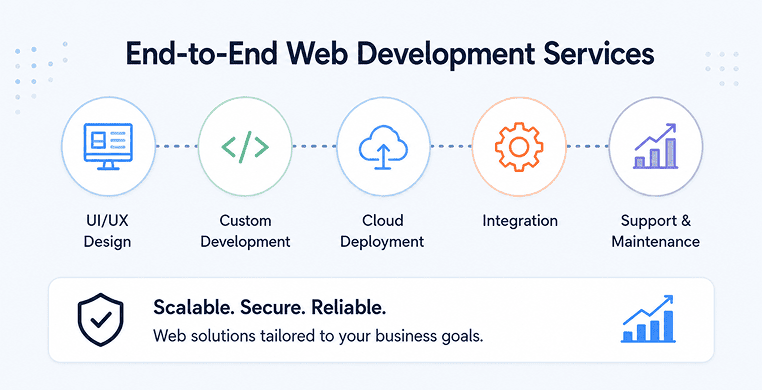
A few practical steps make vendor selection far less risky:
1. Write down your actual requirements first. Agencies quote more accurately — and you compare quotes more fairly — when the scope is specific rather than “build us a website.”
2. Check reviews on Clutch or GoodFirms, not just testimonials on the agency’s own site. Look for mentions of communication, timeline adherence, and post-launch support specifically.
3. Ask what happens after launch. Ongoing maintenance, security patching, and feature updates are often priced separately and easy to overlook during initial talks.
Loved What You Just Read?
Let's Build Something Just as Great — For Your Business.
From web & mobile apps to UI/UX, AI solutions, and digital marketing — NGD Technolab turns ideas into scalable, real-world products. 14+ years, 550+ projects, one team you can rely on.
4. Match the engagement model to your project. A fixed-scope marketing site doesn’t need the same contract structure as an ongoing custom software build.
5. Request to see live sites or applications, ideally ones similar in complexity to what you’re building, not just polished case study slides.
There isn’t a single best web development company in Canada for every business. A brand-focused firm like Parachute Design makes sense for a company prioritizing visual identity, an SEO-first shop like Azuro Digital fits lead-generation-driven sites and a full-stack, budget-conscious partner like NGD Technolab tends to work best for startups and SMEs that need custom software built without the overhead of a premium local retainer. The right fit comes down to matching the agency’s actual strengths to what your project genuinely needs.
Conclusion
There’s no shortage of web development companies in Canada — the harder part is matching one to what you’re actually building. A brand-first business will get more value from a design-led shop like Parachute Design, an SEO-driven service firm is better served by Azuro Digital and a startup trying to stretch a limited budget on real custom software tends to do better with a full-stack, cost-efficient partner like NGD Technolab.
Whichever direction you go, the fastest way to avoid a bad hire is still the simplest one: check verified reviews, look at live sites and get a clear answer on support after launch before signing anything.
Frequently Asked Questions
How much does a normal custom web development will cost in Canada?
The average custom web app development cost in Canada ranges from roughly $10,000 for a standard CMS-based business site to $250,000+ for enterprise platforms with ERP or CRM integration. Mid-complexity custom applications typically fall between $30,000 and $100,000. Hourly rates vary just as widely, from $25–$49/hr for hybrid global teams to $150–$250+/hr for premium onshore agencies in cities like Toronto or Ottawa.
How do I hire custom web developers in Canada?
Businesses looking to hire custom web developers in Canada generally choose between three paths: local agencies (higher cost, same time zone), vetted freelance networks like Toptal or hybrid global teams that combine project governance with offshore engineering rates. Before committing, ask to see live applications the team has shipped and confirm who will actually be coding on your project, not just managing it.
How do I choose a web development agency in Canada?
Choosing a web development agency in Canada comes down to matching capability to project type. Check verified reviews on Clutch or GoodFirms rather than agency testimonials alone, confirm experience with your specific tech stack or integrations and get clarity on post-launch support pricing upfront. A detailed written scope also makes quotes far easier to compare across agencies.
What is the top rated web development company in Canada?
There’s no single best web development company in Canada for every use case — it depends on the project. Design-focused brands often do well with Parachute Design or Azuro Digital, while startups and SMEs building custom software on a tighter budget tend to get stronger value from full-stack, hybrid-delivery partners like NGD Technolab, which combine enterprise-grade engineering with more accessible hourly rates.
Should Canadian startups outsource web development or hire in-house?
Most early-stage Canadian startups outsource to custom software developers rather than hiring in-house, since it avoids the overhead of full-time salaries, benefits and recruiting before product-market fit is confirmed. Outsourcing works best when the agency offers flexible engagement models — hourly, dedicated pod or fixed-scope — so the team can scale up or down as the product and budget evolve.