Real estate is one of the most relationship-driven businesses in India. A customer does not buy a property in one day. They enquire, visit multiple sites, compare options, think for weeks, and then finally decide. During this entire journey one missed follow-up or one delayed response can send that customer straight to your competitor.
Why Real Estate Businesses Struggle Without a CRM
Most real estate teams in India still rely on manual processes that create serious problems.
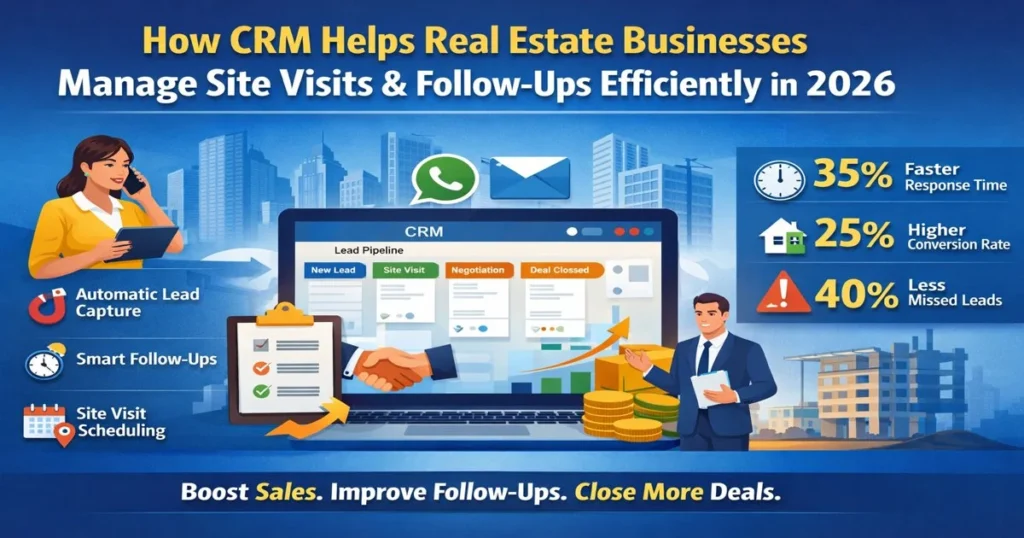
Real estate enquiries come from multiple sources like 99acres, MagicBricks, Housing.com, Facebook ads, Google ads, and walk-ins. Without a CRM these leads land in different places and many simply get missed. Real estate businesses without CRM lose up to 40 percent of incoming leads due to poor tracking and delayed responses.
Speed matters in real estate. A buyer enquiring today is comparing four to five properties at the same time. If your team calls back after two days that buyer has likely already visited a competitor. Manual follow-up systems depending on memory or basic reminders are simply not reliable enough in 2026.
Scheduling visits, assigning the right sales person, sending confirmations, and following up after the visit — all of this happens manually in most real estate offices. This creates confusion, missed appointments, and a poor buying experience.
How CRM Solves Real Estate Problems in 2026
A good real estate CRM brings everything under one roof and fixes these problems directly.
A real estate CRM automatically pulls leads from all marketing channels into one dashboard. Whether a lead comes from a property portal, website, Facebook form, or Google ad it lands directly in the CRM without manual entry. Every lead gets a timestamp, source tag, and automatic assignment to the right sales person based on project or location.
The CRM tracks every interaction and automatically schedules the next follow-up based on where the buyer is in the sales journey. If a lead has not been contacted in 24 hours the system alerts the manager. If a site visit is tomorrow the CRM automatically sends a confirmation message to the buyer on WhatsApp. Nothing falls through the cracks.
Key CRM Features for Real Estate Businesses
Different CRM features solve different problems for real estate teams.
A real estate CRM lets your team schedule site visits directly from the lead profile, assign the right executive, send automated reminders to both buyer and sales person, and mark visit status as confirmed, completed, or cancelled. After every visit the CRM prompts the executive to log feedback and schedule the next follow-up action immediately.
Every lead moves through clear stages — new enquiry, contacted, site visit scheduled, site visit done, negotiation, and deal closed. A visual pipeline shows exactly where every lead stands at any moment. Sales managers can see which deals are moving and which are stuck and act before a lead goes cold.
Indian real estate buyers expect communication on WhatsApp in 2026. A modern CRM integrates directly with WhatsApp Business API letting your team send property brochures, location links, payment plans, and follow-up messages without leaving the CRM. Every message is automatically logged against the lead profile for complete communication history.
Real Impact of CRM on Real Estate Sales
Real estate businesses that implement CRM properly report 35 to 45 percent improvement in lead response time. Site visit to booking conversion improves by 20 to 30 percent because follow-ups happen consistently. Sales team productivity increases because executives spend less time on admin and more time actually selling. Customer experience improves because buyers receive timely communication throughout their journey which builds trust and confidence in your brand.
Choosing the Right CRM for Your Real Estate Business
A good real estate CRM in 2026 should have property and project management built in. It should integrate with Indian property portals like 99acres and MagicBricks for automatic lead import. WhatsApp Business API integration is now a must-have for Indian teams. Mobile app access for field executives is essential because most real estate sales happen outside the office. Easy customisation for your specific sales process without heavy technical setup is also important.
Loved What You Just Read?
Let's Build Something Just as Great — For Your Business.
From web & mobile apps to UI/UX, AI solutions, and digital marketing — NGD Technolab turns ideas into scalable, real-world products. 14+ years, 550+ projects, one team you can rely on.
Making the Right Choice
Select platforms like Zoho CRM, LeadSquared, or Sell.Do for faster setup and lower upfront cost. Ready-made solutions work well for small to medium real estate teams wanting to get started quickly. These platforms are set up and running in 2 to 4 weeks.
Pick custom CRM development when your sales process has unique workflows that standard platforms cannot handle. Large real estate developers managing multiple projects across cities benefit most from custom solutions. A custom CRM costs between ₹8 lakhs to ₹25 lakhs but gives complete ownership with no recurring licence fees.
Conclusion
The Indian real estate market in 2026 rewards businesses that respond fast, follow up consistently, and give buyers a smooth experience from first enquiry to final booking. Managing all of this manually is not possible when your team is handling hundreds of leads simultaneously.
Frequently Asked Questions
What is a Real Estate CRM and how is it different from a regular CRM?
A real estate CRM is built specifically for property businesses with features like site visit scheduling, property management, portal lead integration, and buyer journey tracking. A regular CRM handles generic sales pipelines but lacks the real estate specific workflows that make a real difference for property teams.
How does CRM improve site visit management for real estate teams?
CRM automates site visit scheduling, sends confirmation reminders to buyers and executives automatically, tracks visit status in real time, and prompts follow-up actions immediately after every visit. This eliminates missed appointments and ensures every visit is followed up properly.
Which is the best CRM for real estate businesses in India in 2026?
Popular options for Indian real estate include Zoho CRM, LeadSquared, and Sell.Do. Custom CRM development is also a strong option for larger developers who need complete control over their sales workflow and integrations.
How much does a real estate CRM cost in India?
Ready-made CRM solutions cost between ₹1,500 to ₹5,000 per user per month. Custom real estate CRM development costs between ₹8 lakhs to ₹25 lakhs and gives complete ownership with no recurring licence fees.
How long does it take to implement a CRM for a real estate business?
A ready-made CRM is set up and running in 2 to 4 weeks. A custom CRM built for your specific business processes takes 3 to 6 months from planning to full deployment.